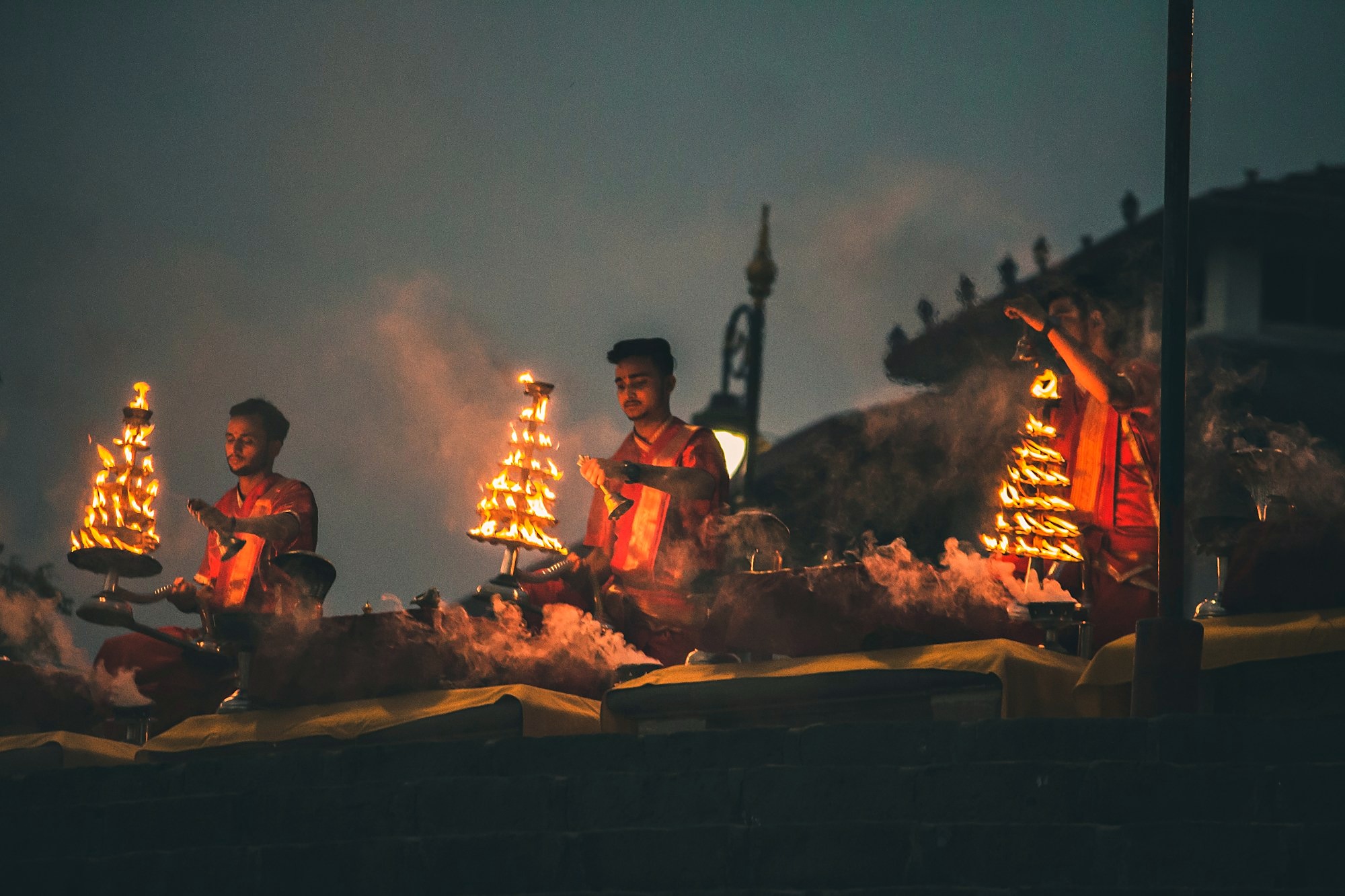
Every evening at Dashashwamedh GhatGhatA flight of steps leading down to a river or tank, used for bathing, worship and cremation.Read in the glossary, as the light fails, young priests raise tiered brass lamps of flame and circle them to the river in synchronised offering — the Ganga AartiAartiA Hindu act of worship in which lamps of flame are circled before a deity or a sacred river, accompanied by bells, conch and chant.Read in the glossary, a ceremony of fire, incense, conch and Sanskrit verse performed for the goddess who is also the river. It would happen identically if no visitor ever came; that is its power.
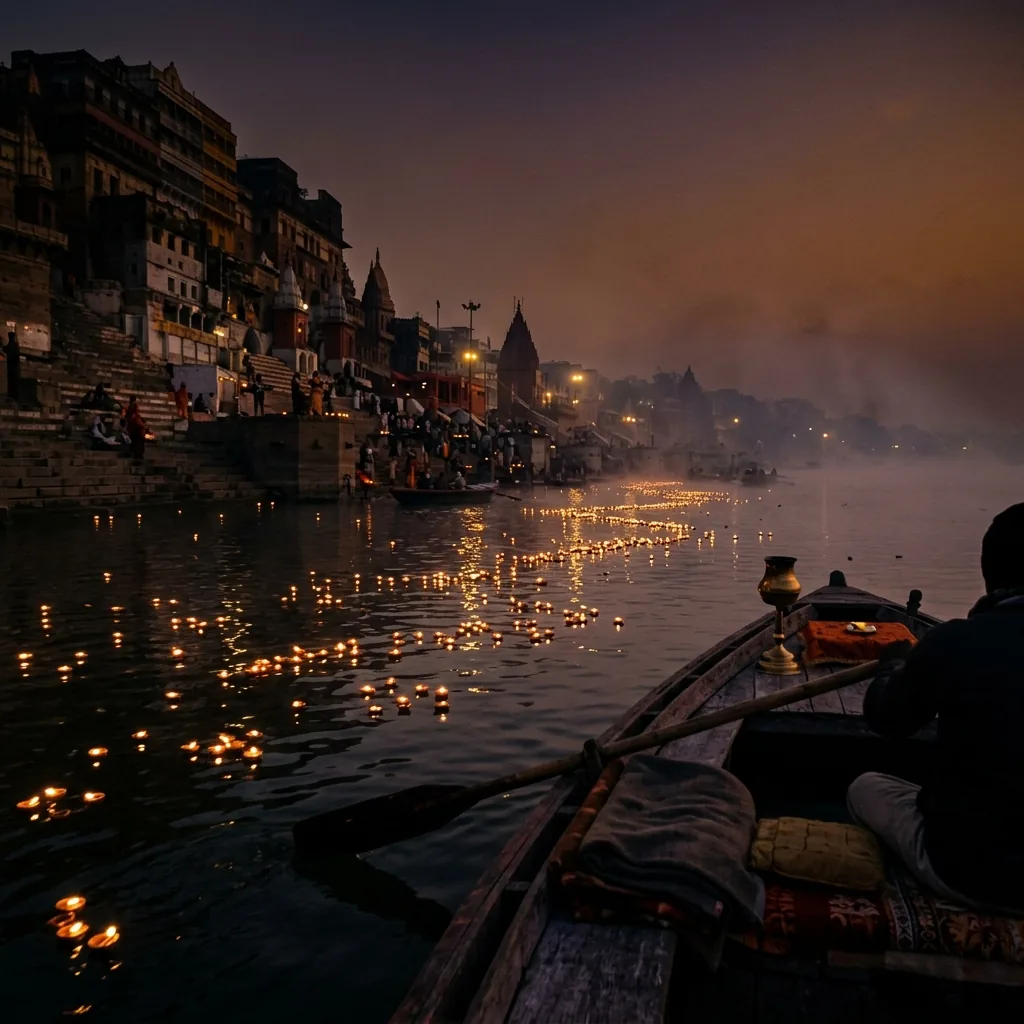
There are two ways to witness it, and they are different ceremonies: from within the crowd on the ghat steps, immersed in the bells and the press of devotion — or from a boat on the black water, the flames doubling in reflection, the whole riverfront turned amphitheatre.
How We Arrange It
- A private boat positioned on the river before the ceremony begins — the definitive view, unhurried.
- A guide raised on the ghats who reads the ritual's grammar: what the lamps, gestures and verses mean.
- Paired, at dawn next morning, with the boat ride past the waking ghats — the river's other liturgy.
When To Go
- Year-round, nightly at sundown (roughly 6–7 p.m., earlier in winter); October to March is the kind season.
Questions, Answered
What time is the Ganga Aarti in Varanasi?
It begins at sundown at Dashashwamedh Ghat — typically around 6:45 p.m. in summer and 6 p.m. in winter, lasting about 45 minutes. Arrive (or anchor) well before for position.
Is it better to watch the aarti from a boat or the ghat?
Both are worth doing once. The boat gives the panoramic, reflective view in relative calm; the ghat steps give full immersion in the crowd's devotion. Elevated India arranges the boat first, the steps for the second night.
Journeys That Take You There