Varanasi does not perform. That is the first thing to understand about the oldest continuously inhabited city on earth: everything a visitor witnesses — the dawn bathers, the cremation fires at Manikarnika, the evening aartiAartiA Hindu act of worship in which lamps of flame are circled before a deity or a sacred river, accompanied by bells, conch and chant.Read in the glossary with its circling lamps — would happen identically if no visitor ever came. You are not the audience. You are barely noticed. This is precisely why the city moves people so deeply.
The second thing to understand is that Varanasi rewards preparation of the spirit more than the schedule. Travellers who arrive with a checklist leave with photographs; travellers who arrive with questions leave changed.
The hours that matter
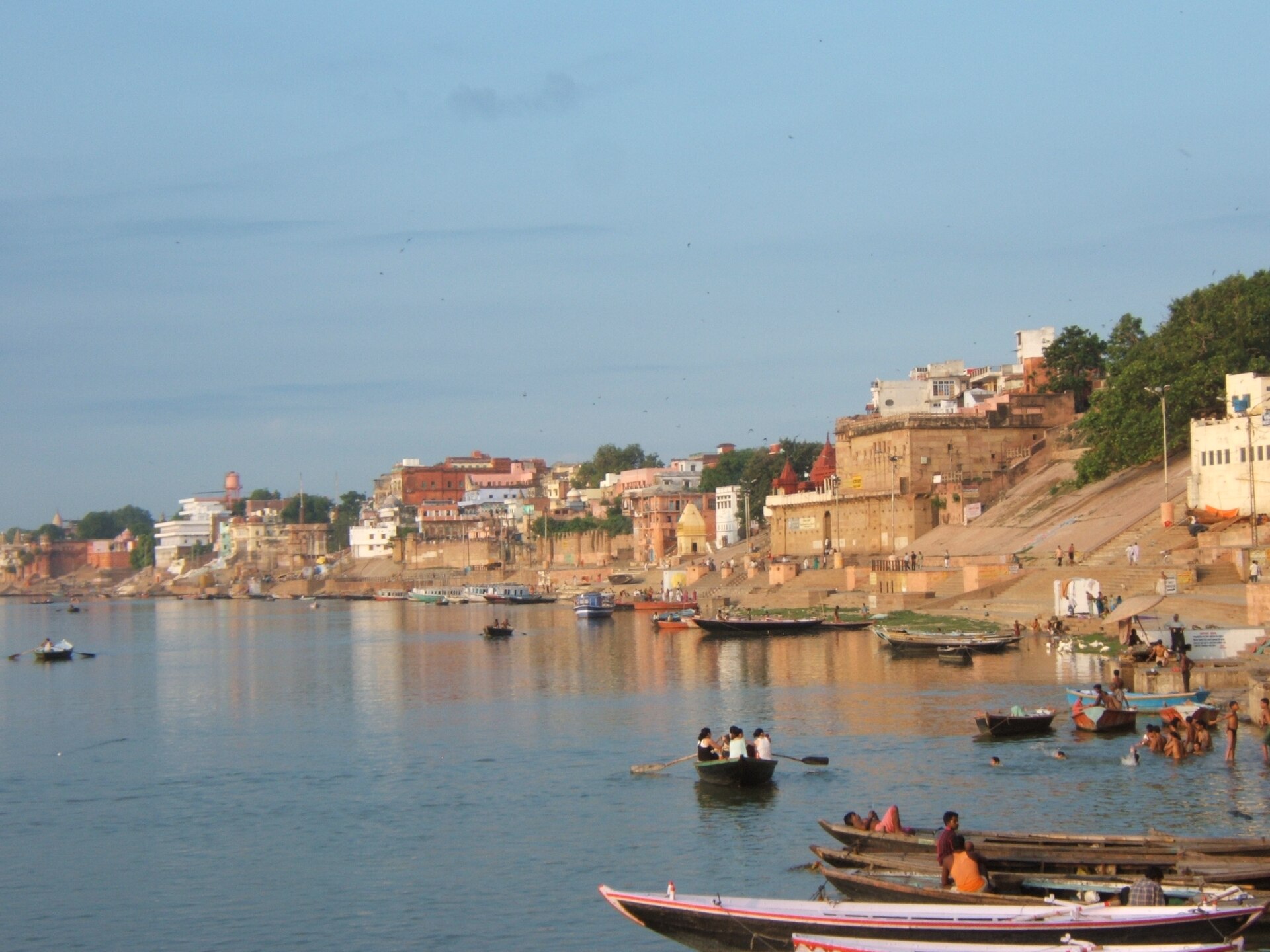
The city belongs to dawn. On the water before first light, you watch Varanasi wake facing the rising sun — priests in meditation, wrestlers at their akharaAkharaA traditional wrestling gymnasium, where pehlwani wrestlers train in an earthen pit under a shared regime of exercise, diet and abstinence.Read in the glossary exercises, the ghatsGhatA flight of steps leading down to a river or tank, used for bathing, worship and cremation.Read in the glossary turning gold one by one. This single boat ride, taken quietly, is worth more than a full day of monument visits.
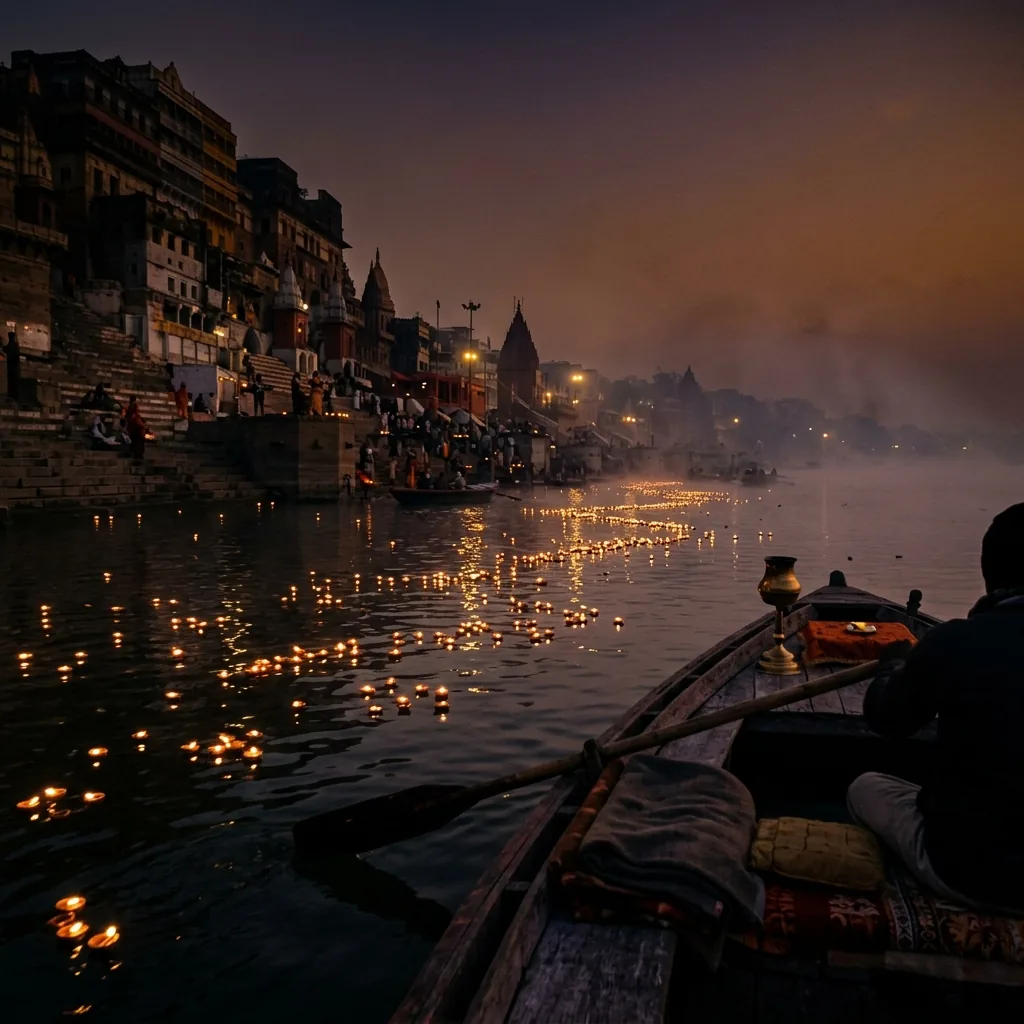
Evening brings the Ganga aarti at Dashashwamedh Ghat — fire, incense, and Sanskrit verse performed to the river itself. See it once from the water and once from within the crowd; they are different ceremonies. Between the two, the old city's lanes hold everything else: the Vishwanath temple corridor, silk weavers at their looms, and lassiLassiA drink of whipped yoghurt, served either salted or sweetened, and in Punjab often thick enough to need a spoon.Read in the glossary served in clay cups from shops without names.
On sensitivity
The cremation ghats ask something of visitors. Photography is a violation, distance is respect, and the right guide makes the difference between voyeurism and understanding — Manikarnika witnessed properly is not morbid but clarifying, which is exactly how the city intends it.
We pair Varanasi with a guide who grew up on the ghats and reads the city's rituals from the inside. Approached this way — unhurried, on its own terms — Varanasi becomes what it has been for three millennia: not a destination, but an encounter.
Questions, Answered
What is the best time of day to experience Varanasi?
Dawn. A boat on the Ganges before sunrise shows the city waking through its rituals — the most profound experience Varanasi offers. Evening belongs to the Ganga aarti fire ceremony at Dashashwamedh Ghat.
Is it appropriate to visit the cremation ghats in Varanasi?
Yes, if done respectfully — no photography, a quiet presence, and ideally a knowledgeable local guide. Cremation at Manikarnika Ghat is a sacred public rite, and respectful witness is part of the city's tradition.
Journeys That Take You There
Read Next