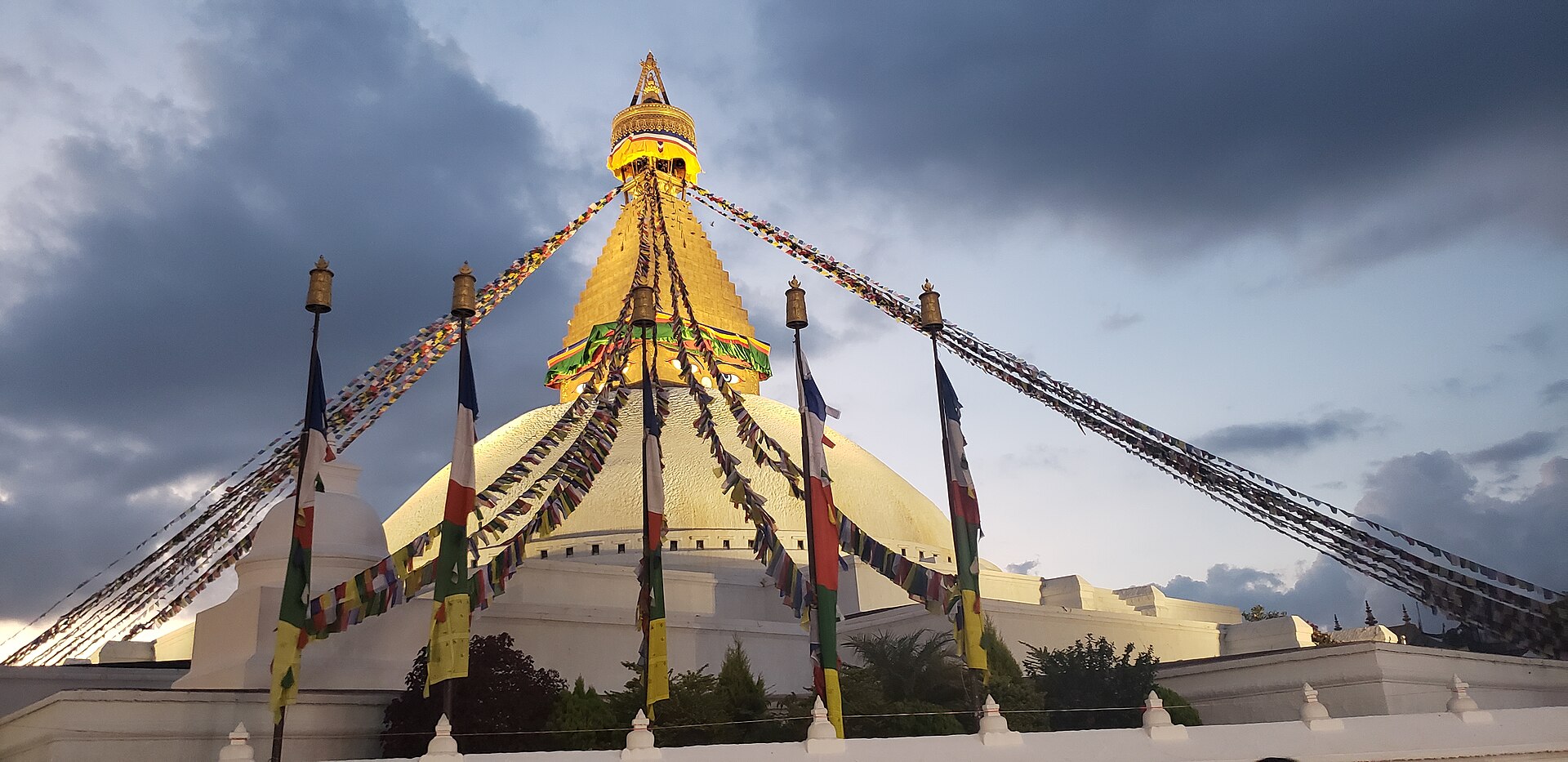
Boudhanath's white dome and gilded spire have been the centre of Tibetan Buddhist life in the Kathmandu Valley for centuries, and the settlement around it grew again after 1959, when Tibetan refugees arrived in numbers.
The practice to understand is kora: pilgrims walk clockwise around the base, turning prayer wheels, at dawn and again at dusk. Monasteries ring the square behind the shopfronts. It is a working devotional site that happens to be a monument, and the difference shows at six in the morning.
The 2015 earthquake cracked the spire badly. It was rebuilt largely by the Buddhist community itself and reconsecrated in 2016 — recent work, done by the people who use it.
Visiting Well
- Dawn or dusk for kora, when the circuit fills and the light is low.
- Walk clockwise, as everyone else does — it is the one piece of etiquette that matters here.
- The rooftop cafés around the square give the full view of the dome; worth an hour.
How Elevated India Arranges It
We walk the kora at dusk with a guide who can explain what is being recited, then take a rooftop above the square as the butter lamps are lit around the base.
Questions, Answered
What is kora at Boudhanath?
The clockwise circumambulation of the stupa performed by pilgrims, usually while turning prayer wheels or reciting mantra. It is busiest and most atmospheric at dawn and dusk.
Was Boudhanath damaged in the 2015 earthquake?
Yes — the spire was seriously damaged. It was rebuilt largely through funds and labour from the Buddhist community and reconsecrated in November 2016.
Journeys That Take You There
Golden Triangle with Kathmandu
12 Days / 11 Nights
Golden Triangle & the Himalayan Kingdom
16 Days / 15 Nights
Explore the destination guide: Kathmandu, Nepal ↗