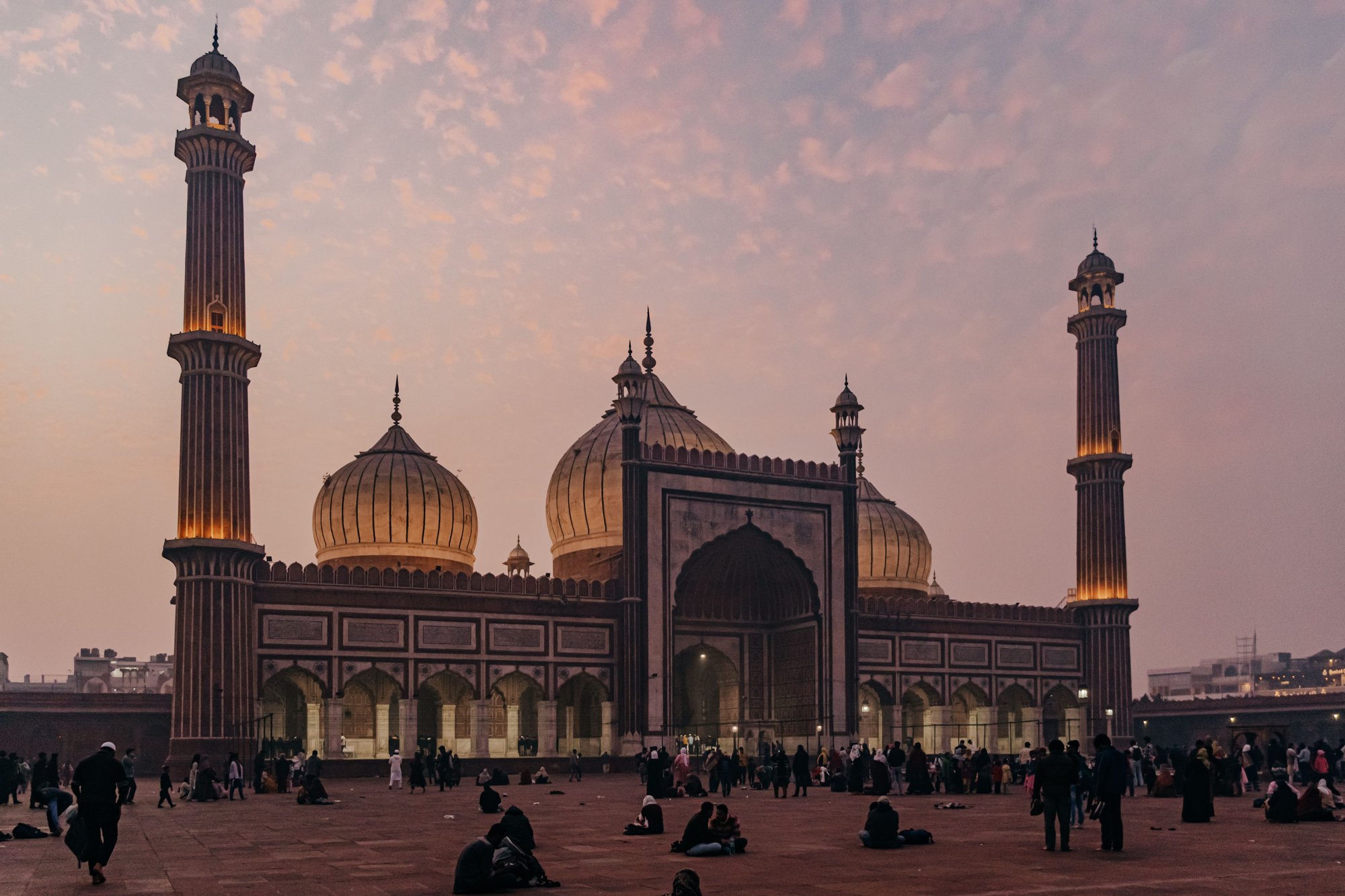
Shah Jahan finished the Jama Masjid in 1656, six years after the Red Fort and five hundred metres from it, on a natural rise so that the mosque would stand above the city he had just built. Five thousand workers, red sandstone and white marble, three domes, two minarets of forty metres, and a courtyard that holds twenty-five thousand people at prayer.
It is a working mosque, not a monument, and the difference is the whole experience. The courtyard is full of people doing ordinary things between prayers — sitting, talking, feeding pigeons, sleeping in the shade of the arcades — and at dusk, when the lamps come on and the domes take the last of the light, it is the most atmospheric place in Delhi.
Visiting Well
- Closed to visitors during the five prayer times; the gaps between them are generous and easily planned around.
- The southern minaret can be climbed for the finest rooftop view in Delhi — narrow, steep, and worth it.
- Shoulders and knees covered for everyone; shoes left at the gate. Robes are available at the entrance if needed.
How Elevated India Arranges It
We time the visit for late afternoon so the courtyard is at its best as the light goes, then walk down into Chandni Chowk for the food lanes rather than driving out — the descent from the eastern steps into the bazaar is the point at which Old Delhi makes sense.
Questions, Answered
Can non-Muslims visit the Jama Masjid?
Yes, outside the five daily prayer times. Shoulders and knees must be covered and shoes are left at the gate; robes are provided at the entrance. There is a camera charge, and a separate charge for the minaret climb.
What is the best time to visit the Jama Masjid?
Late afternoon into dusk, when the light is on the domes and the courtyard fills. Early morning is quieter but flatter. Friday midday is busiest and best avoided by visitors.
Journeys That Take You There
Explore the destination guide: Delhi, North India ↗