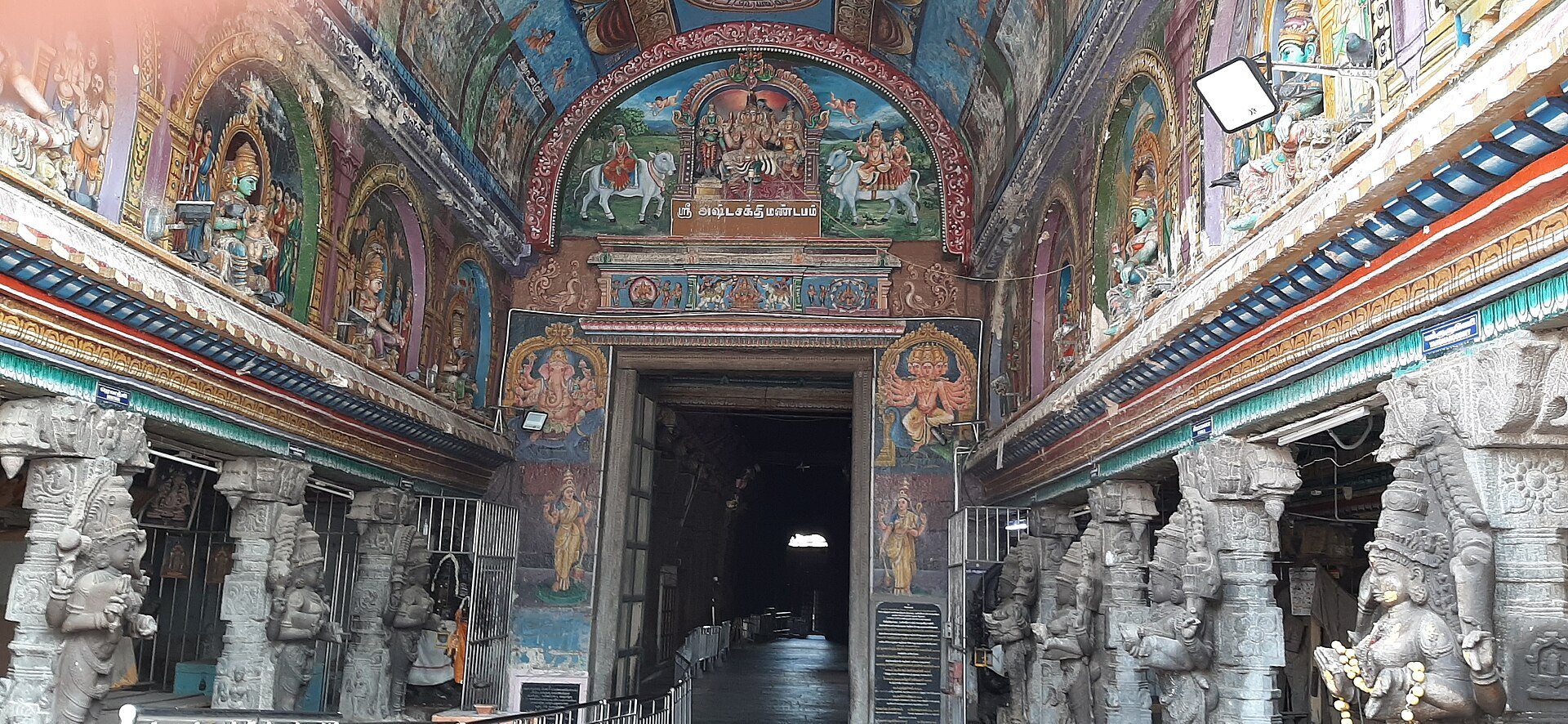
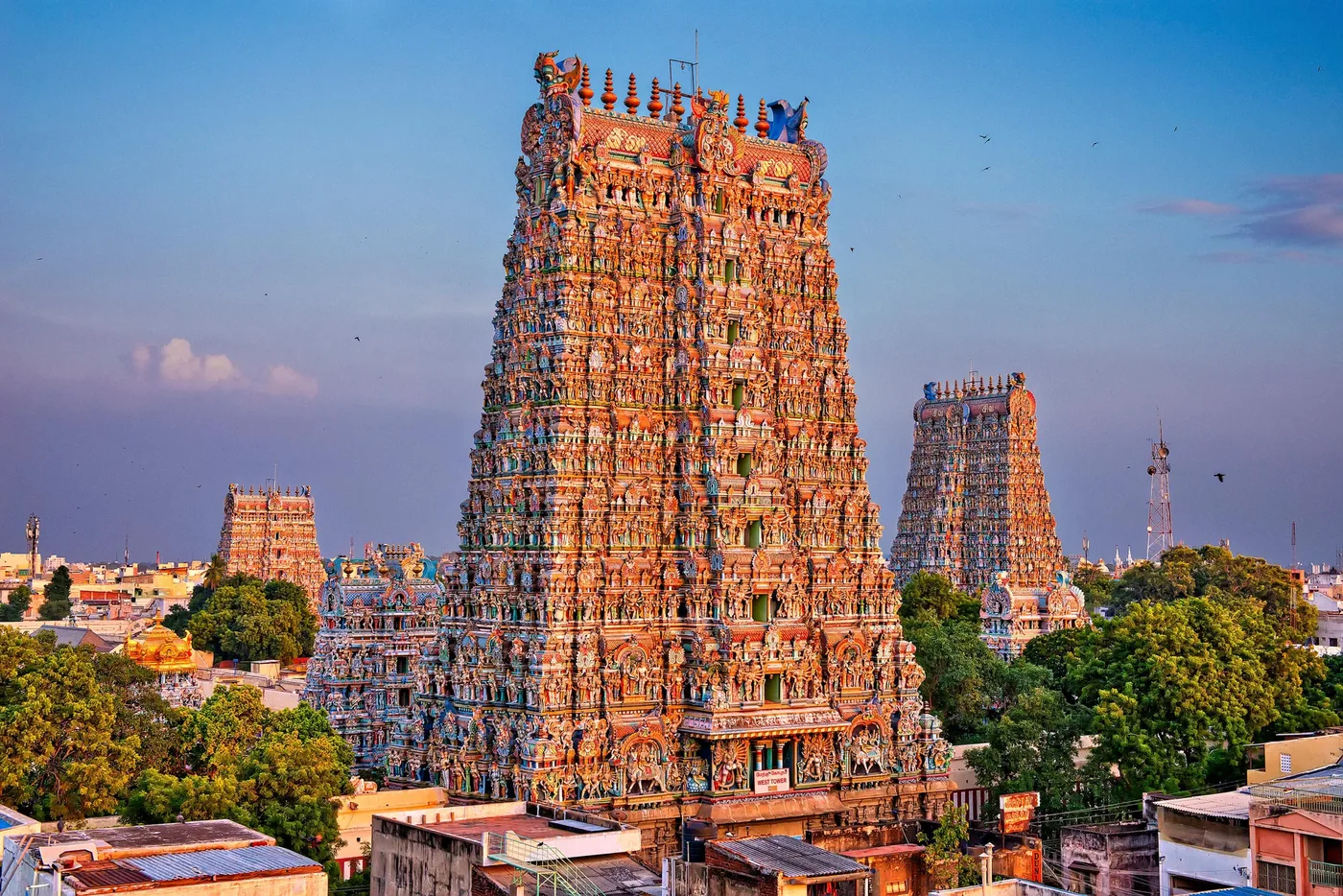
Titelfoto: Ashta Sakthi Mandapam, Madurai Meenakshi Temple, by Sumathy1959 (CC0), via Wikimedia Commons
There is a version of this article that is easy to write and almost entirely wrong. It says cover your shoulders, remove your shoes, ask before photographing people, be respectful. All of that is true and none of it is useful, because the actual rules in India are set temple by temple and they contradict each other in ways that catch out people who have done their reading.
At a gurdwara you cover your head. At Tirumala, the richest and busiest temple in the country, covering your head is expressly prohibited — caps, hats and turbans are on the temple board's own don't list. A visitor who has learned the first rule will do precisely the wrong thing at the second.
So this piece goes to sources. Temple trusts and devaswom boards where they publish, state tourism departments where they do not, court judgments where a matter has been litigated, and the Archaeological Survey's own Rules for the photography question. Where we could not verify something, we say so. There is a lot of confident writing on this subject and a surprising amount of it has nothing behind it.
Who may go in: the rule is specific, not regional
The generalisation you will hear is that Hindu temples in South India bar non-Hindus. It is wrong, and the way it is wrong matters.
Start with the law, because it is routinely misdescribed. India's temple-entry statutes — the Kerala Act of 1965, the Maharashtra Act of 1956, and Article 25(2)(b) of the Constitution — throw temples open to all classes and sections of Hindus. They abolished caste exclusion. They confer no right of entry on anybody who is not Hindu. The Madras High Court added in 2024 that temples are not covered by Article 15. So the question of non-Hindu entry is not a civil-rights question in Indian law at all; it is a matter for each temple's own administration.
A quiet definitional point, which is a statutory one rather than a theological one: section 2 of the Kerala Act provides that 'Hindu' includes a person professing the Buddhist, Sikh or Jaina religion. For the purposes of that statute, a Sikh or JainJainA follower of Jainism, an ancient Indian religion whose central commitment is non-violence towards every living thing.Read in the glossary visitor is a Hindu. It does not automatically bind any particular temple's admission practice, but it is worth knowing.
Now the specific temples, which is what you actually need.
The temples that bar non-Hindus, and the ones that do not
Jagannath, Puri. The Shree Jagannath Temple Administration's own FAQ answers it in four words: only Hindus are allowed inside the temple. It applies to the whole complex, not just the sanctum, and we could find no declaration-of-faith route of any kind. Two recent changes matter for a visitor: smartphones have been banned for everyone inside the temple since 1 January 2023, including for police, with deposit arrangements at the gate; and a dress code became mandatory on 1 January 2024, barring shorts, torn jeans, skirts and sleeveless dresses, with fines.
One correction here, because it is repeated constantly. The Supreme Court did not order Puri opened to non-Hindus. In July 2018 it said only that the temple management may consider permitting visitors of every faith, subject to a dress code and a declaration. That is a suggestion to the temple, not a direction, and it was not acted on. Headlines at the time said otherwise and they were wrong.
Tamil Nadu. This is the most legally precise regime in the country and the one travel writing gets most wrong. In January 2024 the Madras High Court directed that boards be installed reading that non-Hindus are not allowed inside the temple after the kodimaram — the flagstaff — and that where a non-Hindu wishes to go further, the temple obtain a written undertaking that the visitor has faith in the deity and will follow the temple's customs, and record it in a register. The judgment reads as applying to all temples under the state's religious endowments department, not only to the temple before the court.
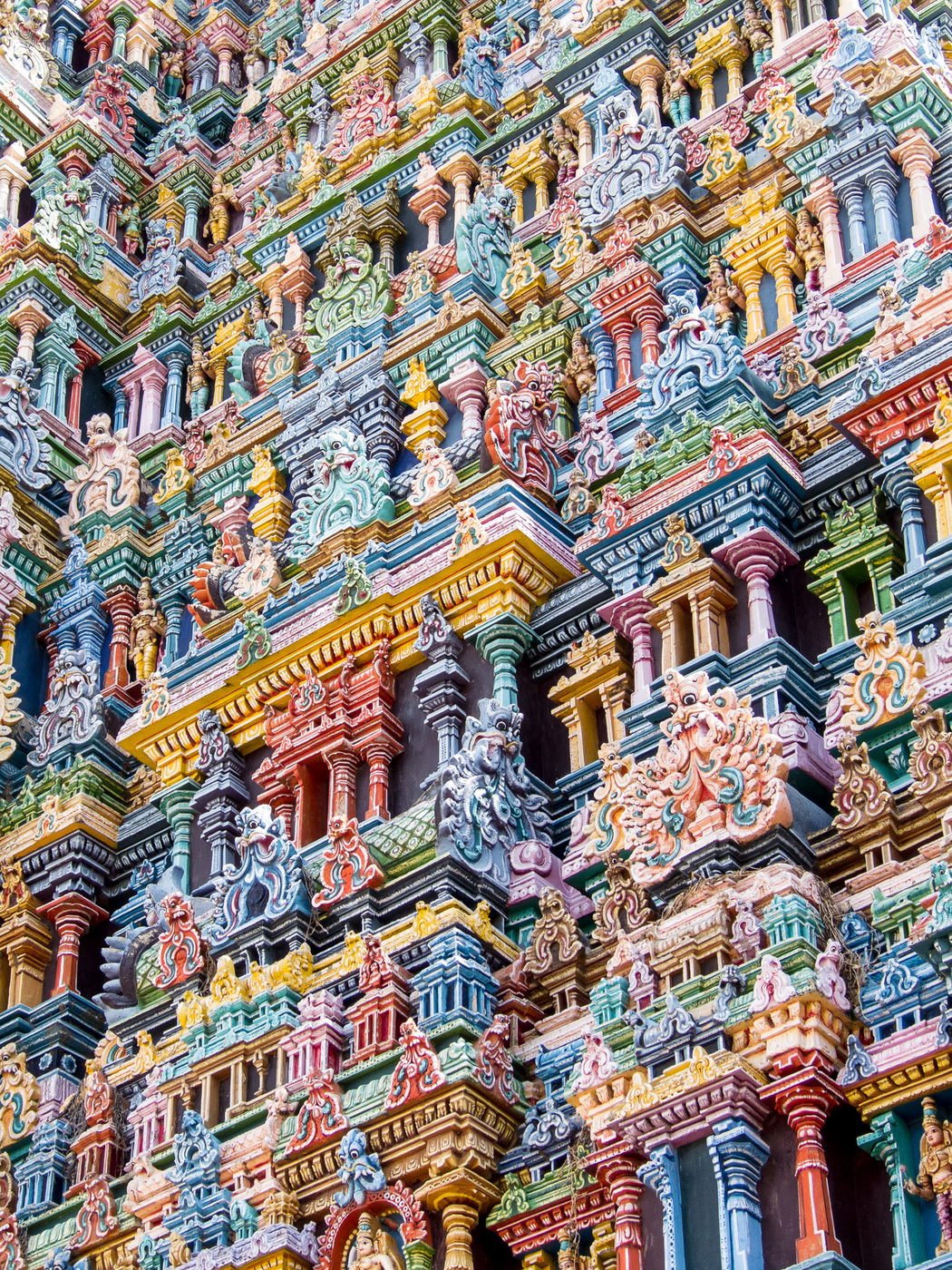
What that means in practice: the outer precinct of a great Tamil temple is open to you. The gopuramsGopuramThe monumental gateway tower of a South Indian temple, built in tiers and covered in painted sculpture.Read in the glossary, the corridors, the tanks, the pillared halls — all of it, up to the flagstaff. At Meenakshi in Madurai the undertaking-and-register system was already in operation before the court ordered it generally. So the honest position is a positional rule with a documented route past it, not a wholesale exclusion. We would add that we have not been able to verify whether that order has since been appealed or how far the signage has actually been installed, and we would check locally before relying on the undertaking route.
Kerala's two. Sree Padmanabhaswamy in Thiruvananthapuram admits Hindus only, per Kerala Tourism — but it has a documented individual-permission route. The singer K. J. Yesudas, a Christian, was admitted after writing to the temple stating that he is a Hindu believer and follows the temple's rituals. Guruvayur is stricter. The cleanest evidence of that is the same man: eight years after being admitted to Padmanabhaswamy, his plea to enter Guruvayur was still unresolved, and in March 2025 the Sivagiri Mutt announced a campaign seeking entry for non-Hindu believers. We should say plainly that Guruvayur's own site could not be reached and the rules circulating about it come from a site that disclaims official status.
Lingaraj, Bhubaneswar. Hindus only — but Odisha Tourism documents a purpose-built viewing platform outside the complex giving a clear sight of the architecture. If you are told there is nothing to be done, that is not true; there is a designated place to stand.
And the one that will surprise you. Kashi Vishwanath in Varanasi — the principal temple of the holiest city in Hinduism — is not barred to non-Hindus. The trust publishes a foreigner ticket booking process: attend the helpdesk with your original passport and photocopies of passport and visa, pay ₹600, and collect a darshan ticket, prasadam and an ang-vastram. No declaration of religion appears anywhere in the process. The trust's FAQ also states, in writing, that there is no dress code, only advice to dress decently. Most visitors assume precisely the opposite about both.
Tirumala has used a declaration form for non-Hindu visitors since 2012, requiring a signed undertaking of faith in the deity. We could not confirm that it is still administered in the same form today; the board's current pages do not mention it.
Dress: what is actually published
Very few temples publish a written dress code. Those that do are worth knowing because they are the ones that will turn you away.
Padmanabhaswamy is the strictest and the most practically solved. Men must wear a mundu or dhoti reaching the heels and may not wear shirts of any kind. Women wear a sariSariAn unstitched length of cloth, several metres long, draped to form a garment — the principal traditional dress of Indian women.Read in the glossary, mundum neriyathum, skirt and blouse, or half sari. The temple rents dhotis at the entrance, and wearing the dhoti over trousers or churidar is now permitted. So the requirement is severe and the temple has already dealt with it for you.
Tirumala publishes dhoti or pyjamas with an upper cloth for men, and sari, half-sari or churidar with an upper cloth for women. Swaminarayan Akshardham in Delhi is the most explicit of all: tops must cover shoulders, chest, back and upper arms, lower wear must extend below the knee, and if you arrive wrong they will hire you a sarong for ₹100 rather than turn you away. Jagannath Puri's code came in on 1 January 2024. Siddhivinayak in Mumbai announced one in January 2025.
What we will not tell you is that men must remove their shirts across South India. That requirement is published and verifiable at Padmanabhaswamy. The wider practice exists, but we could not find a devaswom or endowments department publishing it, and we are not going to generalise a bare-chest rule across two states on the strength of travel blogs.
You will also read that Tamil Nadu has had a legally mandated temple dress code since 2016. A Madras High Court single judge did prescribe one in December 2015. It was stayed. Its current status is unclear and we could not establish it. Individual temples set their own rules; that is the safe assumption.
The practical answer, for a visitor who does not want to think about it: long trousers or a long skirt, shoulders covered, nothing with writing on it, and a scarf in the bag. That clears every published code in the country except Padmanabhaswamy's, which rents you the solution at the door.
The camera: the law is not what people think
This is the part of the subject where almost everything in circulation is wrong, and where the truth is more permissive than visitors expect in one direction and much less in another.
At monuments protected by the Archaeological Survey of India, still photography is free and lawful by default. Rule 41(1) of the 1959 Rules says any person may copy a protected monument, and 'copying' is defined in Rule 2(b) to include photography. You do not need a permit, and there is no still-camera fee.
What does require written permission is Rule 41(2): a camera stand, stool, chair, table, large drawing board, easel, scaffolding, or artificial light other than a flash synchronised with the exposure. The penalty under Rule 48 is a fine of up to ₹500. So the offence at an Indian monument is almost never the camera. It is the tripod.
Only two centrally protected sites restrict ordinary photography: the Ajanta Caves and Leh Palace. That is from a NITI Aayog review of visitor facilities at ticketed monuments, and it is the cleanest answer available to a question that usually gets a vague one.
Video is different. Rule 42 bars filming at a protected monument without a licence, but Rule 42(2) carves out an exception for the ordinary visitor: video filming from the exterior of a protected monument for non-commercial purposes, on payment of ₹25, provided there is no cast and no stand. That ₹25 is the camera fee you have heard about, and it is for video only.
Commercial shoots are a different world and the fees in circulation conflict. Rule 44 sets ₹1,00,000 a day for a World Heritage monument and ₹50,000 a day for others, with refundable security on top, and Form IX three months in advance. The ASI's Agra Circle publishes ₹5,000 a day. Those cannot both be right; the circle figure appears to predate an amendment. Any production should confirm with the Director General's office rather than with a circle page.
ASI site museums run a separate policy: handheld photography free, selfie sticks and monopods prohibited by name, tripods only by written permission requested fifteen days ahead, and ₹750 per photograph for commercial use.
The Taj Mahal, which wrecks more itineraries than anything else on this list: photography is prohibited inside the main mausoleum; the mausoleum itself is a ₹200 supplement on top of the entry ticket for everyone; tripods need ASI permission; drones are prohibited inside and around it; phone chargers are on the banned-items list; and it is closed on Fridays.
Living temples where the camera does not come in at all
At several of the most important shrines the photography question does not arise, because nothing electronic gets past the gate.
Kashi Vishwanath prohibits any electronic or non-electronic gadget — the trust's FAQ names pens explicitly — and provides free lockers at the Mandir Chauk and at three Yatri Suvidha Kendras and the helpdesk. Jagannath Puri bans smartphones for everyone. The Mahabodhi Temple at Bodh Gaya prohibits mobiles, cameras and electronic gadgets, per Bihar Tourism. Akshardham Delhi takes phones, cameras, USB drives, music devices, umbrellas and luggage into a complimentary cloakroom, and screens you through a metal detector. On the Vaishno Devi track, video cameras and mobile phones are not permitted at all, with free cloakrooms at the queue complex and at Sridhar Bhawan.
This is a better outcome than it sounds. The temples that take your phone are the temples where you will actually look at something.
The Golden Temple sits in a different place, and the distinction is worth getting right. Video is banned and now actively policed — the Shiromani Gurdwara Parbandhak Committee installed boards after a visitor filmed a headstand on the parikarma, and has put extra staff and HD cameras on it. But the committee's own secretary has said that a few family photographs for the sake of a memory, without creating chaos, are acceptable. So: a quiet still is fine. Video, vlogging and anything performative is not.
Drones: the short answer is no
People plan around the Drone Rules of 2021 — the weight categories, the green and yellow and red zones, the nano exemption below 250 grams — and they are planning around the wrong instrument.
The operative bar for a visitor is a customs one. DGFT Notification 54/2015-20, dated 9 February 2022, prohibits the import of drones into India in completely built-up, semi-knocked-down or completely knocked-down form. The exceptions are for government R&D bodies, recognised educational and research institutions, licensed drone manufacturers, and defence and security. Components are free to import; drones are not.
A tourist cannot lawfully bring a drone into India. Everything downstream of that — the airspace map at the DGCA's digital sky portal, the 400-foot green-zone ceiling, the nano exemption from registration — is academic for a visitor.
And even for someone operating lawfully, there is a second layer: district magistrates issue blanket drone prohibitions across whole districts, enforceable under the Bharatiya Nagarik Suraksha Sanhita, 2023. Amritsar's, issued on 10 May 2025, covers the entire district until further orders. The Taj prohibits drones inside and around it. Akshardham prohibits them. Assume no, and plan the trip without one.
Photographing people, which has almost no law behind it
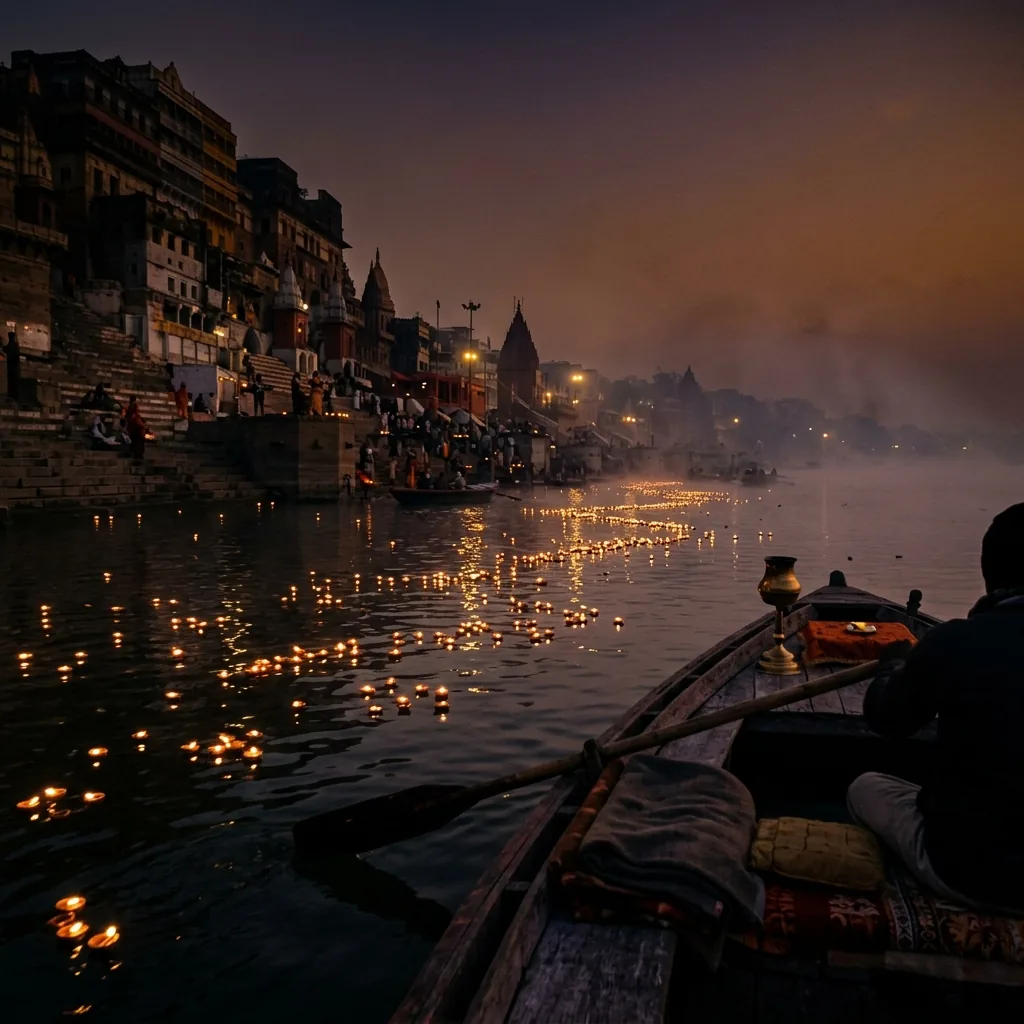
The most-repeated rule in this subject is that photographing cremations at Varanasi's burning ghatsGhatA flight of steps leading down to a river or tank, used for bathing, worship and cremation.Read in the glossary is illegal. We went looking for the statute, the notification, the district order, the official signage policy. There is none that we could find.
That does not make it acceptable. It makes it a social prohibition rather than a legal one, enforced by the Dom families who conduct the cremations, by mourners, and by guides — and that is both a truer description and, we think, a more respectful one. You are not being stopped by a regulation. You are being stopped by the family of the person on the pyre.
The nearest documented precedent for anything adjacent is an arrest of four people in July 2014 for filming the Ganga AartiAartiA Hindu act of worship in which lamps of flame are circled before a deity or a sacred river, accompanied by bells, conch and chant.Read in the glossary at Dashashwamedh Ghat without permission — an organised filming of a ceremony, not a visitor photographing mourners, and we could not establish the provision relied on.
The working rule we give guests is simpler than any of this. Photograph buildings freely where the law allows it. Photograph people only after asking, and accept a no without negotiating. At Manikarnika and Harishchandra, put the camera away before you arrive, not after someone objects.
Shoes, leather, and what to carry
Shoes come off everywhere, and the good news is that the major shrines have solved it. Gurdwaras run a staffed shoe counter, the jorha ghar, free. Vaishno Devi, Kashi Vishwanath and Akshardham all publish free cloakrooms or lockers. Tirumala's instruction is worth reading carefully: do not wear footwear in and around the premises — the barefoot zone there is wide, not just the threshold.
At smaller temples there is usually an informal attendant who expects a small tip and gives no receipt. The Vaishno Devi board's own advice applies everywhere: do not deposit cash, jewellery, valuables or electronics. Arrive carrying as little as you can.
On leather, we are going to contradict the standard advice. It is verifiably prohibited at Jain pilgrimage sites — nothing made of leather or fur may be taken up Shatrunjaya at Palitana — and belts are among the items deposited at Vaishno Devi. We could not find a single Hindu temple publishing a general prohibition on leather bags, belts or camera straps. Treat it as a question to ask at the gate rather than a rule to assume, and do not wear a leather belt to a Jain temple.
Socks on hot stone, the single most-given piece of practical advice about Indian temples, has no documented basis either way at any site we could check. In a Rajasthani courtyard in May it is sound practical sense. At some sanctums bare feet are expected. Treat it as a suggestion, not a rule.
Sabarimala, which is not settled
The question of women of menstruating age at Sabarimala is the one subject here where a confident sentence in either direction will be wrong.
The chain, as it stands. In September 2018 a five-judge Constitution Bench held by four to one that excluding women aged ten to fifty was unconstitutional, striking down the relevant rule. In November 2019 a review bench, by three to two, kept the review petitions pending and referred the underlying constitutional questions to a larger bench — and crucially did not stay the 2018 judgment, stating it would be enforced until the review was decided. A nine-judge bench heard the reference between April and May 2026 and reserved judgment on 14 May 2026. The Chief Justice indicated in August 2026 that it might come by the first week of October. As of early October 2026 we have found no report that it has been delivered.
So the accurate position is: the 2018 judgment stands and has never been stayed; the questions behind it are before a nine-judge bench that has reserved; and the practical position on the ground has not tracked the 2018 judgment. We could not verify the Travancore Devaswom Board's current stated position or whether the mandatory virtual queue booking carries any age condition, and we are not going to guess at either. Anyone planning around Sabarimala should check the position close to the date.
One counter-intuitive case worth knowing, because it runs the other way. At Kamakhya in Guwahati, during Ambubachi, the doors close to everyone — because the goddess is held to be menstruating. The temple is not excluding women. It is observing the same thing it is said to observe.
Beyond Hindu temples
Gurdwaras have the clearest published code of any Indian institution, and it is the most welcoming. The Sikh Rehat Maryada, the Shiromani Committee's own code of conduct, states that there is no prohibition on a person of any nationality, religion or caste visiting a gurdwara, that shoes are left outside, that heads are covered, and that in the langarLangarThe Sikh community kitchen, which serves a free vegetarian meal to any visitor regardless of faith, caste or means.Read in the glossary there should be no discrimination based on nationality, colour, caste or faith, with distribution equal for all, Sikh or non-Sikh. If you have read that non-Sikhs should not eat in the langar, the code says the opposite in terms.
One thing visitors get wrong: the Rehat Maryada bars having tobacco in your possession on the premises. Not smoking it — carrying it. A packet of cigarettes in the bag is the problem.
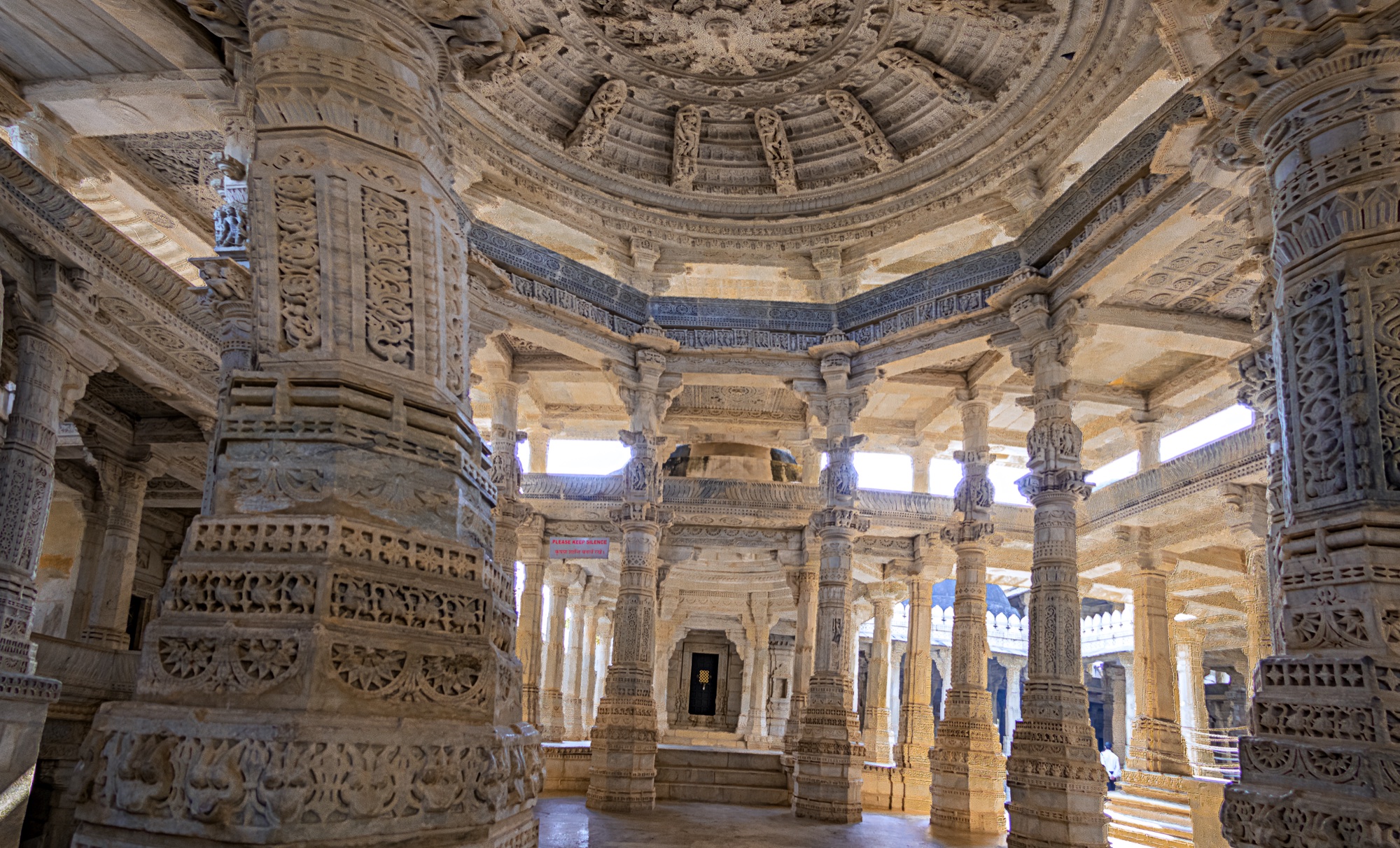
Jain temples. The documented rules are at Shatrunjaya: no leather or fur up the hill, nobody stays overnight, no pilgrimage in the rainy season so access runs roughly October to June, the ascent on foot or by palanquin, everyone down before sunset, and visitors are told to ask about photography rather than assume. On wider questions — non-Jain entry, menstruation rules — the public record is thin and we are not going to fill it.
Mosques. We could find no official source for the camera charge at Delhi's Jama Masjid, which is not an ASI monument and not ASI-administered. It is an unpublished gate charge with no published schedule, so we will not give you a figure.
Buddhist monasteries in Ladakh and Sikkim: nothing official on photography fees or conduct could be found for any gompa. The one solid published rule is at Bodh Gaya, where the Mahabodhi Temple prohibits mobiles, cameras and electronic gadgets outright. Note separately that parts of Ladakh and Sikkim sit inside Protected Area Permit regimes, which is a different question from etiquette.
Parsi fire temples. Entry is restricted to Zoroastrians by community practice. We could not find a statute, a trust bye-law or any official Zoroastrian institutional source documenting it, and we are not going to cite a rule that nobody has published.
Money, and the thing the temples themselves say
The best advice about donation pressure at Indian temples does not come from a foreign writer. It comes from inside the institution.
The Tirumala Tirupati Devasthanams publishes a dos-and-don'ts list on its own site that includes: deposit your offerings only in the hundi; do not approach touts for accommodation and darshan; do not carry much jewellery and cash; do not throw away the prasadam and teertham given to you; and wait for your turn rather than rushing. That is a temple board telling its own pilgrims not to pay anybody except the collection box. A visitor can follow it without any sense of being ungenerous.
On special darshan tickets, the structure is real and the prices in circulation are not reliable. We can verify Kashi Vishwanath's: ₹300 for Sugam Darshan, where a shastri takes you near the sanctum without queueing, and ₹600 for the foreign visitor ticket including prasadam. The widely quoted Tirupati figure we could not confirm from any official source, so we are not printing it. Describe the queue structure to your guide and ask on the day.
The seven things actually worth remembering
Cover your head at a gurdwara. Uncover it at Tirumala — caps, hats and turbans are explicitly prohibited there, and full-length prostration inside the temple is too.
In a Tamil temple, the flagstaff is the line. Everything up to it is open to you.
Kashi Vishwanath will admit you and take your pen. Puri will not admit you at all.
Still photographs at monuments are free and legal. Your tripod is the offence. Inside the Taj's mausoleum, nothing at all.
Leave the drone at home. You cannot legally bring it into the country.
At the ghats, the camera stays in the bag. Not because of a law — because of the family standing there.
And when you do not know, ask. A visitor who asks is treated as a guest everywhere in India. A visitor who assumes is treated as a problem, and usually deserves to be.
Reisen, die Sie dorthin bringen
Weiterlesen