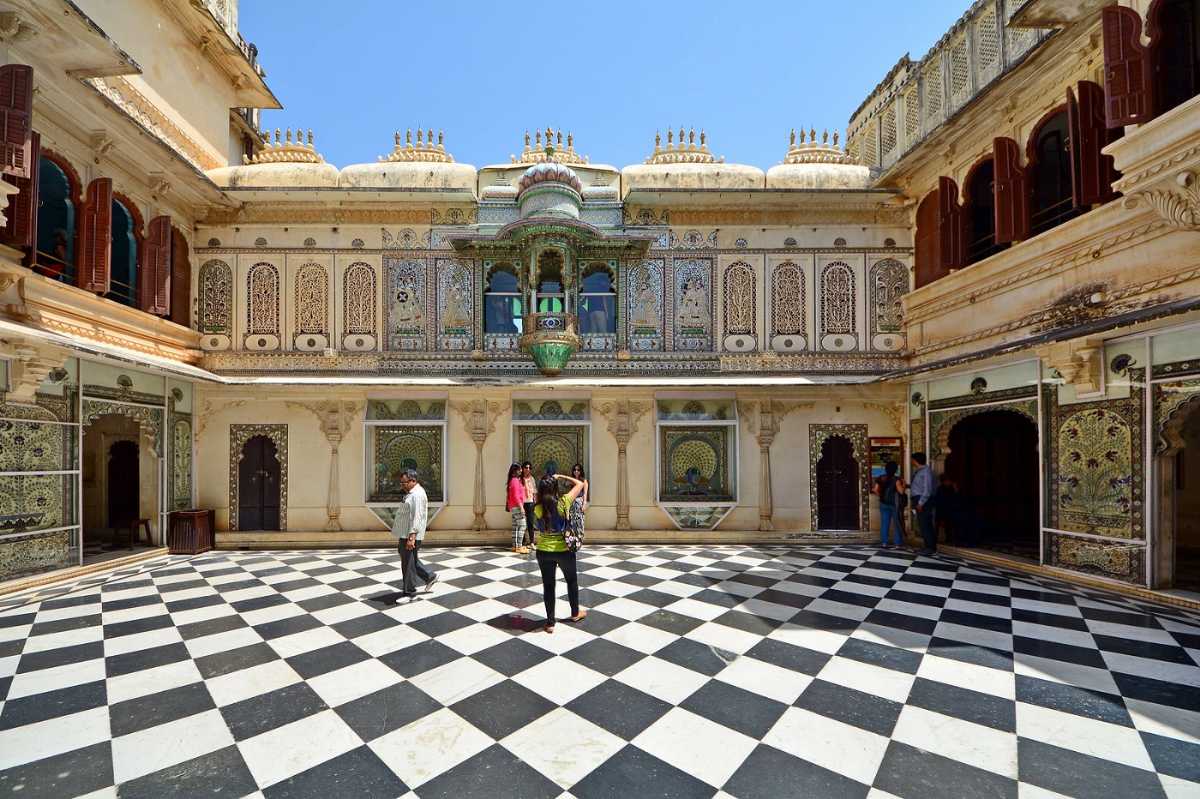
Titelfoto: Illustrative image, IndiaMedica
Most of the people we look after come to India for something they want: a palace on a lake, a tiger at dawn, a festival they have wanted to see for twenty years. Some people come to India for something they need: a cardiac surgeon, a joint replacement, a transplant team.
Those journeys deserve everything we bring to the others, and more. So our founder, Nikhil Sharma, has opened a sister house for them: IndiaMedica.
Why a travel house, of all things
The best hospitals in India give world-class clinical care. What a family travelling for treatment usually lacks is everything around it — the person at the airport, a calm place to stay that suits their food and their budget, someone who speaks their language, an answer at three in the morning, and a clear explanation of what the hospital, the visa office and the law actually require.
That is not medicine. It is hospitality, and hospitality is the thing this house does every day. At Elevated India we run the ground ourselves rather than handing guests to strangers. IndiaMedica is built on the same instinct: one case manager, from the first report to the flight home, and no hand-offs to people the family has never met.
There is a line we will not blur. Medicine is the treating doctors' job, entirely. IndiaMedica does not give medical advice, does not promise outcomes and does not decide when anyone is fit to fly. It plans around the doctors, never the other way round.
The same refusal to invent anything
This Journal has one rule above the others: we do not publish what we cannot stand behind. IndiaMedica keeps it too, and in medical travel it matters more.
There are no testimonials, success rates, patient counts or price tables on the site, because none of those can be stated honestly in general. Every hospital accreditation it shows — NABH or JCI — carries the source it was checked against and the date it was checked, and a badge older than a year stops showing until it is re-checked. The site says plainly how IndiaMedica is paid: hospitals pay it a referral fee, which never changes the patient's price and never decides which hospital it suggests.
It is also plain about the law. Under India's transplant rules a foreign patient must travel with a near-relative donor whose relationship is certified by their embassy; IndiaMedica never sources or introduces donors. Commercial surrogacy is banned in India and foreign nationals are not eligible, so it does not offer it. Those are not small print. They are the reason a family can trust everything else.
Current rules, not copied ones
A good deal of what is written about medical travel to India is out of date. The clearest example is the visa. The official Indian e-Visa portal now states that the e-Medical visa is valid for 365 days from arrival with multiple entries, and that up to two e-Medical Attendant visas can be granted per patient. Older guidance describing a 60-day, triple-entry visa is still copied across the internet. IndiaMedica publishes the current rule, links the government source and dates it.
We wrote about the same discipline for ordinary travellers in our piece on what you actually need to enter India. The principle is identical: check the primary source, say when you checked it, and say so when something cannot be confirmed.
Where the two houses meet
Most of the time they will not. A patient's journey belongs to their doctors and their case manager.
But some families, once the treating team allows it, want the weeks after discharge to be somewhere restful rather than a hotel room near a hospital — the backwaters of Kerala, a heritage house in Rajasthan, a quiet hill station. Others travel as a family, and the people who are not the patient need looking after too. Where that is wanted, Elevated India can plan it, with the same care as any of our journeys and always within the limits the doctors set.
And for our own guests: if a journey with us ever turns into a medical need, we can bring in IndiaMedica. That is what sister houses are for.
What IndiaMedica covers
Eleven treatment areas — cardiac care, orthopaedics and joint replacement, cancer care, organ transplant, fertility and IVF, neurosciences, bariatric surgery, cosmetic and reconstructive surgery, dental, eye care, and AyurvedaAyurvedaA traditional Indian system of medicine that treats health as a balance between three bodily humours, or doshas.Read in the glossary for wellness and supportive care. Medical hubs in Delhi NCR, Mumbai, Chennai, Bengaluru, Hyderabad, Kolkata, Ahmedabad, Jaipur and Kochi. And for each common condition, the treatment journey laid out stage by stage, the way our itineraries lay out a journey day by day — without the day counts, because those belong to the surgeon.
You can read it at indiamedica.com. If you are reading this because someone you love needs treatment, we are sorry for the reason, and we hope the house is useful.
Reisen, die Sie dorthin bringen

Weiterlesen