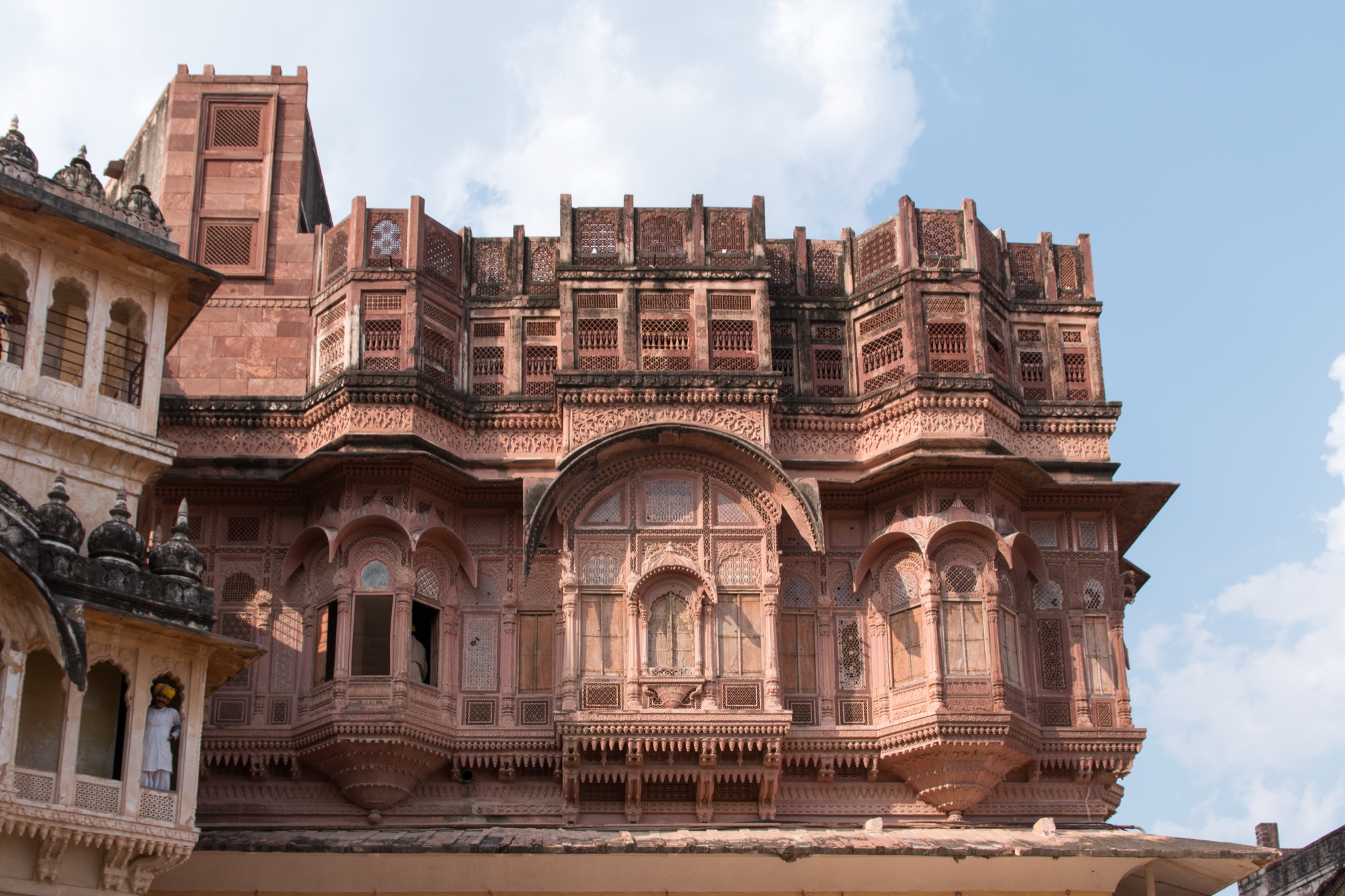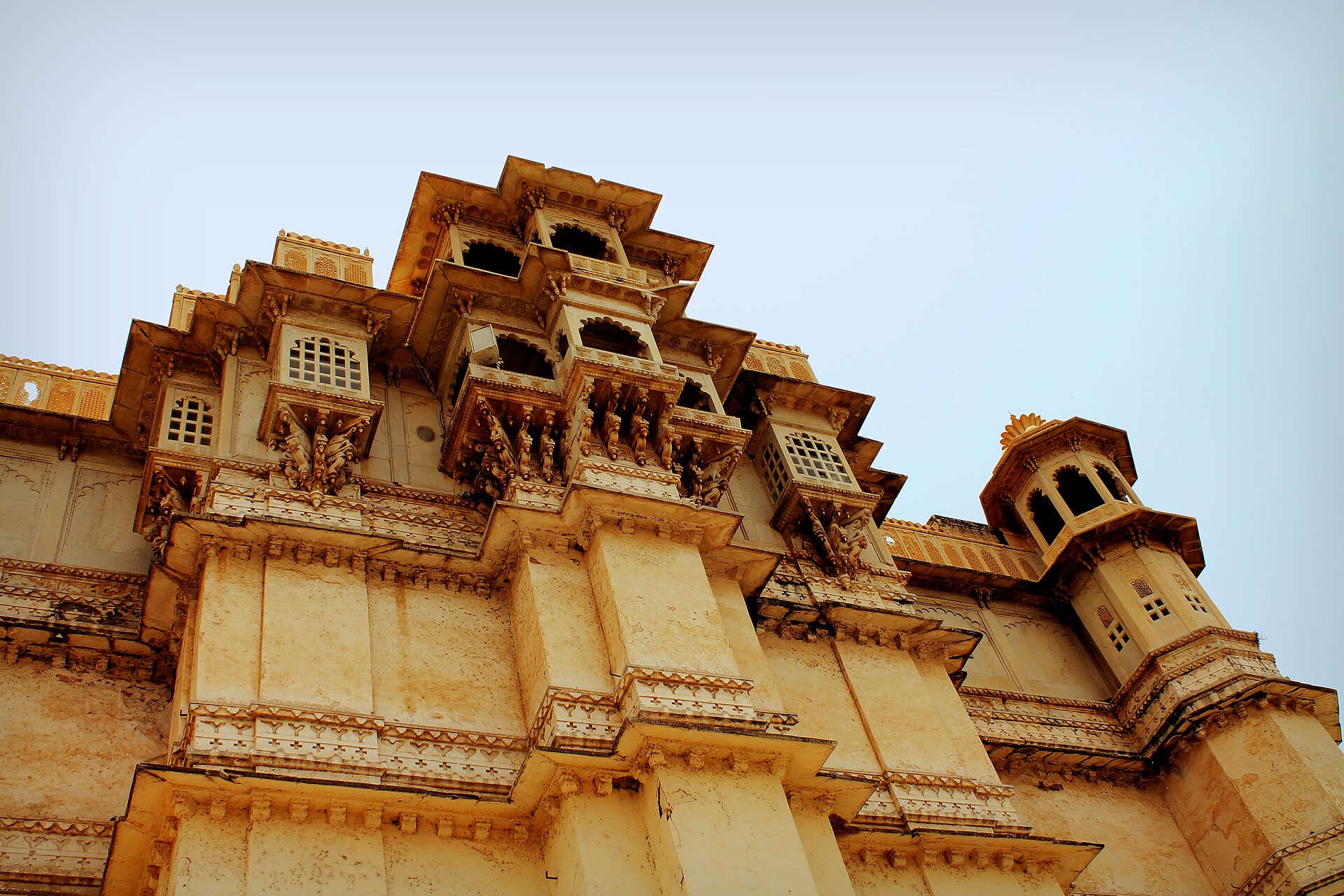
Fotografía de portada: Courtyard of Samode Haveli, Jaipur — CC BY 2.0, via Wikimedia Commons
Read four proposals for the same India trip and the word 'private' will appear in all four, attached to different things, at prices that differ by a factor of ten. It is the most overworked word in the business, and the reason it is worth unpicking is not pedantry: two of its meanings transform a trip, one is situational, and one is frequently oversold.
Here is what each actually is.
A private guide
This is the one that matters most and costs least. A private guide is a licensed, trained person who is working for your party alone on a given day — not shepherding fourteen people around a fort at the pace of the slowest, and not attached to a coach that leaves at eleven whether you have finished or not.
The practical difference is the ability to change your mind. You can spend an hour on one courtyard because the light is good and you have found something you want to understand, and skip the room everyone else queues for. You can ask a follow-up question and get an answer rather than a script. You can stop for tea.
The quality range here is enormous, and it is the single thing most worth interrogating in a proposal. A state licence is a floor, not a recommendation. The relevant question is not 'is the guide private' but 'who, specifically, and what do they know' — and whether the same person will be with you across the days, which is what turns a guide into a companion.
A private vehicle
A car and driver working solely for your party, for the duration, rather than a seat on a scheduled transfer. In India this is close to a necessity rather than an indulgence, and the arithmetic is covered properly in our piece on car and driver travel: the marginal cost over the alternatives is far smaller than most visitors expect, and the driver is a fixer as much as a chauffeur.
The thing to confirm is whether 'private vehicle' means the same car and the same driver throughout, or a different subcontracted vehicle in each city. Both are sold with the same phrase. Only one of them accumulates the knowledge of your trip that makes the service worth having.
Private access — the one to read carefully
This is where the word does the most work and delivers the least consistently. There are real things in this category. Some privately owned heritage properties genuinely open rooms that are not on the public route. Some craft workshops, studios and family houses receive visitors by arrangement and not otherwise. A curator or a scholar can sometimes be engaged to walk you through a collection. Those are real, specific and verifiable — and a good operator will name the person or the house rather than gesture at the category.
What is generally not real is the implication that a major public monument will be emptied for you. The Taj Mahal opens before dawn, which is the best hour to be there; it is closed on Fridays; and it admits visitors at night only on five nights around each full moon. Those are the terms, and they are the same for everyone. What an operator can genuinely do is have you at the gate before it opens, with tickets already held and a guide who is yours, so that you are among the first people through rather than the four hundredth. That is worth a great deal. It is not the same claim as exclusivity, and the difference tells you something.
So the test for any access claim in a proposal is simple: can they name it? 'Private access to the fort' is marketing. 'The family still lives in the north wing and will receive us for tea, and here is the arrangement' is a product.
Exclusive use of a property
The fourth meaning, and the most expensive by a distance: taking a small heritage house, a villa, a camp or a wing for your party alone. For a family group or a celebration this can be exceptional value in a way that per-room pricing disguises, because a nine-room house taken whole is a different holiday from nine rooms in a hotel.
The questions that decide whether it works are unglamorous. Is the staff included and how many. Is the kitchen yours or is there a set menu. What happens about the pool, the public rooms, the grounds. Is there a minimum night stay, and does exclusive use trigger a food-and-beverage minimum. Properties answer these very differently, and the answers are where the real cost sits.
How to read the word in a proposal
When 'private' appears, ask what noun it is attached to. Private guide and private vehicle should be in essentially every serious itinerary for India, and if they are being presented as premium upgrades rather than the baseline, that is informative. Private access should be named and specific. Exclusive use should come with a list of what is included.
Vagueness about which of the four is meant is rarely accidental. It is the cheapest way to make a standard itinerary read like a rare one.
Preguntas, respondidas
What does a private guide in India actually include?
A licensed guide working for your party alone for the day, rather than leading a group. The practical gain is control of pace and the ability to follow your own interest — an hour in one courtyard, skipping a room that does not appeal, real answers to follow-up questions. It is the cheapest of the things sold as 'private' and the one that changes a trip most.
Can you visit the Taj Mahal privately?
Not in the sense of having it to yourself. The Taj Mahal opens before dawn, is closed on Fridays, and admits visitors at night only on five nights around each full moon — and those terms apply to everyone. What a good operator arranges is being at the gate before opening with tickets held and a guide who is yours, so you are among the first through. Any proposal implying the monument will be emptied for you is worth questioning.
Is a private car and driver standard on a luxury India trip?
It should be the baseline rather than an upgrade. The point to confirm is whether it means the same vehicle and the same driver for the whole itinerary or a different subcontracted car in each city — both are described with the same phrase, and only the first accumulates any knowledge of your trip.
What does exclusive use of a property mean in India?
Taking a whole house, villa, camp or wing for your party alone. For families and celebrations it can represent real value against per-room pricing, but the terms vary enormously: confirm which staff are included, whether the kitchen is yours or set, what happens with the public rooms and grounds, and whether exclusivity triggers minimum stays or food-and-beverage minimums.
How can I tell if a 'private access' claim is genuine?
Ask them to name it. Genuine privileged access is specific — a named heritage house whose family receives guests, a particular workshop, a curator engaged for an afternoon. If the answer stays at the level of 'private access to the fort' without a name attached, it is an adjective rather than an arrangement.
What does private luxury India travel actually include?
Private luxury India travel usually combines four separate things: a licensed guide working for your party alone, a car and driver dedicated to your trip, genuine privileged access to specific houses or workshops, and — where it suits — exclusive use of a villa or heritage property. The first two change a trip most and cost least; the last is the most expensive. The one to read carefully is private access, which should always be named and specific rather than implied.
Los viajes que le llevan allí


Leer a continuación