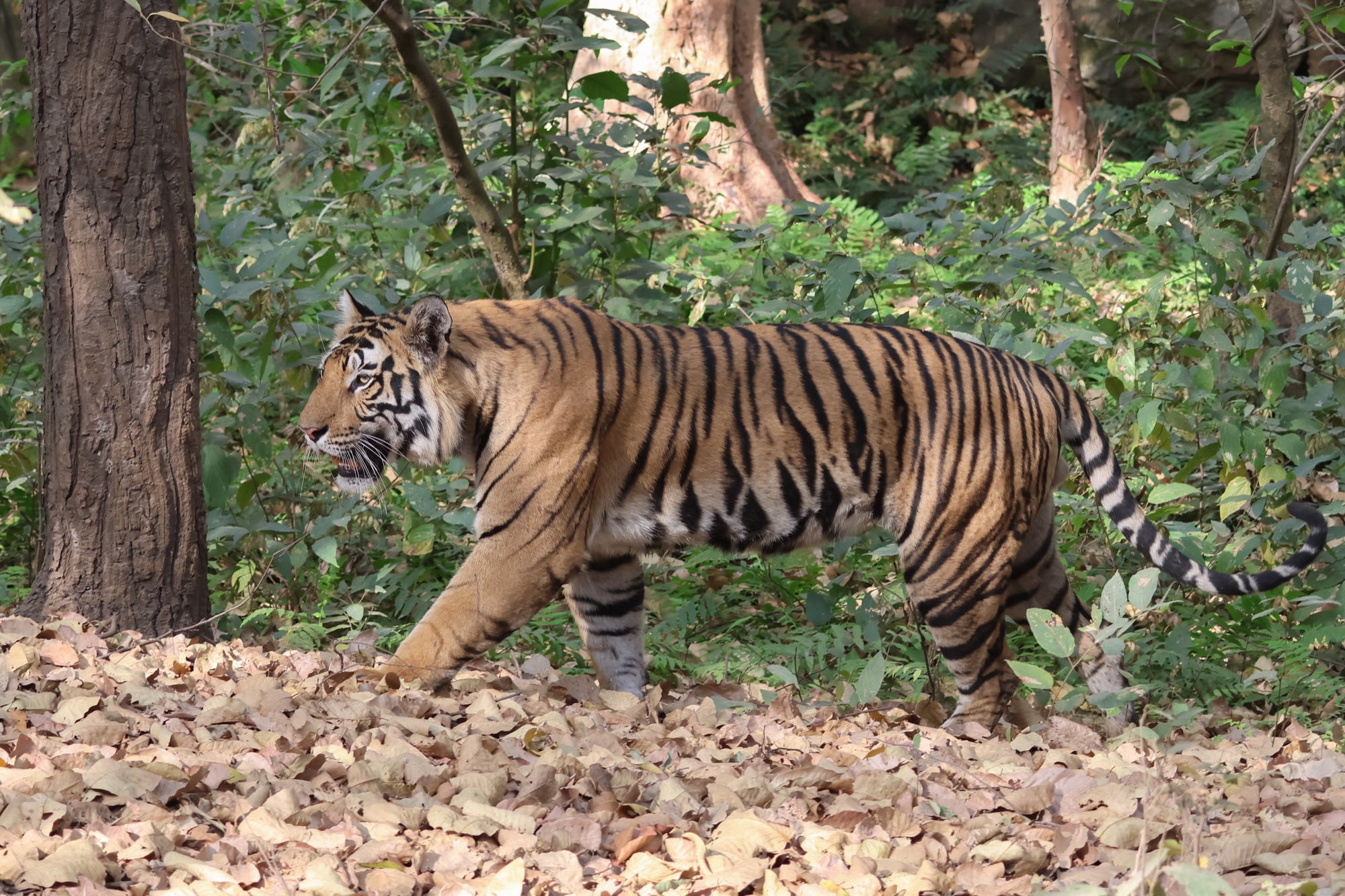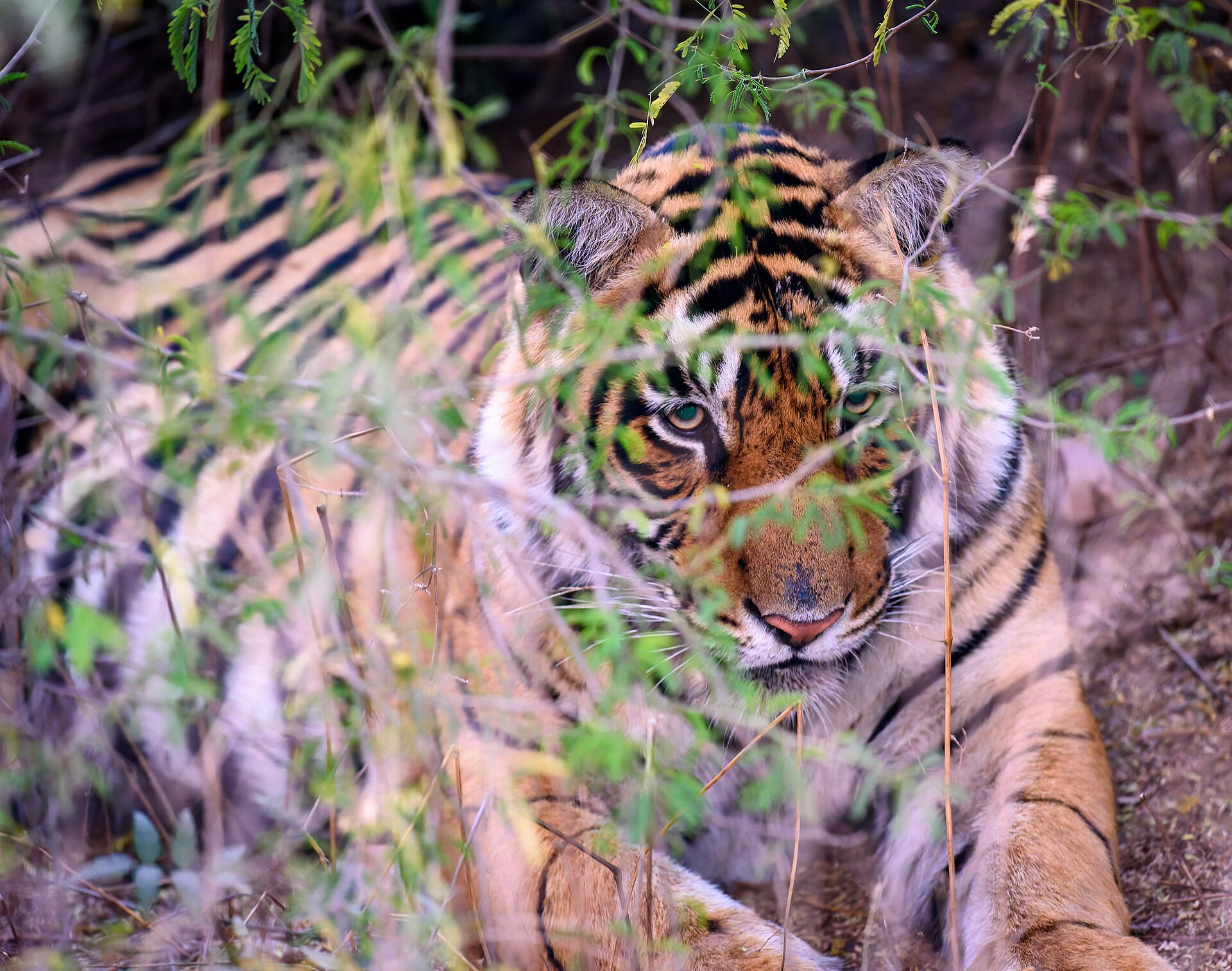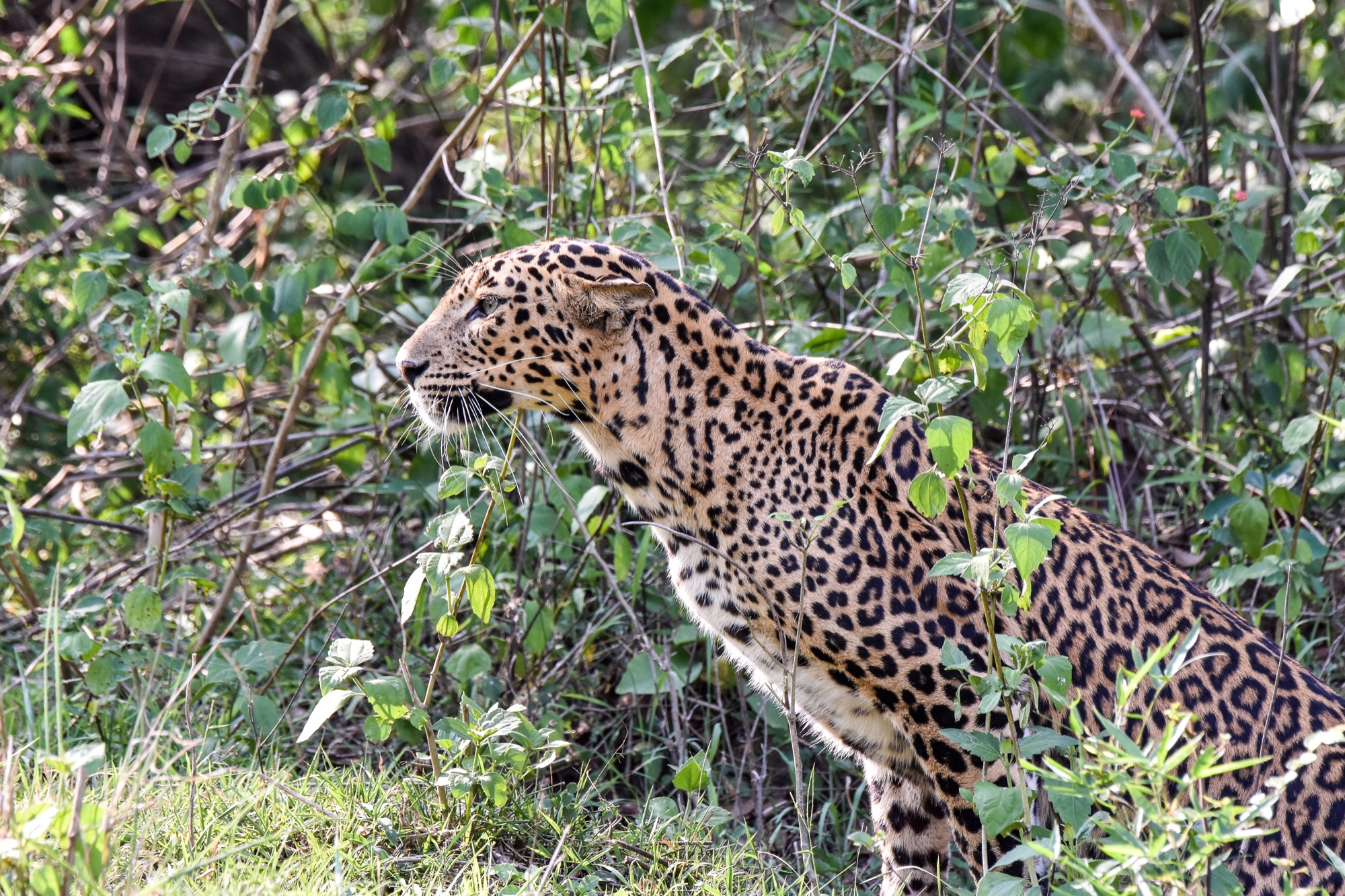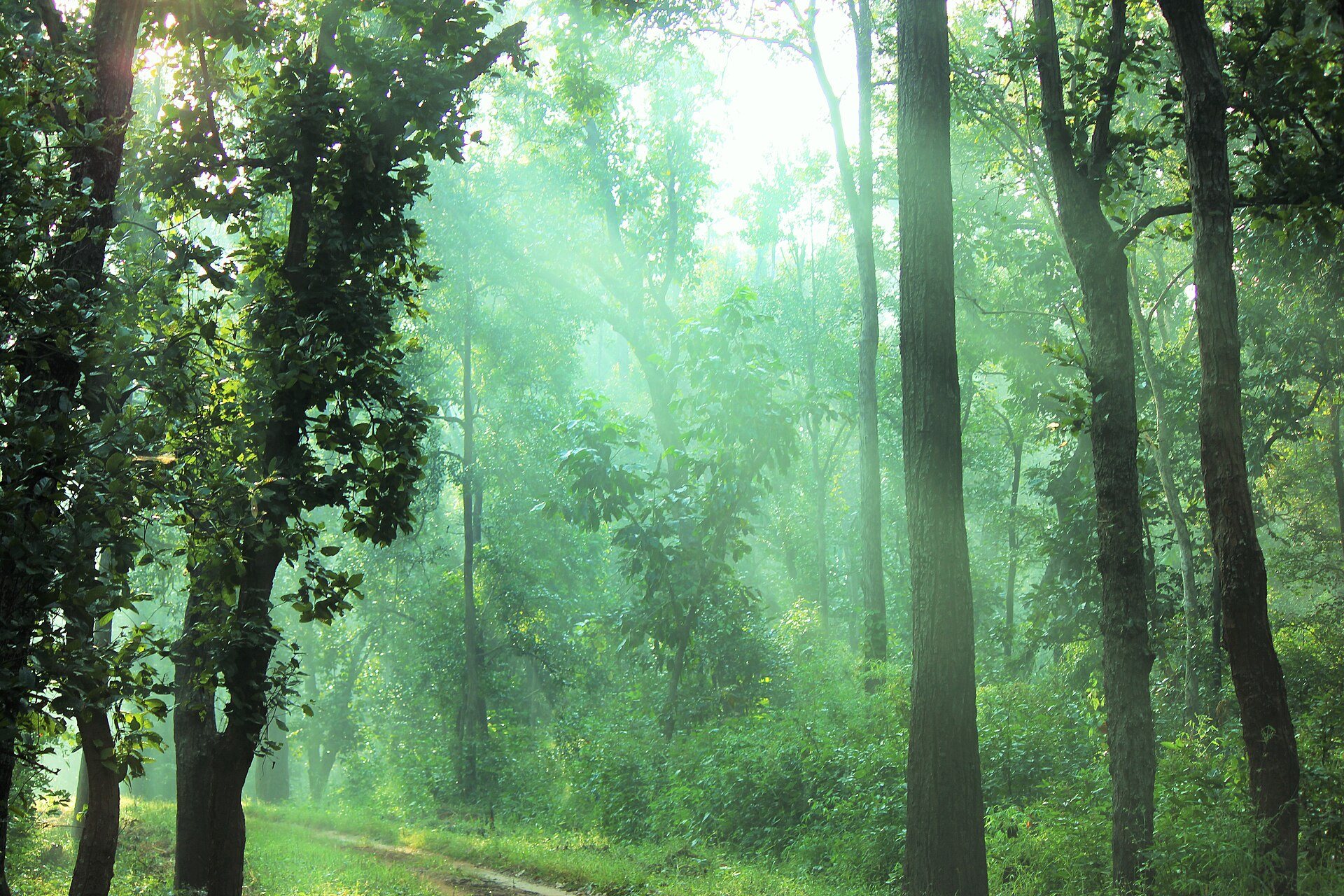
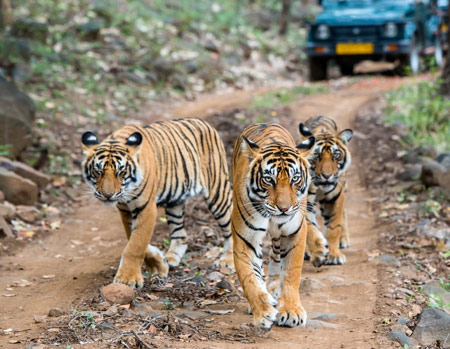
Fotografía de portada: The Jungle of Kanha, by Imrozbaig (CC BY-SA 4.0), via Wikimedia Commons
On the morning of 1 October 2026 the Tala, Magdhi and Khitauli gates at Bandhavgarh were decorated for the reopening, a tigress was seen near Siddh Baba on the first day, and nearly a month of advance online bookings had already been taken. The core had been shut since 1 July.
This is the pattern across central India, and it produces a peculiar market. The scarcest, most expensive, first-sold safari slots of the Indian wildlife year are in the month in which a tiger is hardest to see.
Both halves of that sentence are true for the same reason. The monsoon that closes the cores also fills every depression with water and every gap in the canopy with growth. The forest in October is at its most beautiful and its most opaque. The animals are dispersed, because water is everywhere and they do not need to come to it, and they are screened, because there is three months of undergrowth between them and the track.
Who decides, and what they decide
India has fifty-eight tiger reserves across eighteen states, covering about 84,487 square kilometres — 2.56 per cent of the country. The National Tiger Conservation Authority recommends that no more than twenty per cent of core or critical tiger habitat be opened to tourism, capped at existing use where that is already lower, with long-term phase-out as the stated direction. A core is defined as an inviolate space of 800 to 1,200 square kilometres, enough for eighty to a hundred tigers with at least twenty breeding females; the buffer surrounds it, absorbs poaching pressure, and holds the sub-adults and transients. All of it is managed under Tiger Conservation Plans made under section 38V of the Wildlife (Protection) Act, 1972.
The crucial point for planning is that the NTCA directs and the states execute. In June 2025 the authority approved tiger conservation plans in eleven states and banned monsoon tourism in sixteen reserves on grounds of breeding and visitor safety — Kamlang in Arunachal, Manas and Orang in Assam, Indravati in Chhattisgarh, Palamu in Jharkhand, Periyar and Parambikulam in Kerala, Kanha, Panna and Sanjay in Madhya Pradesh, Nawegaon-Nagzira in Maharashtra, Ranthambore in Rajasthan, Sathyamangalam in Tamil Nadu, Pilibhit and Amargarh in Uttar Pradesh, and the Sundarbans in West Bengal. The same reporting notes that despite an NTCA directive dating to 2015, several reserves in Karnataka and Kerala remain open through the monsoon anyway. The authority instructs field directors; it does not run state operations.
On numbers: the official estimate is 3,682 tigers, in a range of 3,167 to 3,925, from the All India Tiger Estimation of 2022, published in July 2023, with annual growth put at 6.1 per cent and India's share of the world's wild tigers at almost seventy-five per cent. That release counted fifty-three reserves; the NTCA's current figure is fifty-eight. Both numbers are correct for their dates, and anyone quoting either without the date is being careless.
The calendar, park by park
Madhya Pradesh closes its cores on 1 July and reopens them on 1 October. In 2026 that meant Bandhavgarh, Panna, Kanha, Satpura and Pench. The buffer zonesCore zone & buffer zoneThe two parts of an Indian tiger reserve: a strictly protected core, where no one lives, ringed by a buffer in which limited human activity is permitted.Read in the glossary run all year, and during the rains they are where the sightings are — a point made plainly in reporting on an earlier season, which noted that with the cores closed, sightings were limited to the buffers.
Ranthambore reopened zones one to five on 1 October 2026, and Sariska's core circuits reopened the same day. On the much-repeated claim that Ranthambore's zones six to ten stay open through the monsoon: every source we could find for it is a commercial booking site, not the Rajasthan Forest Department, and the reopening reporting we could verify mentions only zones one to five and says nothing about the others. We would not plan a monsoon Ranthambore trip on that basis without a forest department confirmation in hand.
Maharashtra follows the same shape — Tadoba-Andhari's core closed on 30 June and reopened on 1 October 2026, with buffers open through the rains.
Corbett does not follow the pattern at all, and this is where most itineraries go wrong. The Nainital district administration gives Dhikala as 15 November to 15 June, Bijrani as 15 October to 30 June, Sonanadi and Domunda the same, and Jhirna as open round the year. Dhikala — the zone everybody wants — opens a month after the others. Corbett was India's first national park, declared in 1936 as Hailey National Park and renamed in 1957, and runs to 1,288.32 square kilometres in total.
Kaziranga is on the opposite calendar, because it sits across the Brahmaputra floodplain and large areas of it go under water. It closed on 29 May 2026 by order of the Divisional Forest Officer, Eastern Assam Wildlife Division, with the last safaris on the 28th, having carried about 470,000 visitors over the season. It reopened on Saturday 3 October 2026 for the 2026-27 season, with jeep safaris from the first day, elephant safaris expected within twenty days, and slots at 7.30 to 10.00 in the morning and 1.30 to 3.00 in the afternoon. The park holds 2,613 of Assam's 2,895 one-horned rhinos and 104 of the state's 229 tigers, and is a UNESCO World Heritage Site.
Two more for this season: Gir was announced for 16 October 2026, with a minister indicating a possible early opening on the 3rd, and Indravati opens on 1 November 2026 — for the first time in roughly forty years, which is a genuinely significant thing and not a marketing line.
Why March is the sighting month
The mechanism is documented even where the magnitude is not. Through October to December, tigers are harder to find because the vegetation is dense — sightings described as relatively lower, though consistent. From February the forests begin to dry and the undergrowth goes. By April to June the deciduous forest of central India has dried out properly, the vegetation has thinned into open space, and tigers are frequently seen at waterholes, cooling off, in temperatures above forty degrees.
Three things are doing the work there, and it is worth separating them. Cover: how much forest is between you and the animal. Water: whether it is everywhere, in which case the animal can be anywhere, or in six known places, in which case it has to come to one of them. Heat: whether the day is hot enough to make behaviour predictable, which above forty degrees it reliably is.
This is also where we have to stop. There is no government, NTCA or peer-reviewed figure comparing October sighting rates with March ones. Every percentage in circulation comes from somebody selling safaris. We describe the mechanism, attribute it, and decline to put a number on it — which is less satisfying and considerably more honest.
What the two seasons actually buy
October to December gives you a forest at its most photogenic — green, full, washed, with water in the nalas and mist in the mornings — comfortable temperatures, and a lower chance of the sighting. It is the better trip for anyone who wants the place rather than the animal, which is a larger group than the market admits.
March to early June gives you the animal. The cover has gone, the water has concentrated, the heat makes the afternoons predictable, and the forest is grey, dusty and hard. By May the midday heat in Bandhavgarh is genuinely punishing and the trip needs building around it. This is the serious wildlife window and it is also the one nobody puts in a brochure photograph.
A third option that gets overlooked: the buffers in the monsoon. Madhya Pradesh and Maharashtra keep them open, the lodges are at their quietest and their least expensive, the forest is extraordinary, and the sightings — while fewer — do happen. For a returning guest who has already had their tiger, it is one of the most interesting things available in India between July and September.
What we will not tell you
That India's tiger reserves close for the monsoon. Only the cores do, only in some states, and Kaziranga's closure runs May to October rather than July to September.
That everything reopens on 1 October. False for Corbett, Kaziranga, Gir and Indravati, all on different dates in 2026.
That Periyar is open all year. This one is genuinely unresolved. The NTCA's June 2025 decision listed Periyar and Parambikulam among the sixteen reserves where monsoon tourism was banned, while the same reporting noted Kerala's reserves had stayed open in defiance of a 2015 directive. Kerala Tourism's Periyar page and the official Thekkady visitor page give no season, no closure dates and no operating hours at all. We check with the Kerala Forest Department for the specific year, every year, and so should anyone selling it.
That Dhikala opens on 15 October. It opens on 15 November. The 15th of October is Bijrani, Sonanadi and Domunda.
How we book it
For the October window, the booking has to be made before the gates open — nearly a month of slots were gone at Bandhavgarh before the reopening in 2026, and that is now normal rather than exceptional. The practical deadline for an October core safari is the preceding June.
For a guest whose priority is actually seeing a tiger, we say so plainly and propose February to April instead, with the trade named: hotter, browner, and far better odds. Where a trip has to be in October for reasons outside the wildlife, we build in more drives rather than more days, use the buffer as well as the core, and put the strongest naturalistsNaturalistThe trained wildlife guide who accompanies guests on safari, reading tracks, alarm calls and behaviour to find animals.Read in the glossary we have on it — the difference between a good naturalist and an adequate one is largest exactly when the cover is thickest.
And we plan the park against the season rather than the other way round. Kaziranga in late October, when central India is at its most difficult, is one of the great sightings propositions in the country, for an animal most guests have not thought to ask for.
Los viajes que le llevan allí
Leer a continuación