This is not an argument about how many places you should see. It is an argument about an hour, and where it goes.
The itinerary we are describing exists in every market and it has a familiar shape: Delhi, Agra, Jaipur, Udaipur, Mumbai, Kochi, Alleppey, in ten days or eleven, with a flight or a long drive on seven of them. It is sold on the promise of breadth and it is bought because breadth is what a first-time visitor to a country this size thinks they want.
We think it is the single most common mistake in India travel, and we think the case against it is not aesthetic. It is arithmetic, and the numbers are all published by people with no stake in our argument.
What the Indian state says about Indian roads
Start with Kerala, because Kerala's own government has done the work for us.
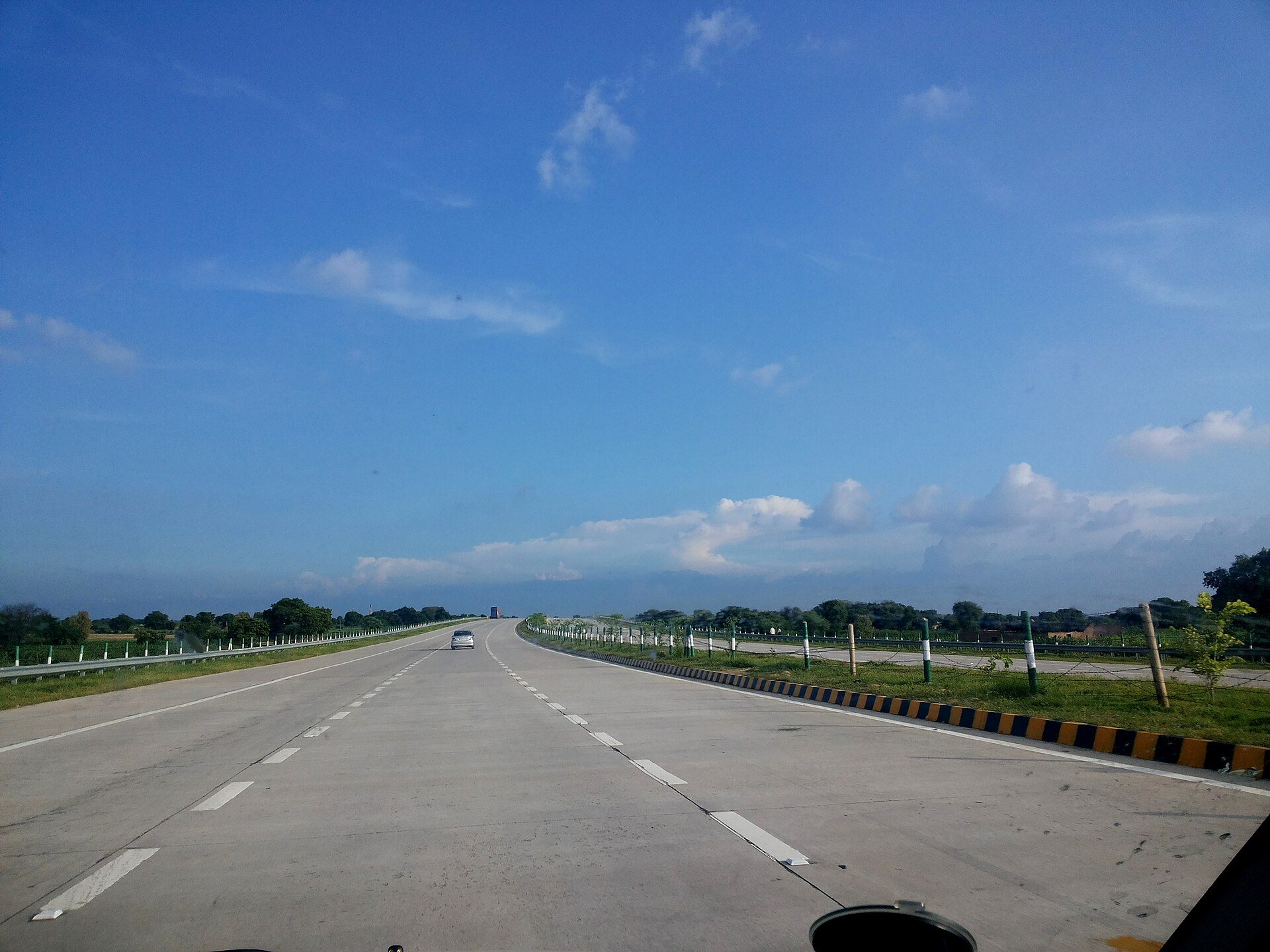
Kerala Tourism, the state tourism department, publishes the drive from Cochin International Airport to Munnar as 108 kilometres in three hours and seven minutes. That is about thirty-five kilometres an hour. The Idukki District Administration — the district Thekkady is in — publishes Munnar to Kumily as 110 kilometres in four hours. Twenty-seven and a half kilometres an hour. The Alappuzha District Administration publishes Cochin airport to Alleppey as 82.8 kilometres in two hours. Forty-one kilometres an hour.
These are not aggregator estimates and they are not cab-company marketing. They are three arms of the Government of Kerala publishing their own drive times, and they agree with each other: a transfer in the Kerala hills runs at under forty kilometres an hour, and often under thirty.
A planner who tells a guest that Munnar to Thekkady is a two-hour drive is contradicting the district administration of the district Thekkady is in.
Rajasthan corroborates it from a different direction. The sectors that actually get sold imply speeds between roughly forty-five and sixty kilometres an hour: Agra to Jaipur, 240 kilometres in four to five hours; Jaipur to Jodhpur, about 340 kilometres in six to seven; Jodhpur to Udaipur, 250 to 260 kilometres in four to five; Udaipur back to Jaipur, around 400 kilometres in seven to eight.
And a road transport ministry master plan, as reported, puts the current average speed on the national highway network at forty-seven kilometres an hour, with a target of eighty-five by the early 2030s. We flag that figure's provenance honestly — it traces to press reporting of a ministry plan rather than to a published NHAI or MoRTH document, and the ministry's own year-end reviews give construction pace and project-specific time savings but no average-speed figure at all. We cite it because the sold transfers independently land in the same place.
Flying does not fix it
The instinct, having read the above, is to fly. The instinct is often right and it is never as right as it looks, because the flight is the shortest part of the flying day.
Delhi airport's own instruction to domestic passengers is to reach the airport at least two hours before departure. Mumbai's is the same: two hours prior for domestic. Air India's general guidance goes further and recommends at least three hours. IndiGo's domestic check-in counters close sixty minutes before departure and its boarding gates close twenty-five minutes before; Air India's counters close sixty minutes before and its gates twenty minutes before.
Now put a real sector against that. Delhi to Udaipur blocks seventy-five minutes. The airport's own instruction is to be there one hundred and twenty minutes before it. Air India's recommendation makes the overhead 2.4 times the flight.
Then add the parts nobody counts: the drive to the airport in a city with the traffic of Delhi or Mumbai, disembarkation, bags, and the drive from the arrival airport to the hotel. A seventy-five-minute flight is a five-to-six-hour door-to-door movement, and on a day that contains one of those there is no morning and there is not much of an afternoon.
One honest correction while we are in the detail: the sixty-minute check-in cutoff is an airline rule, not an airport one — neither Delhi nor Mumbai publishes a counter closing time — and there is no DGCA-mandated minimum connection time in India that we could find. Do not let anyone tell you a regulation exists where only a carrier's conditions of carriage do.
And in the peak season, flying is the risk
The Indian high season and the north Indian fog season are the same season, and this is where a tight itinerary stops being inefficient and starts being fragile.
Delhi handles around thirteen hundred flights a day. On 21 December 2025, ninety-seven were cancelled and more than two hundred delayed. On the 29th, one hundred and twenty-eight cancelled and eight diverted. On the 31st, one hundred and forty-eight cancelled — roughly eleven per cent of the day's schedule — with visibility around two hundred and fifty metres. On 16 January 2024 visibility fell to zero between five and nine in the morning; eighty-four flights were cancelled, one hundred and sixty-eight delayed, and eighteen trains ran late. On 2 February 2026 parts of the city were below fifty metres and the airport was operating under CAT III procedures.
Three days in eleven, in late December 2025, saw ninety-seven, one hundred and twenty-eight and one hundred and forty-eight cancellations at a single airport. An itinerary with a flight on seven of ten days, in December, is making that bet seven times.
There is a further illustration worth having, because the regulator has effectively already written this essay. In December 2025 the Directorate General of Civil Aviation fined India's largest airline over ₹22 crore after a collapse that cancelled 2,507 flights and delayed 1,852 across three days, stranding more than three hundred thousand passengers, with on-time performance of 8.5 per cent on 5 December. The cause the regulator identified was over-optimisation of operations — a network run with no buffers, maximising utilisation of crew, aircraft and routes.
That is precisely the failure mode of the itinerary that moves every day. A schedule with no slack does not degrade gracefully. It fails all at once, and it fails on the day you were going to see the thing you came for.
The twenty-two hours you paid for and the fourteen you get
The hotel convention in India, as everywhere, is a two o'clock check-in and a twelve o'clock check-out. The Oberoi New Delhi publishes exactly that, and is admirably direct about the remedy: for an early-morning arrival it recommends reserving the room from the prior night, and for an evening departure it suggests booking an additional night. Early check-in and late check-out are subject to availability.
There is no Ministry of Tourism norm behind this and no published industry standard — we looked, including through the ministry's own classification guidelines, and found nothing. It is universal commercial practice, which is a weaker thing to appeal to and a more honest one.
Run the arithmetic on a one-night stay. Two in the afternoon to noon the next day is twenty-two hours nominal, of which eight or so are spent asleep. Now impose the airport rule: a nine o'clock flight the next morning means leaving the hotel around half past six, forfeiting five and a half hours of a room paid for in full. What is left of a one-night stay in a palace hotel is an afternoon, an evening, and a dark drive to an airport.
On a seven-city, ten-day itinerary, that convention is applied six times.
Where the rails are better, and where they have just got worse
It is worth saying what works, because the argument is against the shape of the trip, not against movement.
Delhi to Agra on the Gatimaan Express is one hundred minutes, Nizamuddin at 08:10 to Agra Cantt at 09:50, daily except Friday. There is no sensible way to improve on that, and it makes a day trip from Delhi genuinely a day rather than a transfer with a monument attached. Mumbai to Ahmedabad by Vande Bharat is similarly well served.
But the rail map is not getting uniformly better, and this is the detail nobody noticed: both of the Udaipur Vande Bharat services — Udaipur to Jaipur and Udaipur to Agra — were withdrawn in February 2026 for low demand, with the paths reallocated to a new Udaipur to Ahmedabad service. Anyone planning a Rajasthan trip on a 2025 reading of the rail options is planning on trains that no longer run.
What the government wants, which is not what the market sells
The Ministry of Tourism publishes the average duration of stay of a foreign tourist in India. For 2024 it was 18.12 days, and the ministry characterises the figure as a positive trend with scope for further growth — explicitly suggesting that India's heritage and diversity could support longer visits.
By continent, the 2020 to 2024 averages run from Oceania at 32.2 days and Africa at 27.1 down through Asia at 27 and the Americas at 23.1 to Europe at 20.9.
A ten-day, seven-city India is forty-four per cent shorter than the average foreign visit to the country, and the government's own stated ambition for inbound tourism is that visitors stay longer rather than see more. Which means the itinerary everybody sells is running against the grain of both the infrastructure and the policy.
What we do instead, concretely
Three nights minimum in any place worth stopping, and two is a compromise we will make only for a place that is genuinely a halt rather than a destination. A single night in Udaipur is a wasted flight.
No more than one movement day in three. On a ten-day trip that is three moves, which means four bases, which in Rajasthan is comfortably Delhi, Agra by train, Jaipur and Udaipur — and in the south is Kochi, Alleppey, the hills and the coast. Both are better trips than the seven-city version and both are shorter to describe, which is the actual commercial problem with selling them.
Movement days are movement days. We do not put a monument at the end of a six-hour drive and call it a morning and an afternoon. The drive is the day, and the day is built around arriving well — which usually means leaving early, stopping somewhere real on the way, and arriving in daylight.
In December and January, we route around Delhi where we can and we never put an international connection on the same day as a domestic flight out of Delhi. If the trip must pass through Delhi in fog season, there is a night either side of it.
And we tell guests the numbers. Not as a sales technique but because a guest who understands that the Kerala hills move at thirty kilometres an hour makes a better decision about their own holiday than a guest who has been shown a map with seven dots on it.
The breadth a first-time visitor wants from India is not available in ten days, and the version of it that gets sold is mostly airports. What is available in ten days is four places properly, which is more India than seven places glimpsed — and which happens to be the arithmetic the Indian government publishes about its own country.
Preguntas, respuestas
How many places can I realistically see in ten days in India?
Four bases, with three movement days. That gives roughly two and a half usable days in each place, which is enough for a city to become legible. Seven cities in ten days gives you about one usable afternoon in each, because a short flight consumes five to six hours door to door and a Kerala hill transfer runs at under forty kilometres an hour.
Is it faster to fly or drive between Rajasthan cities?
It depends entirely on the sector, and the honest answer is that door to door the two are often closer than they look. A short flight carries two hours at the departure airport plus transfers at both ends. Jodhpur to Udaipur by road is four to five hours with Ranakpur on the way, which is a better day than the same move by air.
Why is one night at a palace hotel a bad idea?
Because of the check-in convention. Two in the afternoon to noon the next day is twenty-two hours, of which eight are spent asleep, and an early flight the following morning cuts it further. You pay a full night's rate for an afternoon and an evening. Two nights roughly doubles the usable time for less than double the cost, once the transfer is counted.
Is December a bad time to travel in north India?
It is the best time for weather and the worst for air schedules. Delhi recorded ninety-seven, one hundred and twenty-eight and one hundred and forty-eight cancellations on three separate days in late December 2025, out of roughly thirteen hundred daily flights. December is entirely bookable; it is not bookable tightly.