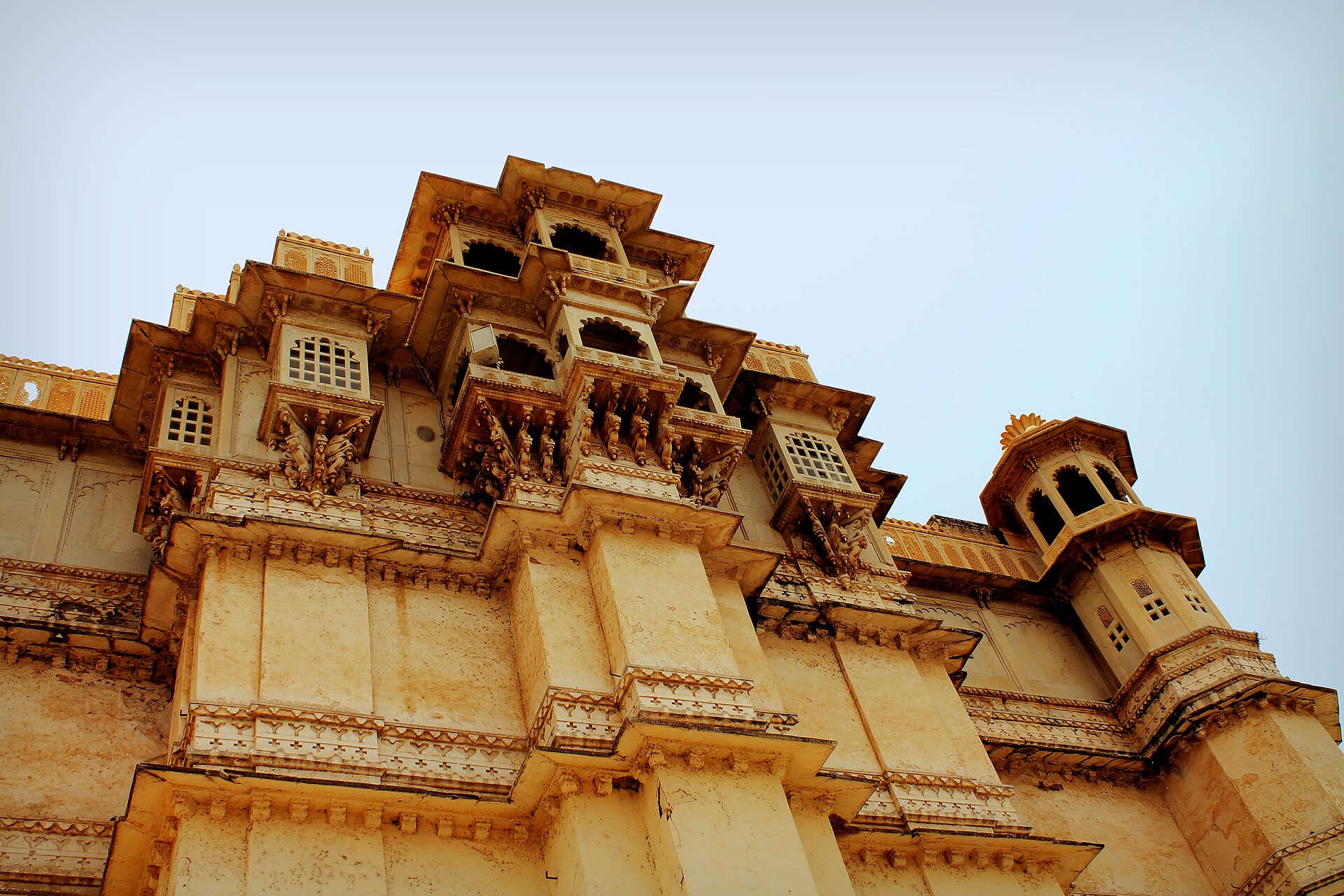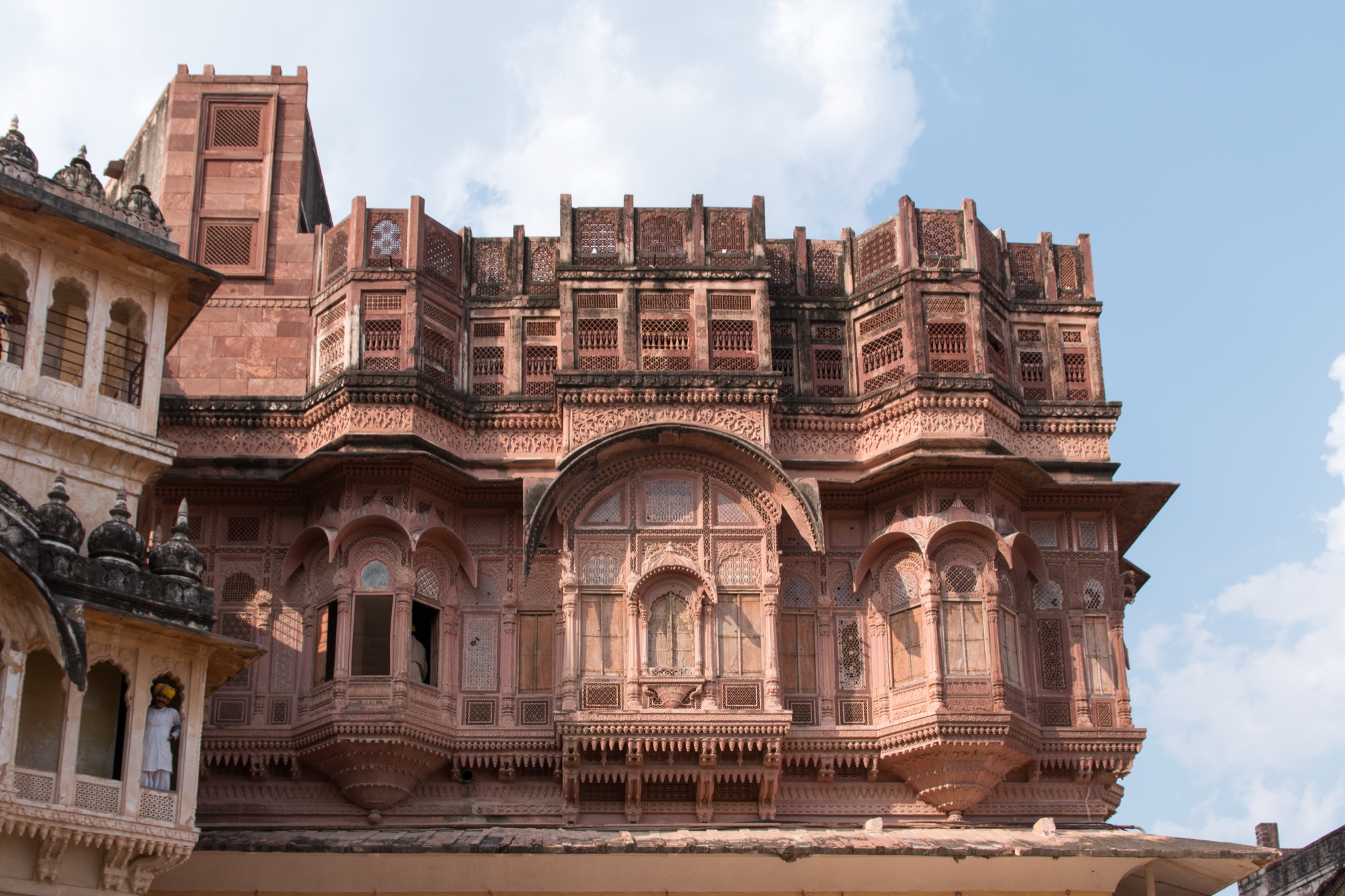
Photo d'en-tête : Jodhpur-Mehrangarh Fort-11-Sangar Chowk-20131011 — CC BY-SA 3.0, via Wikimedia Commons
A luxury India tour operator is a company that designs and runs private journeys through India — and the distinction that matters most is whether it runs them itself or hands them to a local supplier once you have paid. Many of the names a traveller encounters are agencies abroad that resell an Indian ground operator's work at a markup. Some do this well. But when a flight is cancelled in Jodhpur at nine in the evening, the question of who is actually in India, and whether they answer the phone, stops being academic.
This guide sets out what to ask, what the answers reveal, and what is worth walking away from.
What is the single most useful question to ask an India tour operator?
Ask: who will meet me at the airport, and do they work for you? A company that operates in India will answer immediately and specifically — a named driver, a named representative, employed or long-contracted, reachable on a number you are given before you fly. A reseller will answer in the passive voice: arrangements will be made, a representative will be present.
The question works because it cannot be answered well from a brochure. It requires the company to actually know the person. Everything else about operational depth — the fixer who reopens a closed monument, the manager who moves a booking at midnight — runs along the same line: either there are people, or there is a supply chain.
Which credentials actually mean something?
The useful test is not what a credential sounds like but whether you could confirm it from a source that is not the company's own website. Three pass that test. Membership of IATO, the Indian Association of Tour Operators, indicates a company registered and operating inside India rather than selling into it, and the association publishes its member list. Recognition by India's Ministry of Tourism is a formal approval with published criteria. And a registered Indian office — a real address, not a virtual one — is the plainest evidence of all, and the easiest to check.
Discount heavily anything a company can grant itself: badges, unattributed awards, superlatives with no issuing body. Note also what a credential does not cover. None of the three says anything about whether the itinerary is any good; they establish that there is a real company in India behind it, which is a different and more basic question.
How do you tell a designed itinerary from a repackaged one?
Send a genuinely awkward brief — an interest that does not fit the standard circuit, a constraint that complicates the route, a pace slower than the norm. A repackaged itinerary comes back as the familiar sequence with your interest bolted on as an afternoon. A designed one changes shape: different bases, different nights, sometimes a frank recommendation to drop a famous stop that does not serve what you actually want.
The willingness to say no is the signal. An operator confident in their knowledge of India will tell you that four cities in nine nights is a poor idea, and explain why. An operator selling volume will simply agree.
How should you read the price?
Ask what is excluded, and ask in writing. A serious quotation itemises the hotel by name and room category, the vehicle and whether it is exclusive to you, whether guides are private or shared, which meals are included, and which monument fees and permits sit outside the figure. A quotation that arrives as a single number per person, with hotels described only as “five star”, is concealing its own substitutions.
Unusually low pricing in Indian luxury travel almost always resolves into one of three things: a lower hotel category than implied, guides shared with other parties, or commission-driven shopping stops built into the days. None appears in the headline figure. All are visible in the itemisation.
What are the warning signs worth walking away from?
Pressure to commit before you have seen a written itinerary. Reluctance to name hotels. Shopping visits presented as cultural experiences. An inability to describe what happens if something goes wrong mid-journey. And a company that cannot tell you, plainly, which parts of your trip it runs itself and which it subcontracts.
None of these is proof of bad faith. All of them are reasons to ask one more question before you pay a deposit.
How Elevated India answers these questions
Elevated India is a private travel house that composes journeys through India and runs them with its own people on the ground — the team that designs a journey is the team you reach while you are travelling it. We own our vehicles and employ our chauffeurs, and the guides we work with are government-licensed and paid by us rather than by a shop.
Our journeys are composed rather than selected from a catalogue. Our quotations itemise what is included and what is not. And we will tell you when a route you have asked for is the wrong shape for what you want from India. If you are at the stage of comparing houses, the questions above are the ones we would want you to put to us.
Questions, réponses
How do you choose a luxury tour operator for India?
Establish first whether the company operates in India itself or resells another firm's ground handling. Ask who will meet you at the airport and whether they work for the company; check credentials you can verify somewhere other than the company's own site, such as IATO membership, Ministry of Tourism recognition and a registered Indian office; and insist on an itemised quotation that names hotels and room categories, states whether guides and vehicles are private, and lists what is excluded.
What are the warning signs of a poor India tour operator?
Pressure to pay before a written itinerary exists, reluctance to name specific hotels, shopping stops presented as cultural experiences, no clear answer on what happens if something goes wrong mid-journey, and an unwillingness to say which parts of the trip the company runs itself. A single price per person with no itemisation usually conceals a lower hotel category, shared guides, or commission-driven stops.
Is IATO membership necessary for an India tour operator?
It is not legally required, and a company without it is not automatically suspect. What membership does is corroborate, from outside the company's own marketing, that it is registered and operating inside India rather than reselling into it. Treat it as one verifiable signal among several — alongside Ministry of Tourism recognition and a real registered Indian office — rather than a pass or fail on its own.
Is a tour operator or a travel agency better for a trip to India?
For a complex, high-value India trip, a tour operator that runs journeys on the ground usually has the edge over a travel agency that books and resells one, because so much of an India trip is operational — private guides, chauffeurs, permits, and the rebooking when a flight is cancelled — and only the party actually operating in India can act at the hour it happens. A capable agency can still deliver a fine trip; what the distinction means for you is set out in our guide to a tour operator versus a travel agency.
Les voyages qui vous y emmènent


À lire ensuite