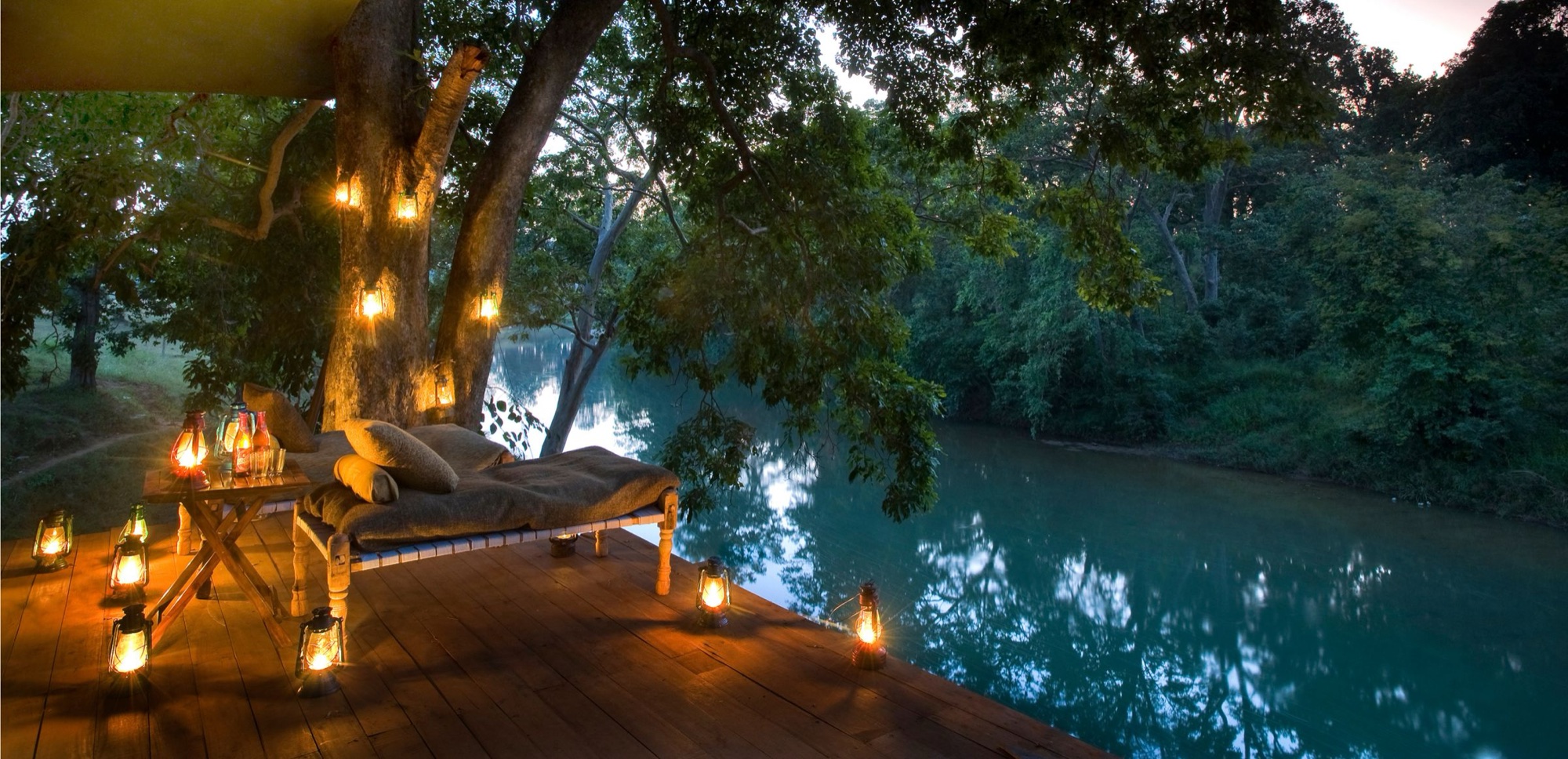
Banjaar Tola sits on about ninety acres of SalSalA tall hardwood tree that forms the dominant forest of central and northern India.Read in the glossary forest on the bank of the Banjaar river, outside Kanha's Mukki Gate — the quieter of the park's entrances. Rather than one lodge block it is built as two separate camps of nine tents each, with their own dining and lounge.
The tents are raised just above the forest floor, eighty square metres apiece, with freestanding tubs and living rooms. Kanha is the barasinghaBarasinghaThe swamp deer of central India, named for the many tines of its antlers.Read in the glossary's last stronghold and one of the better tiger forests in central India; Mukki is where you go to be away from the crowd at Khatia.
Why We Place Guests Here
- Nine tents per camp is a genuinely small number for a park of Kanha's size — game drives leave without a convoy.
- The Mukki side is the less-pressured gate, and the camp's resident naturalists work it properly rather than chasing radio calls.
- Bonnet Breakfast — laid out off the vehicle at dawn in the forest — is the right way to spend the pause between drives.
The Table
- Bush Dinner
- Poolside Dinner
- Bonnet Breakfast in the forest
- Learn from the Masters — chef-led sessions
The Elevated India Signature
The dawn drive out of Mukki, then breakfast off the bonnet wherever the morning has taken you.
Questions, Answered
When is Kanha National Park open?
Kanha's core zones close on 1 July for the monsoon and reopen in mid-October. February to April gives the best tiger sightings as water sources shrink. Confirm current dates when booking — the park publishes them annually.
Which Kanha gate is best?
Mukki is the quieter entrance and the one Banjaar Tola uses. Khatia is busier. For guests who want Kanha's barasingha meadows and fewer vehicles, Mukki is the answer.
Journeys That Take You There
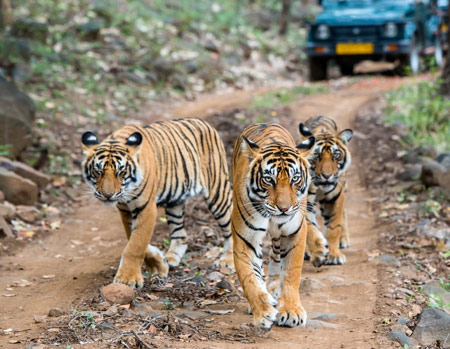
Explore the destination guide: Kanha, Madhya Pradesh ↗
Photography: Photograph courtesy Taj Hotels