In 1955 a commercial artist in Calcutta with no filmmaking experience released a first feature he had shot on weekends, with a mostly amateur cast and a camera he barely knew. Pather Panchali went on to be recognised as one of the most important debuts in the history of the medium. The story of how it got made — the pawned jewellery, the stalled production, the state government eventually stepping in — has become part of Bengali folklore.
What interests a traveller is that the world Satyajit Ray filmed has not entirely gone. Bengal changed enormously in seventy years, but Ray's eye was for the ordinary and the ordinary persists: a courtyard, a train seen across a field, a staircase in an old house, the particular quality of light before a monsoon breaks.
Two Bengals, not one
It is worth separating them. The Apu Trilogy is rural — the village, the river, the family that cannot hold together, and then the move outward. The later films are urban and often sharply political: the Calcutta trilogy of the early 1970s deals with unemployment, corporate compromise and a city under strain. Travellers who arrive expecting one Bengal are usually surprised by the other.
A journey built around Ray works best when it acknowledges both — a few days in the city, and time in the countryside beyond it where the rhythm he filmed is still the rhythm.
The city he worked in
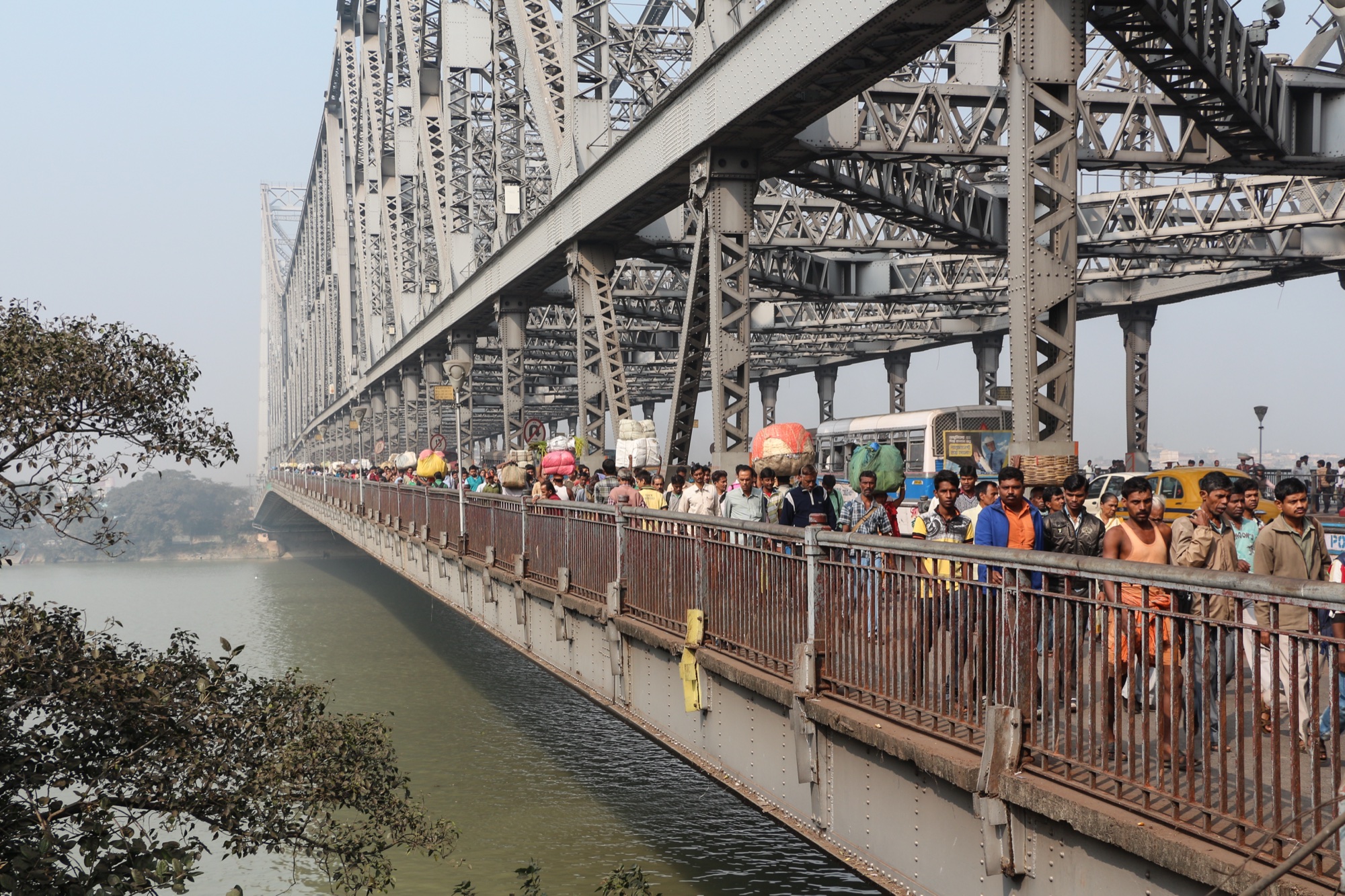
Ray lived and worked in Kolkata his whole life, and the city rewards being walked rather than driven. The colonial core is compact and continuous; the northern lanes, older and denser, are where a good deal of his sensibility came from. The coffee houses and bookshops of College Street — where his generation argued about cinema and politics in more or less equal measure — are still functioning, which is more than can be said for most such places anywhere.
He was also a graphic designer, an illustrator, a composer for his own films, and the writer of a much-loved detective series. The completeness of the man is part of what makes Bengal so protective of him.
How we compose it
Three or four days in Kolkata on foot with someone who knows the city's film history, and time out into rural Bengal where the landscape of the trilogy still reads. For guests who care about cinema, we can arrange a screening and a conversation with people who work in the industry here — Kolkata still has a serious film culture, and it is generous with visitors who take it seriously.
It pairs naturally with a wider eastern India journey, or as a counterweight to a Rajasthan itinerary: after the palaces, a city that is entirely about ideas.
Questions, Answered
Where were Satyajit Ray's films shot?
Across Bengal. The Apu Trilogy was largely shot in rural West Bengal, while the later Calcutta films used the city itself — its streets, offices and apartments. Ray lived and worked in Kolkata throughout his career.
Can you visit Satyajit Ray locations in Kolkata?
Many of the city locations are ordinary streets and buildings still in everyday use rather than marked sites, which is part of the pleasure. Walking them with someone who knows the films is far more rewarding than a checklist.
What should I watch before travelling to Bengal?
Pather Panchali is the natural starting point, followed by the rest of the Apu Trilogy. For the city, the Calcutta trilogy of the early 1970s shows a Kolkata under strain and is a very different film-maker at work.