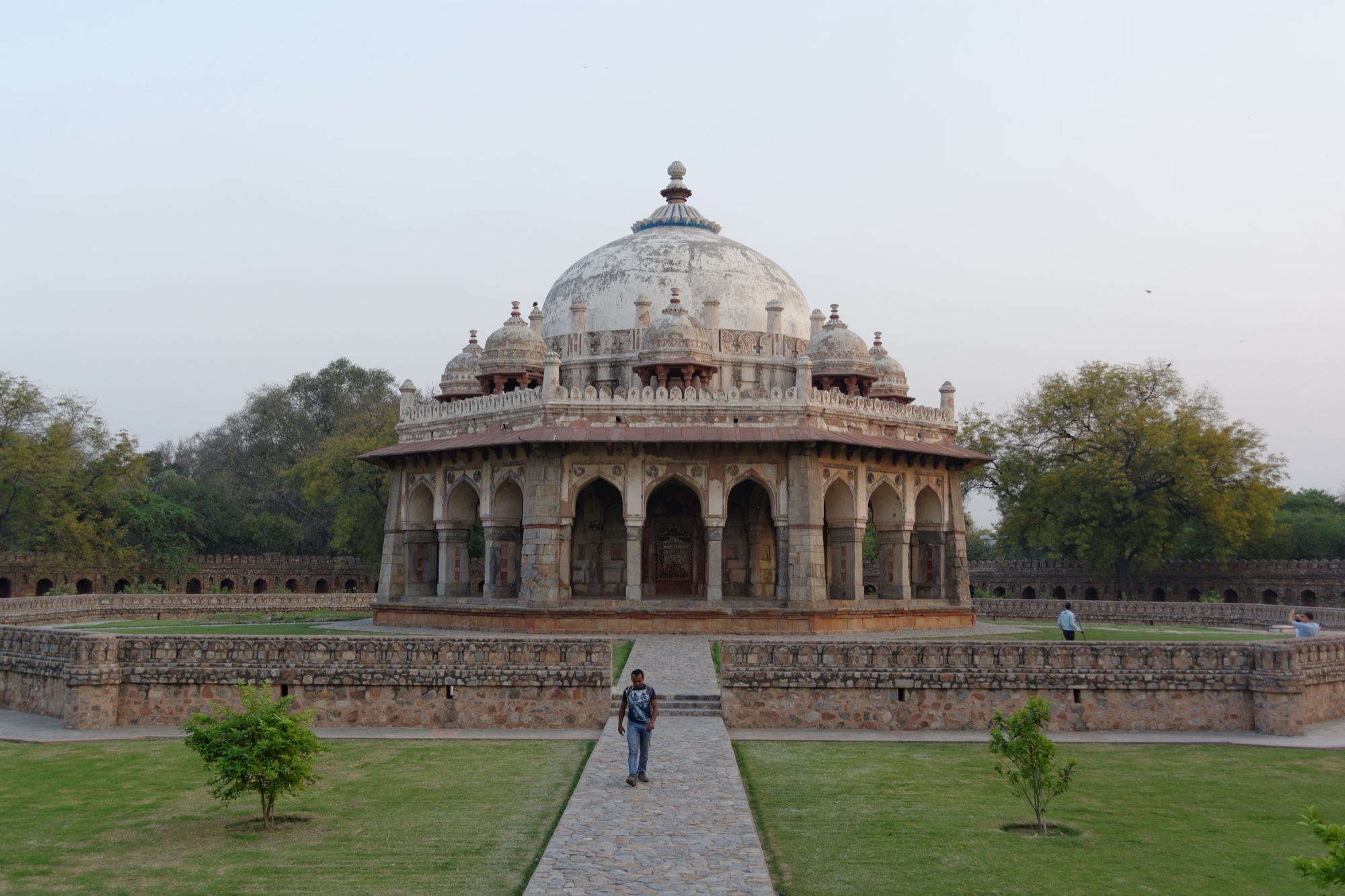
Foto di apertura: Humayun’s Tomb, Delhi 6 — CC BY-SA 4.0, via Wikimedia Commons
Almost nobody plans Delhi. It arrives at the start of an itinerary as a fixed cost — the city the flight lands in, two nights before the trip proper begins — and it gets the itinerary that a fixed cost deserves: Red Fort, Jama Masjid, India Gate, Qutub Minar, Humayun's Tomb, in that order, in one very long day, from the back of a car.
That day is the reason so many people arrive in Rajasthan saying they did not much like Delhi. They did not dislike Delhi. They disliked being driven across it. Delhi is not one city and never has been; it is a sequence of capitals built on the same plain over roughly a thousand years, and each of them built in a different place. The standard itinerary treats those places as stops on a list. Treated instead as what they are — three separate cities, each worth a day — Delhi becomes one of the most rewarding three days in India, and arguably the best possible preparation for everything that follows it.
Why the standard Delhi day does not work
It is a mapping problem. The Qutb Minar stands in Mehrauli, in the far south of the modern city, because that is where Delhi began — the Tomar RajputsRajputA member of the warrior and landholding clans of northern India, chiefly Rajasthan, who ruled its princely states.Read in the glossary built Lal Kot there in 1060, and the site has been continuously occupied ever since. The Red Fort stands far to the north of it because Shah Jahan moved his capital to the riverbank in the seventeenth century. Lutyens' Delhi sits between them because the British wanted a ceremonial city on empty ground. These are not neighbouring sights. They are three cities that happen to share a municipal boundary.
An itinerary that visits the Qutb in the morning, comes north for lunch and goes south again for a monument it missed is not badly organised so much as geographically illiterate, and the cost is paid in the one currency a short trip cannot spare. On a Delhi weekday, in our own experience of running both, the difference between a day grouped by map and a day grouped by checklist is measured in hours rather than minutes.
So: one day in the old city, one in the imperial centre, one in Mehrauli and the south. Nothing in the list below is unusual. The order is the whole argument.
The two dates that should set your order
Before the days themselves, two constraints, because they are the only two that should move anything — and one of them is new.
The Red Fort no longer closes on Mondays. The Archaeological Survey of India issued an order on 13 February 2026 opening it on all seven days, and it was receiving visitors on the Monday of that week. For anyone who has planned a Delhi trip before, this is worth reading twice: the single most frequently stated rule about visiting Delhi is no longer true. The fort now runs from sunrise to 9pm, and tickets are cheaper bought online than at the gate — ₹550 rather than ₹600 for most foreign nationals, ₹35 rather than ₹50 for SAARC and BIMSTEC visitors, with under-fifteens free either way.
The Humayun's Tomb Museum does close on Mondays, along with national holidays. It opens at 10am and runs until 9pm with last entry at 8pm, which makes it one of the few significant sites in Delhi you can visit properly in the evening. Foreign nationals pay ₹300, Indian and SAARC visitors ₹50.
Add one softer constraint. Rashtrapati Bhavan — the Viceroy's House, and the reason Lutyens' Delhi exists — can be visited, but its main building and central lawn open only Thursday to Sunday. The museum complex opens every day but Monday, the gardens only from November to March and again only Thursday to Sunday, and the Change of Guard is a Saturday and Sunday ceremony. All of it closes on gazetted holidays.
Which produces a simple rule. If you land on a Sunday night and have Monday, Tuesday and Wednesday, put the old city or Mehrauli on the Monday and accept that Rashtrapati Bhavan is not available to you this trip. If your three days include a Thursday, Friday, Saturday or Sunday, spend that one in the centre. Everything else in Delhi worth an hour is open daily.
Day one: Shahjahanabad
Shah Jahan's city, begun in 1639, walled, and still functioning as a walled city does — which is to say densely, commercially, and on its own schedule rather than a visitor's.
Start at the Red Fort at opening, and not for the reason usually given. The light is better, yes, but the real gain is that you will have the Chatta Chowk — the covered bazaar inside the gate, built as a shopping arcade for the imperial household — and the Diwan-i-Am more or less to yourself for the first half hour. The fort rewards slow walking and suffers badly from crowds; it was inscribed on the World Heritage List in 2007, and the citation is about the ensemble rather than any one building in it.
Then the Jama Masjid, a short distance south, which Shah Jahan commissioned as the congregational mosque of his new capital. Built between 1644 and 1656 and inaugurated on 23 July 1656, its courtyard holds twenty-five thousand people, and on a Friday it does. It is an active mosque rather than a monument, which means the five daily prayers govern access and a guide who knows the timings is worth more here than anywhere else in the city. Shoulders and legs covered, shoes off at the steps.
And then Chandni Chowk — on foot, which is the only way it makes sense. The main avenue from the JainJainA follower of Jainism, an ancient Indian religion whose central commitment is non-violence towards every living thing.Read in the glossary temple at the fort end to the Fatehpuri Masjid at the far end has been redeveloped by the Delhi government explicitly to give pedestrians precedence over vehicles, and the walk from one mosque to the other is the spine of the old city. But the avenue is the least interesting part. The lanes running off it are organised by trade in a way that has barely changed in three centuries — one for paper, one for wedding cards, one for silver, one entirely for spices — and half an hour in any of them is worth the whole of the main street.
Eat in the old city rather than driving out of it, rest in the afternoon, and do not schedule anything ambitious for the evening. Shahjahanabad is genuinely tiring, and pretending otherwise is how a first day ruins a second.
Day two: the imperial centre, and the Delhi nobody books
Two capitals in one day, because they were built three hundred years apart on adjacent ground.
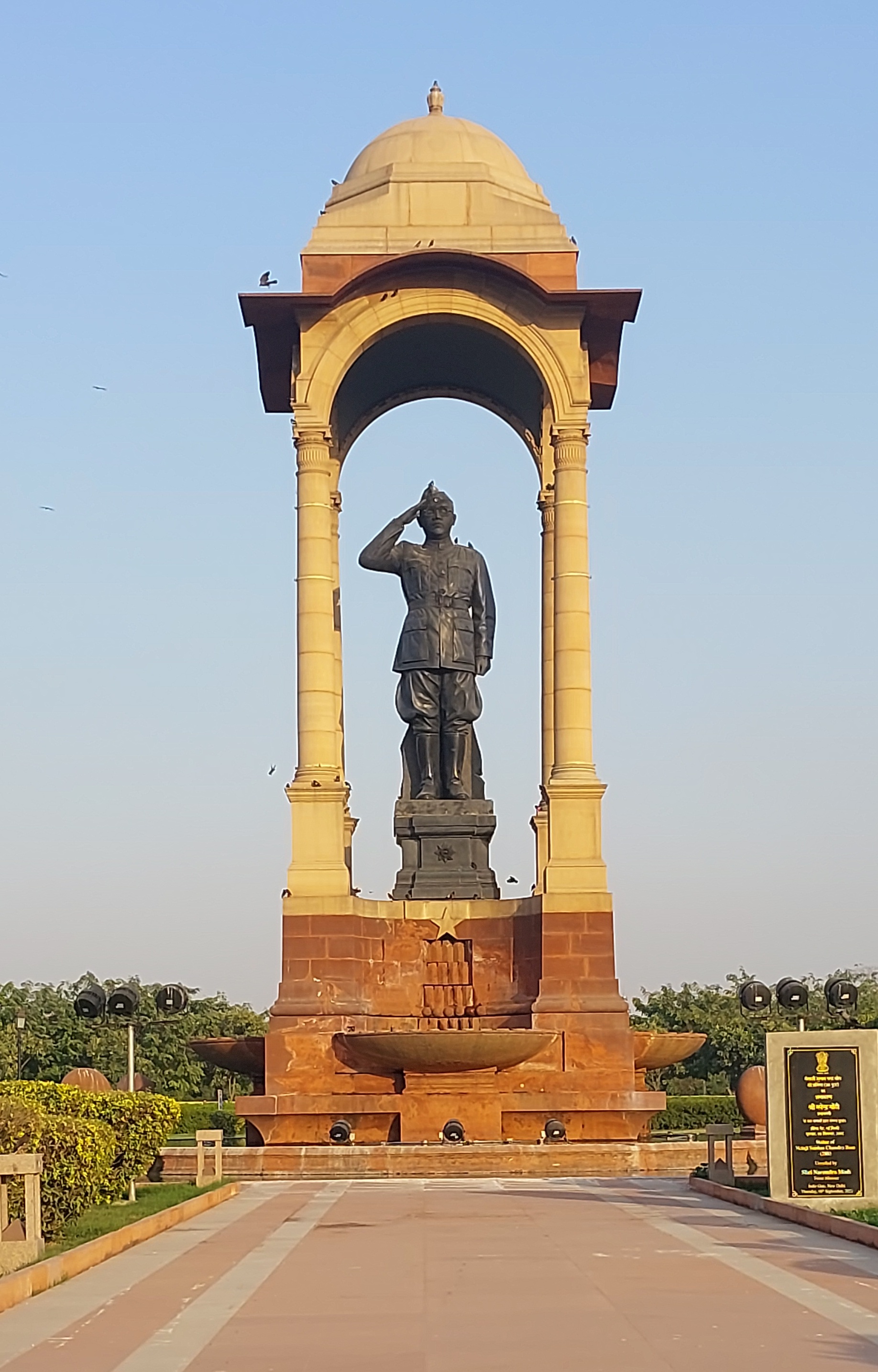
Begin with Lutyens' Delhi in the morning, while it is still cool enough to walk any of it. The ceremonial axis, the government buildings on Raisina Hill, the bungalow streets behind them — this is the last imperial city the British built anywhere, and it is a more interesting piece of architecture than the standard photograph stop at India Gate suggests. If your day is a Thursday, Friday, Saturday or Sunday, this is where Rashtrapati Bhavan belongs: a circuit inside the main building, which almost no visitor to Delhi realises is possible, and which needs arranging in advance rather than on the morning.
The afternoon belongs to Nizamuddin, and this is the part of Delhi we would fight hardest to keep in a three-day trip.
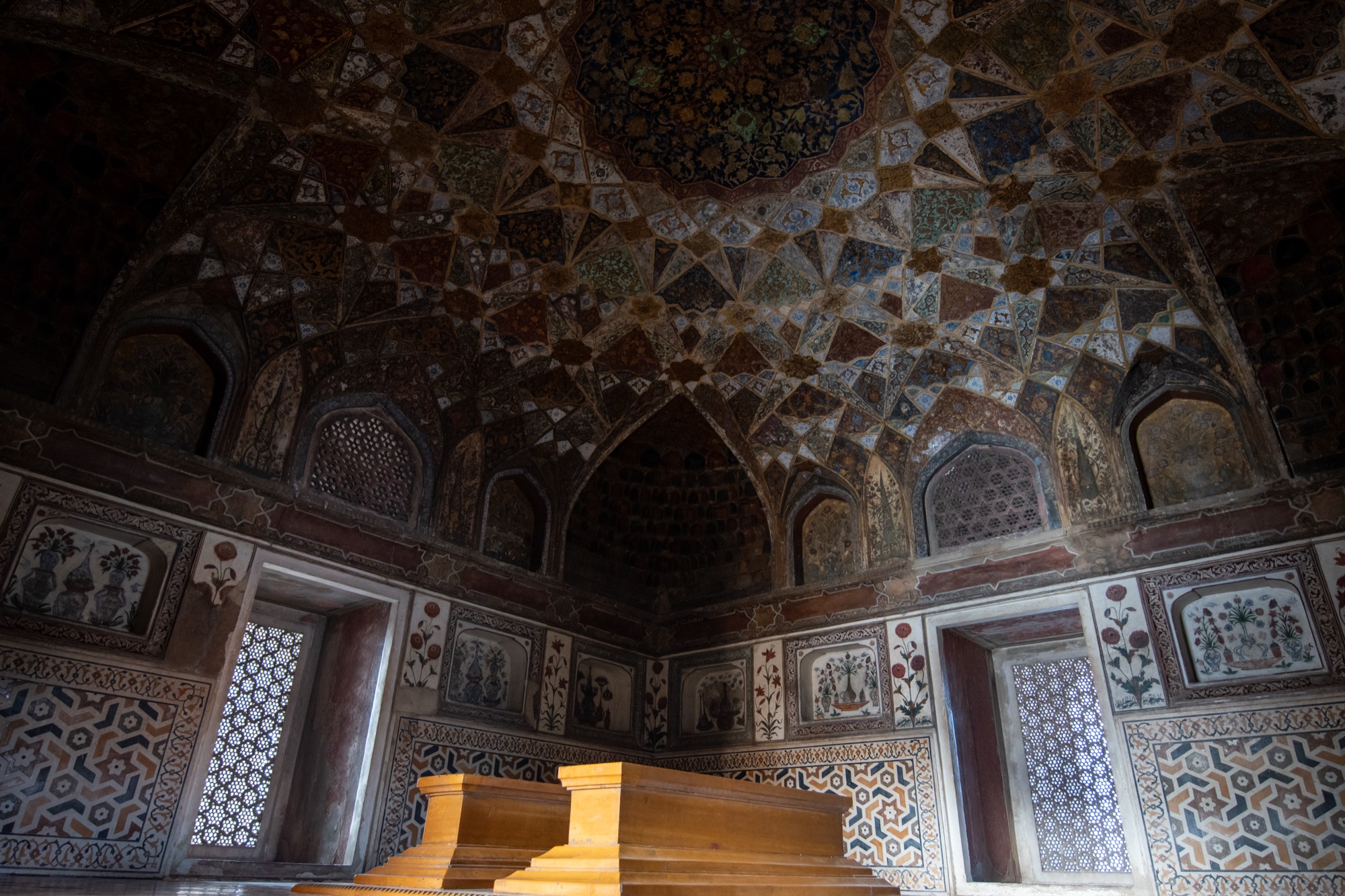
Humayun's Tomb was inscribed on the World Heritage List in 1993, and it is the building the Taj Mahal descends from — the first of the great garden tombs, and the one where the form was worked out. Next to it, six metres below ground, is the site museum inaugurated on 29 July 2024: a sunken building holding over seven hundred objects, MughalMughalRelating to the Muslim dynasty of Central Asian descent that ruled most of the subcontinent from the sixteenth to the eighteenth century.Read in the glossary miniatures and manuscripts, coins, astrolabes, celestial spheres, stone inscriptions, glass and textiles, built by the Aga Khan Trust for Culture with the Archaeological Survey of India after nine years of construction and a quarter-century of conservation across the wider site. It is the best museum in Delhi, it did not exist three years ago, and a great many itineraries have not caught up with it.
The museum also functions as a passage. It connects the tomb complex to Sunder Nursery, ninety acres restored by the same trust and opened to the public on 21 February 2018 — Delhi's first arboretum, with fifteen heritage monuments inside it, six of them on the World Heritage List, and a Persian garden rebuilt after a thousand truckloads of rubble came out of the ground. In the last hour of daylight it is the most beautiful public space in northern India and it is almost always half empty.
Finish in the basti at dusk, at the dargahDargahThe shrine built over the tomb of a Sufi saint, visited as a place of pilgrimage by people of many faiths.Read in the glossary of Hazrat Nizamuddin Auliya, where Amir Khusrau and Jahanara Begum — Shah Jahan's eldest daughter — are buried near the entrance, among more than seventy graves. The shrine is open from five in the morning until half past ten at night, entry is free and open to anyone of any faith, and qawwaliQawwaliThe devotional music of Sufi Islam, sung by a group with harmonium, percussion and driving handclaps, intended to carry singer and listener towards religious ecstasy.Read in the glossary is sung every Thursday evening after the Maghrib prayer. If one of your three days is a Thursday, this is the evening to protect. It is not a performance, the crowd is substantial, and it is the single most affecting hour available to a visitor in Delhi.
Day three: Mehrauli, and the first Delhi
The Qutb Minar is on every itinerary. Mehrauli is on almost none, and they are adjacent.
Take the Qutb complex first and early. The minaret is 72.5 metres of red and grey sandstone in five storeys, begun in 1199 by Qutb ud-Din Aibak and finished around 1220 by his son-in-law Iltutmish, and it was inscribed on the World Heritage List in 1993. The 379 steps inside it are closed and have been since 4 December 1981, when the stairway lighting failed and between three and four hundred visitors stampeded for the exit; forty-five people died, many of them schoolchildren. Nobody mentions this at the monument, and it is worth knowing why the door is shut.
In the same enclosure stands the Quwwat-ul-Islam mosque, built by Aibak in 1199 and the earliest surviving mosque of the Delhi Sultans, assembled openly from the material of twenty-seven Hindu and Jain temples — which is visible in the carving and is the honest and complicated beginning of Islamic architecture in India. And in its courtyard, the Iron Pillar: a fourth-century shaft raised as a standard of Vishnu for a ruler named Chandra, with a Sanskrit inscription, standing there five or six hundred years before anything else around it.
Then cross into the Mehrauli Archaeological Park, which is two hundred acres holding over a hundred monuments, and the only part of Delhi with a thousand years of continuous occupation. Balban's tomb, from about 1287, contains the earliest surviving true arch and true dome in the subcontinent — the structural idea that makes everything from Humayun's Tomb to the Taj Mahal possible, sitting in a ruin with no ticket office. Jamali Kamali, built between 1526 and 1535, is the pre-Mughal mosque immediately before the form changes. Rajon ki Baoli and Gandhak ki Baoli are stepwellsStepwellA well reached by a long descending staircase, so that water can still be drawn as the water table falls.Read in the glossary you descend into. Quli Khan's tomb was converted into a country house by a nineteenth-century British Resident, which tells you most of what you need to know about how Delhi treats its own past.
It is a walk rather than a set of stops, it takes a morning and can take a day, and it is the closest thing Delhi has to a secret.
What three days does not include
Agra. Three days in Delhi means three days in Delhi. The day trip to the Taj Mahal is a real thing that a great many people do and it is not what this itinerary is, because a round trip that leaves before dawn and gets back after dark removes a third of the time available and returns a tired guest who has seen the Taj Mahal badly. Agra deserves its own night, and the Taj deserves a sunrise you have slept near.
It also does not include Akshardham, the Lotus Temple, the National Museum, the Crafts Museum, Purana Qila, Safdarjung's Tomb, the Lodi Gardens or the shopping, all of which are worth time and none of which will fit. Three days in Delhi is a choice about what to leave out, and the version above leaves out the ones that photograph well in favour of the ones that explain the city.
If you have a fourth day, spend it on craft and the market rather than another monument. If you have a fifth, spend it in Mehrauli again.
The season, and the air
Delhi has a short good season and a long difficult one. The window is roughly October to March: May and June are genuinely dangerous heat for anyone walking a monument at midday, the monsoon makes the old city hard going, and January brings the fog that turns a forty-minute airport transfer into two hours and delays flights out.
The air is a real planning consideration and not a reason to cancel. The Commission for Air Quality Management operates a Graded Response Action Plan across the capital region with four stages tied to Delhi's air quality index — Stage I at 201 to 300, Stage II at 301 to 400, Stage III at 401 to 450, and Stage IV above 450 — and each stage brings progressively stricter restrictions on construction, older vehicles and, at the top, commercial activity and schools. The difficult weeks are in the late autumn and early winter. What this means practically is that the outdoor half of the itinerary above is best done in the morning during those weeks, that the Humayun's Tomb Museum's 9pm closing is more useful than it first appears, and that anyone with a respiratory condition should be checking the index for the week rather than the month.
None of that is an argument against Delhi in December. It is an argument for planning the days in the order the city allows rather than the order a list suggests — which, in the end, is the whole of the case above.
Domande, con risposta
Is the Red Fort closed on Mondays?
No, not any longer. The Archaeological Survey of India issued an order on 13 February 2026 opening the Red Fort on all seven days of the week, ending a long-standing Monday closure that still appears in most guidebooks. It now runs from sunrise to 9pm.
Is three days enough for Delhi?
Yes, if the three days are grouped by geography rather than by checklist. Delhi is a sequence of capitals built in different places over about a thousand years — the old city in the north, the imperial centre, and the Qutb and Mehrauli in the far south. One day in each works. One day covering all three does not, and costs roughly three hours in the car.
What is the museum at Humayun's Tomb?
A sunken museum six metres below ground, inaugurated on 29 July 2024 by the Aga Khan Trust for Culture with the Archaeological Survey of India. It holds over seven hundred objects — Mughal miniatures and manuscripts, coins, astrolabes, celestial spheres, inscriptions, glass and textiles — and physically connects the tomb complex to Sunder Nursery. It is closed on Mondays and national holidays and open 10am to 9pm, with last entry at 8pm.
Can you go inside Rashtrapati Bhavan?
Yes. The main building and central lawn are open to visitors on Thursdays, Fridays, Saturdays and Sundays; the museum complex is open every day except Monday; and the gardens open from November to March, again Thursday to Sunday. The Change of Guard is held on Saturdays and Sundays. All circuits close on gazetted holidays, and a visit needs arranging in advance.
Can you climb the Qutb Minar?
No. The 379 steps inside have been closed to the public since 4 December 1981, when the stairway lighting failed and between three and four hundred visitors stampeded towards the exit. Forty-five people died, many of them schoolchildren. The complex itself, including the Quwwat-ul-Islam mosque and the fourth-century Iron Pillar, is open as normal.
What is worth seeing in Mehrauli beyond the Qutb Minar?
The Mehrauli Archaeological Park, immediately adjacent — two hundred acres with over a hundred monuments, and the only part of Delhi continuously occupied for a thousand years. Balban's tomb, from around 1287, holds the earliest surviving true arch and true dome in the subcontinent. The Jamali Kamali mosque and tomb date from 1526 to 1535, and Rajon ki Baoli and Gandhak ki Baoli are both substantial stepwells. Almost no itinerary includes any of it.
When is the best time to visit Delhi?
October to March. May and June bring heat that makes walking a monument at midday genuinely unwise, and January brings fog that delays flights and lengthens transfers. On air quality, the Commission for Air Quality Management runs a four-stage Graded Response Action Plan keyed to Delhi's air quality index — Stage I at 201 to 300 through to Stage IV above 450 — and the difficult weeks fall in late autumn and early winter, which is an argument for doing the outdoor half of each day in the morning rather than for staying away.
I viaggi che la portano lì

Da leggere dopo