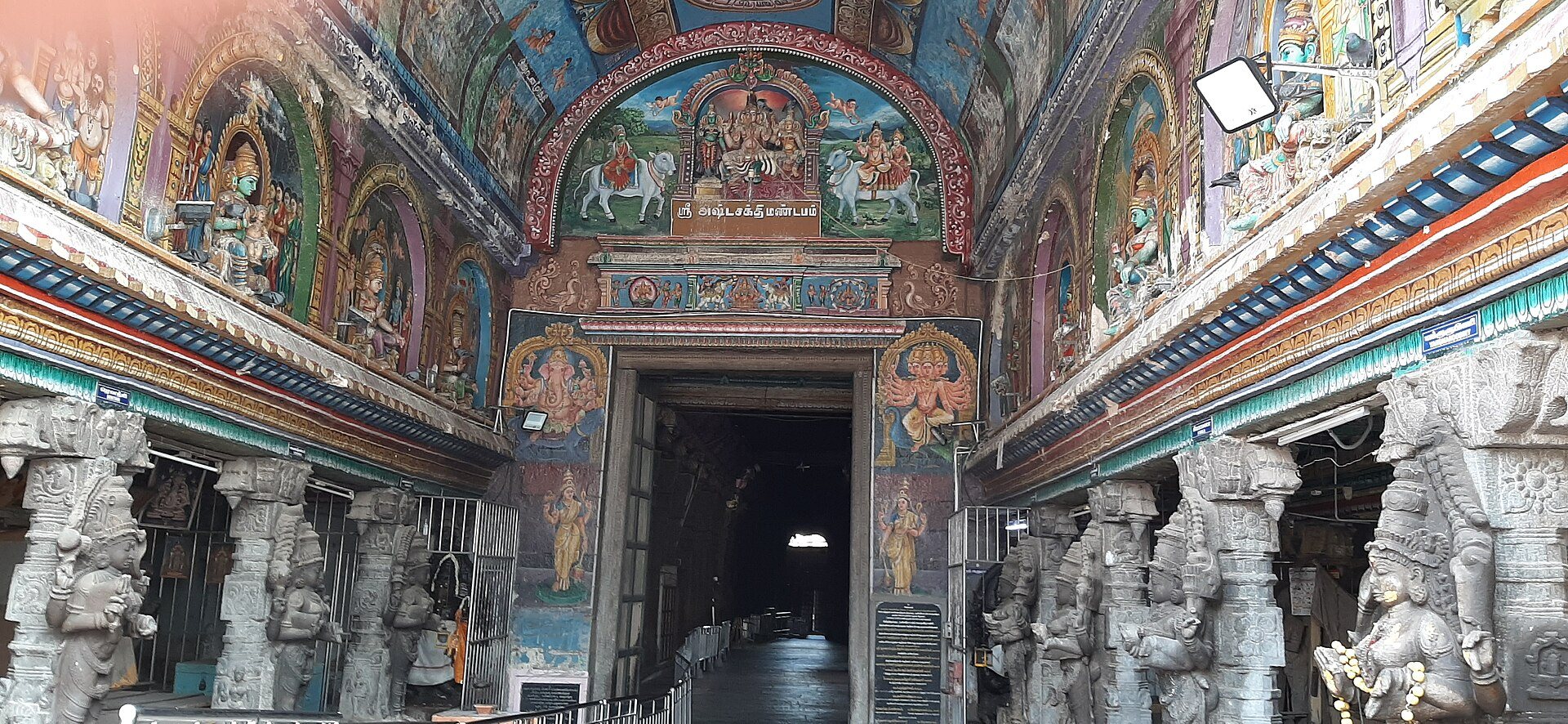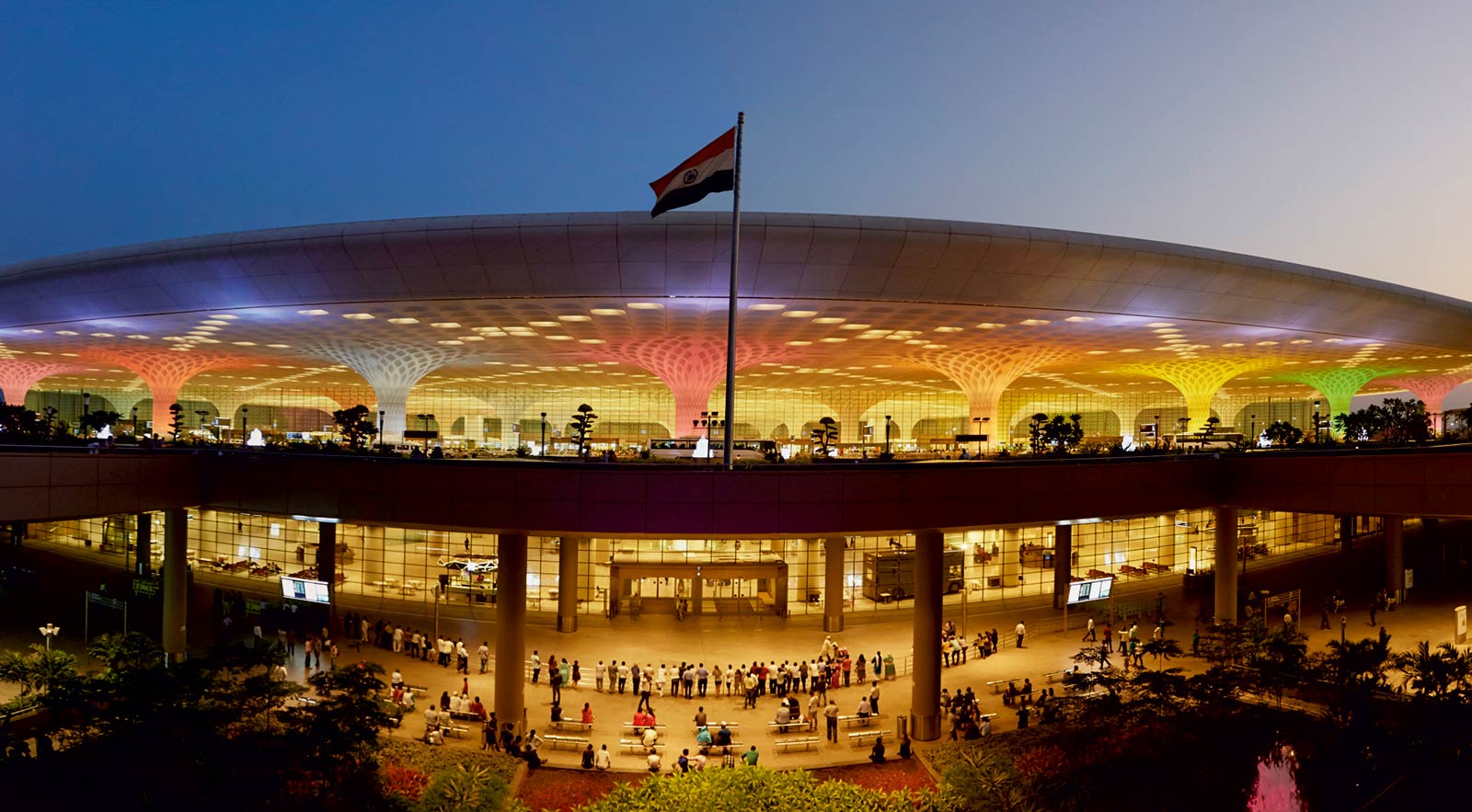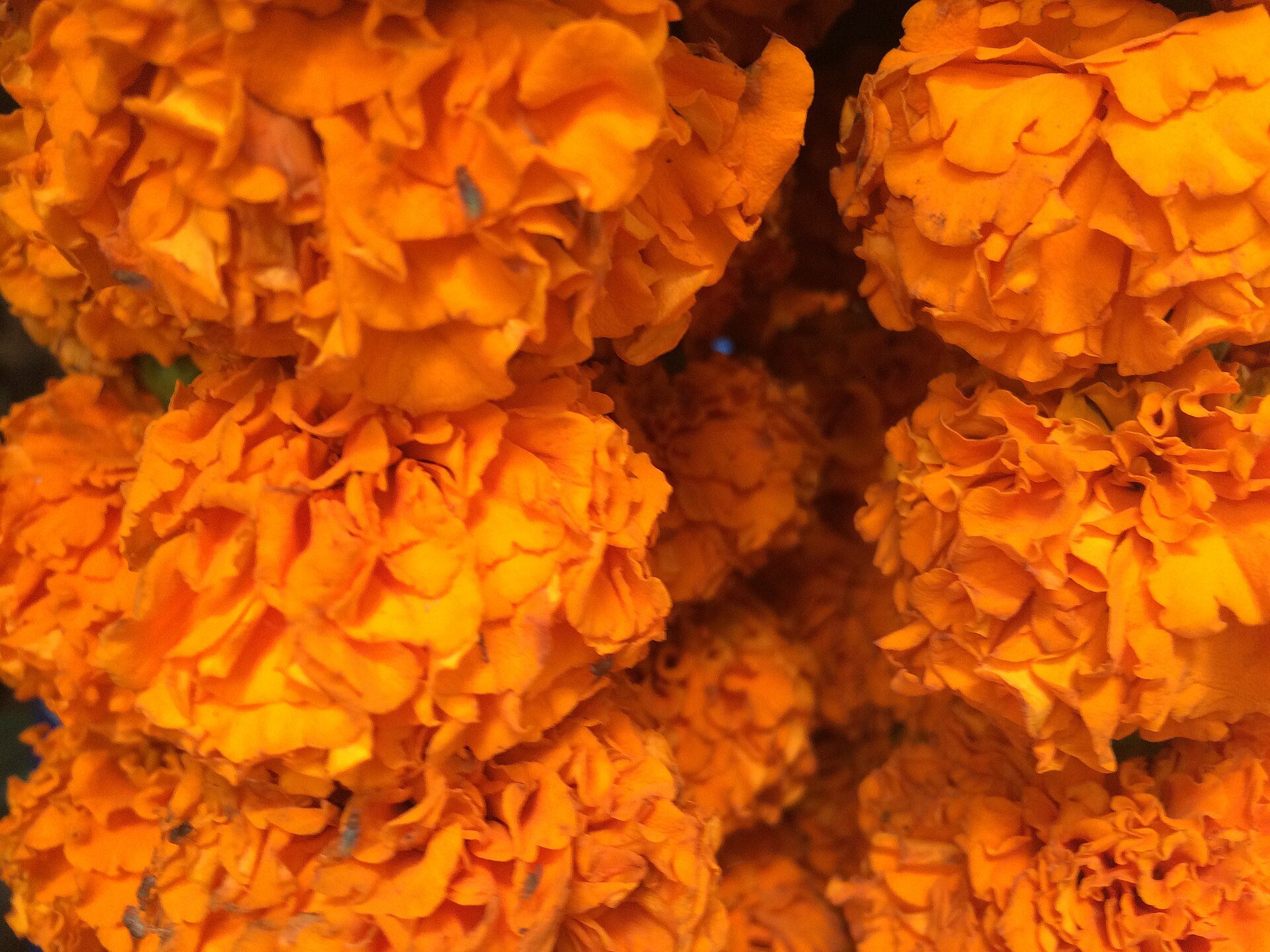
Hero photograph: Marigold garlands, India, by SnapMeUp (CC BY 4.0), via Wikimedia Commons
Being a guest at an Indian wedding is one of the great experiences available to a visitor to this country and almost nobody writes practically about it, because the literature is all about planning one. The anxieties people arrive with are mostly the wrong anxieties. Nobody will mind what you wear as much as you will. Nobody expects you to know the rituals. What will actually catch you out is the duration, the timing, the money, and a particular kind of hospitality that does not take no for an answer. We have put our guests into a great many of these and this is what we tell them.
There is a well-populated genre of writing about planning an Indian wedding, and we have contributed to it ourselves. There is almost nothing about going to one, which is odd, because far more visitors get invited than get married.
The invitation usually comes from a colleague, a client, a university friend or somebody met through work, and it arrives with very little explanation attached, because the sender assumes a shared understanding that the recipient does not have. What follows is a week of quiet anxiety about clothes.
Clothes are the thing people worry about and very nearly the least important. Here is what actually matters.
It is not a day
The first and most consequential adjustment. An Indian wedding is a sequence of events across several days, and depending on the family and the community it can run from a long weekend to the better part of a week.
The shape varies enormously by region, religion and community, and anybody who gives you a single template is describing one tradition and calling it India. But in broad terms there is a run-up of events in each family's own home, then a set of shared celebrations, then the ceremony itself, then a reception.
The thing to understand, and it surprises almost every foreign guest, is that the ceremony is frequently not the social centre of the week. Depending on the tradition it may be long, conducted in a language you do not speak, scheduled according to an auspicious time that falls in the middle of the night, and attended by a steadily thinning crowd while the catering continues elsewhere. It is often the most moving part and rarely the most convivial.
The events on either side — the music nights, the applying of turmeric, the mehndi, the groom's procession, the reception — are where the guests actually are.
So if you can only come for part of it, do not assume you should come for the wedding. Ask the family which event they most want you at. The answer is frequently not the one you expected, and asking the question is itself read as courteous.
The timing, which is the real trap
The card will give a time. The time on the card is the beginning of a window rather than a moment, and this is the single most reliable source of foreign-guest discomfort we encounter.
Arriving at the printed hour for a reception will often mean standing in an empty marquee watching staff finish laying tables. Arriving ninety minutes later will mean arriving when things are starting. There is a real gap between the stated time and the social time, and nobody in the room regards this as a problem because nobody in the room is operating on the stated time.
There is one important exception, and getting it wrong is the mistake that stings. Where a ceremony is fixed to an auspicious hour calculated for that couple, that hour is real and the ritual will proceed on it. If an event is described to you with a precise time and the word muhurat, or if somebody says firmly that it begins at twenty past four in the morning, believe them.
The practical rule: ask your host, or ask another guest, what time people will actually arrive. Everybody knows and nobody writes it down.
The second practical rule concerns the nights. These events run late — a reception may still be serving at one in the morning, and the ceremony may be after that. If you have come to India for a wedding and also booked a sightseeing itinerary, you need to understand that you cannot do both at full intensity. We build the days after wedding nights deliberately empty, and guests who override that advice regret it on day three.
What to wear, settled
Nobody minds as much as you think. But there are a few things worth knowing, because they are cheap to get right.
Dressing in Indian clothes is welcomed, not resented, provided it is done respectfully rather than as costume. A woman in a well-chosen salwar kameez or a sariSariAn unstitched length of cloth, several metres long, draped to form a garment — the principal traditional dress of Indian women.Read in the glossary she has been helped into will be received with pleasure. A man in a kurta is entirely unremarkable. If that feels like a step too far, formal Western dress is perfectly acceptable at any Indian wedding we have ever sent anybody to.
The one near-universal rule for women guests in North India is to avoid wearing red, and particularly not a red lehenga or a heavily worked red outfit, because that is the bride's. In the south the equivalent caution attaches to the colours and the specific drape a bride wears, which vary. If you are in doubt, ask somebody in the family and they will tell you happily.
White and black are worth a thought. White carries mourning associations in much of Hindu practice, and black is avoided by some families for auspicious occasions. Neither is a hard prohibition at a modern urban wedding and you will see both. But if there is an easy alternative, take it.
Cover your shoulders if any event is in a temple or a gurdwara, and expect to remove shoes at some of them. We have written separately about etiquette at places of worship, and a wedding held at one is governed by the same rules as any other visit.
Dress up rather than down. Indian weddings are formal, guests are magnificently turned out, and the foreign visitor's instinct towards understatement reads as having not bothered. This is the only context in which we tell guests that more is correct.
And wear shoes you can get off and on. You will do it more than once.
The gift, which has a convention
The convention is cash, in an envelope, handed over at a reception or given to a family member, and it is neither grasping nor impersonal — it is how the enormous cost of the event is collectively absorbed.
The amount traditionally ends in one. Two thousand one hundred and one rupees; five thousand one hundred and one; eleven thousand one hundred and one. The extra rupee is the point of it: it makes the sum indivisible and is read as a wish that the relationship should continue rather than conclude. A round number is not an insult, but ending in one is the gesture, and foreign guests who make it are noticed.
How much is a question of your relationship to the family rather than your nationality, and we would guide on it privately rather than publish a figure. The thing to resist is the instinct to be lavish as a courtesy. Overgiving is awkward in a way that undergiving is not, because it converts a social gesture into a transaction.
Envelopes for the purpose — shagun envelopes — are sold everywhere and cost almost nothing, and using one rather than a hotel envelope is a small courtesy that takes two minutes.
If you would strongly rather give an object, give something from your own country. Something made where you live, with a note explaining what it is. That is received as a gift. Something Indian, bought in India, is received as a souvenir.
One thing not to give: alcohol, unless you are certain of the family. Many Indian weddings are entirely dry, many families do not drink, and the assumption that a good bottle is a universal gift travels less well here than almost anywhere.
Food, and the hospitality that will not take no
You will be fed continuously and you will be pressed to eat more than you want, and declining does not work the way you expect.
A polite no in most of the world ends the conversation. At an Indian wedding it opens one. Food will be put on your plate while you are still saying no. This is not a failure of communication; it is a form of care, and it is particularly directed at guests who have come a long way.
The technique that actually works is to accept a small amount enthusiastically rather than to refuse. Leaving a little is fine. Refusing outright reads as displeasure with the food, which is not what you mean.
If you have a real dietary restriction — coeliac, a nut allergy, anything medical — tell us or tell the family in advance rather than at the buffet, because the kitchen at a wedding is cooking for several hundred people and cannot improvise. This is important and it is the one area where politeness should give way to clarity. We have written elsewhere about handling restrictions in India properly and everything in that piece applies more sharply at a wedding.
On alcohol: it varies completely. Many weddings have a full bar and some have a very good one; many are entirely dry; at some the men drink and the women do not. Follow the room, and do not arrive with the assumption either way.
Being photographed, and photographing
You will be photographed a great deal, including by people you have not met, and you will be asked to pose for photographs with strangers. This is normal and it is friendly. A foreign guest at a family wedding is a small event in itself and people will want a picture.
Going the other way, the rule is the one that applies everywhere: the professional photographers are working and have sightlines, and standing in them is the one genuine irritation a guest can cause. Stay out of the aisle during a procession and out of the frame during the ceremony.
Ask before photographing the rituals themselves. Most families are delighted. Some are not, and a few moments — particularly the more intimate religious ones and anything involving the bride's family's farewell — are not for a camera held by somebody who does not know what they are watching.
If any event is in a temple or a gurdwara, the rules of that place apply and some of them are strict.
What is actually happening, in broad terms
We will keep this general, because specificity here is where travel writing goes wrong — what follows describes common North Indian Hindu practice, and a Tamil Brahmin wedding, a Sikh wedding, a Bengali wedding, a Malayali Christian wedding, a Muslim nikah and a MarwariMarwari horseAn Indian riding horse, bred in Marwar, recognisable by ears that curve inward until the tips meet.Read in the glossary wedding differ from it and from each other enormously.
There will usually be an engagement or formal agreement between the families, sometimes long before.
There will be a night of music and dancing, which in its contemporary form involves rehearsed performances by both families and is often the most purely enjoyable evening of the week. If you are asked to join a dance, join it. Nobody is judging the dancing.
There will be an application of turmeric paste to the bride and groom, separately, at their own homes, which is domestic, messy and affectionate, and to which you may or may not be invited depending on how close you are.
There will be henna applied to the women's hands, which takes hours and is a social occasion rather than a cosmetic appointment.
There will be a procession in which the groom arrives, traditionally on a horse, with a band and a great deal of dancing in the street, and his family and friends dancing him to the venue. This is loud, slow, joyful and goes on far longer than you expect. It is also the single best thing to be part of as a guest, and you should be in it rather than watching it.
There will be a ceremony conducted by a priest, involving a sacred fire, the joining of the couple's garments, and circuits made around the fire, with vows spoken at each. It is long. There is no expectation that you follow it. Somebody will usually sit near you and explain, and if nobody does, ask — people enjoy explaining.
There will be a farewell, when the bride leaves her family's home. It is emotional in a way that can take a foreign guest by surprise, and it is not a performance. Follow the room.
And there will be a reception, often given by the groom's family, which is the large formal party where most of the guest list appears, the gifts are given and the photographs happen.
If you are only there for one or two of these, the music night and the procession are the ones that will make you glad you came.
The things that actually catch people out
Six, in our experience, and none of them is clothes.
The scale. A wedding of eight hundred people is unremarkable. You will meet a great many people once, be told how they are related, and retain none of it. Nobody expects you to.
The sound. Indian weddings are loud, deliberately. If you are sensitive to noise, position yourself at the edges rather than enduring the middle.
The duration, again, because it is the biggest one. Several consecutive late nights, heavy food, a great deal of standing. Build nothing demanding into the following mornings.
The cash. Have rupees, in notes, in an envelope, before the day. Nobody is going to accept a card.
The heat, if it is a daytime event in a marquee in the shoulder season — and the cold, if it is an outdoor December wedding in north India, where the evenings are genuinely cold and the venue will be outdoors anyway. We have written about packing for a Rajasthani winter and every word applies.
And the invitation itself. If you are asked whether you are coming, say yes or no clearly and early. Indian hospitality absorbs late additions gracefully, but catering is being counted and rooms are being blocked, and the clearest courtesy a foreign guest can offer is an unambiguous answer.
If the wedding is the reason for the trip
A word on planning around one, because this is where we are usually involved.
Wedding season in north India runs broadly through the winter and is dense in November and December, which is also peak travel season. If you are attending a wedding in that window, understand that hotels, drivers and flights around the venue city are under pressure for reasons that have nothing to do with tourism. Book early is advice everybody gives; book earlier than you think is what we actually mean.
Leave the days immediately after the main events genuinely empty. Not light — empty. The most common failure mode we see is a guest who has flown in, attended three consecutive late nights, and then has a six o'clock departure for a monument.
And consider doing the trip the other way round. Arrive several days early, see what you want to see while you are fresh and on local time, and let the wedding be the end of the trip rather than the middle of it. Guests who do it that way enjoy both halves. Guests who put the wedding in the middle tend to sleep through the second half.
One last thing, and it is the reason we like this piece. Of all the ways a visitor can spend a week in India, being a guest at somebody's wedding is the one that most reliably changes how they think about the country — because it is the only one where they are not a customer. You will be fed, housed, introduced, photographed and absorbed by several hundred people who have no commercial interest in you whatsoever. Nothing we arrange can replicate that. Say yes.
Questions, Answered
How many days does an Indian wedding last?
It is a sequence of events rather than a single day, and depending on the family and the community it runs from a long weekend to the better part of a week. In broad terms there is a run-up of events in each family's own home, then shared celebrations, then the ceremony, then a reception.
What should a foreign guest wear to an Indian wedding?
Indian clothes are welcomed rather than resented when worn respectfully, and formal Western dress is perfectly acceptable at any Indian wedding. Dress up rather than down — guests are magnificently turned out, and the instinct towards understatement reads as having not bothered. Women guests in North India should avoid red, which is the bride's; white and black are worth avoiding where there is an easy alternative. Wear shoes you can get off and on.
What gift do you give at an Indian wedding?
The convention is cash in an envelope, handed over at a reception or given to a family member, and the amount traditionally ends in one — 2,101 or 5,101 rather than a round figure — because the extra rupee makes the sum indivisible and is read as a wish that the relationship should continue. Shagun envelopes are sold everywhere and cost almost nothing. If you would rather give an object, give something made where you live. Do not give alcohol unless you are certain of the family.
What time should I actually arrive at an Indian wedding event?
The time on the card is the beginning of a window rather than a moment, and arriving at the printed hour for a reception often means watching staff finish laying tables. Ask your host or another guest what time people will actually arrive. The exception is a ceremony fixed to an auspicious hour calculated for that couple — if you are given a precise time and the word muhurat, that hour is real and the ritual will proceed on it.
If I can only attend one event, which should it be?
Ask the family which event they most want you at, and expect the answer not to be the wedding itself — asking is itself read as courteous. The ceremony is frequently the least convivial part of the week. Of the rest, the music night and the groom's procession are the two that will make you glad you came.
Journeys That Take You There

Read Next