Lucknow is missed by almost every international itinerary, which is a strange fact about a city that once set the standard for courtesy, cuisine and courtly refinement across northern India. The NawabsNawabA Muslim prince or governor ruling a province under the Mughal empire and, later, under the Raj.Read in the glossary of Awadh spent a century and a fortune on the arts of living well, and the residue of that — buildings, food, embroidery, an unusually polite dialect — is still here and still in use.
The Bara Imambara, and a room that should not stand
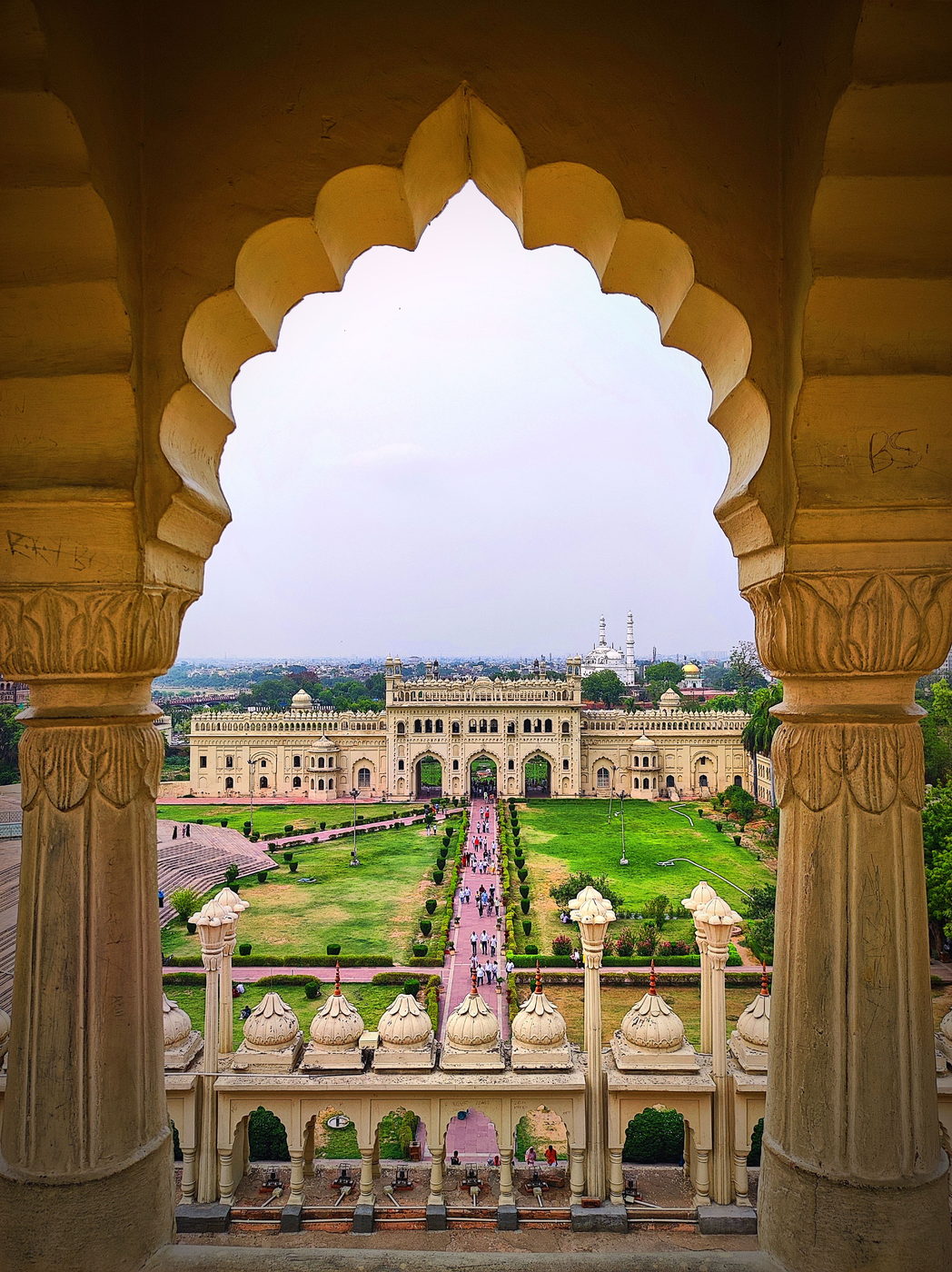
The central hall of the Bara Imambara is roughly fifty metres long and fifteen high, vaulted, and built without a single supporting beam — an engineering decision that remains startling in person. Above it runs the bhulbhulaiya, a labyrinth of interlocking passages and stairs built into the structure of the roof. It was commissioned as famine relief in the 1780s, which is a fact worth carrying around the building with you: the nobility worked at night pulling down what the labourers built by day, so the wages could continue.
Awadhi food, and the difference from Punjabi
Most visitors arrive in India with a mental model of north Indian food formed by Punjabi cooking — tandoorTandoorA cylindrical clay oven fired to a very high heat, used to bake bread against its walls and to cook meat on skewers.Read in the glossary, char, robust spicing. Awadhi cuisine is the other tradition: dum, the technique of sealing a pot and cooking slowly in its own steam; kebabs so soft they are eaten with a spoon; korma built on nuts and cream rather than tomato; biryaniBiryaniA dish of rice and meat cooked together in a sealed pot, so that the rice takes up the flavour of the meat as it steams.Read in the glossary layered rather than stirred. Even a short visit should include one serious kebab house and one proper dum biryani.
Chikankari
Lucknow's white-on-white shadow-work embroidery is one of India's great living crafts, and one of the most heavily counterfeited — machine work passes as hand work everywhere including in Lucknow itself. The distinction is visible on the reverse of the cloth, and it is worth being shown by someone who knows. Bought properly, from a workshop rather than a shop front, it is among the best things to take home from India.
How to fit it in
Two nights, and it sits naturally between Delhi and Varanasi — a pairing that turns two flights into a coherent route through the old north. Season is the standard northern one: October to March.
Questions, Answered
Is Lucknow worth visiting?
Yes, and it is among the most under-visited great cities in northern India. It offers exceptional Indo-Islamic architecture, arguably the finest cuisine in the north, and chikankari embroidery as a living craft — with a fraction of the visitor traffic of Delhi or Agra.
What is Lucknow famous for?
Awadhi cuisine — particularly slow-cooked dum dishes, kebabs and layered biryani — the monuments of the Nawabi period including the Bara Imambara, and chikankari, its distinctive white-on-white hand embroidery.
How many days do you need in Lucknow?
Two nights covers the principal monuments, a proper meal or two, and time in a chikankari workshop. It fits naturally between Delhi and Varanasi.
What is the Bhulbhulaiya?
The labyrinth of interconnecting passages and staircases built into the roof structure of the Bara Imambara. It should only be entered with a guide.
What is chikankari?
Lucknow's traditional shadow-work embroidery, usually white thread on fine white cloth. Much of what is sold is machine-made; genuine hand work is identifiable from the reverse of the fabric and is best bought at a workshop.
Journeys That Take You There
Read Next