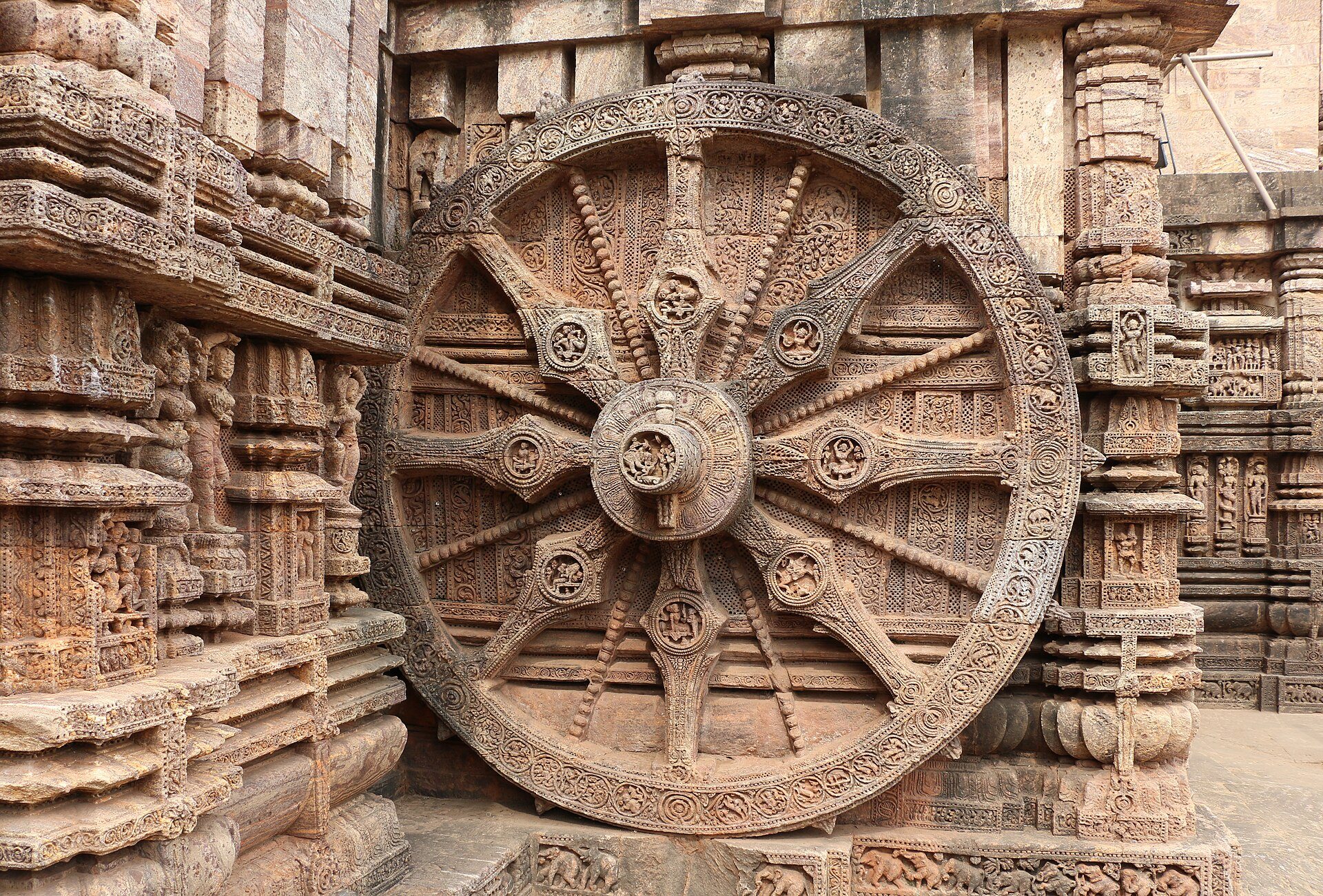
Hero photograph: Chariot wheel, Sun Temple at Konark, by Bernard Gagnon (CC BY-SA 3.0), via Wikimedia Commons
Odisha has one of the three or four great monuments in India, a documented Buddhist archaeology that nobody associates with the state, a Ramsar lagoon that came off the endangered register and won a prize for it, and the longest-running arribada of sea turtles anywhere outside Costa Rica. It also has exactly two internationally branded luxury hotels, nothing at all at Chilika or Bhitarkanika beyond forest camps, and a principal temple that most of our guests cannot enter. Both halves of that are true and a piece that gives you only one of them is selling something. Six to eight nights, late November to February, and go knowing what the inventory is.
We have written almost nothing about Odisha, which is a gap we are closing rather than a judgement we were making. It is the least-visited serious destination on the Indian east coast, and the reasons are partly real.
This piece will do two things. It will make the case, which is stronger than most people realise. And it will tell you honestly what the state cannot yet do for a guest who expects what Rajasthan provides, because the hotel inventory is thin in ways that a brochure would not mention.
Start with the fact that sets the tone for the whole place.
The edict that is not at Dhauli
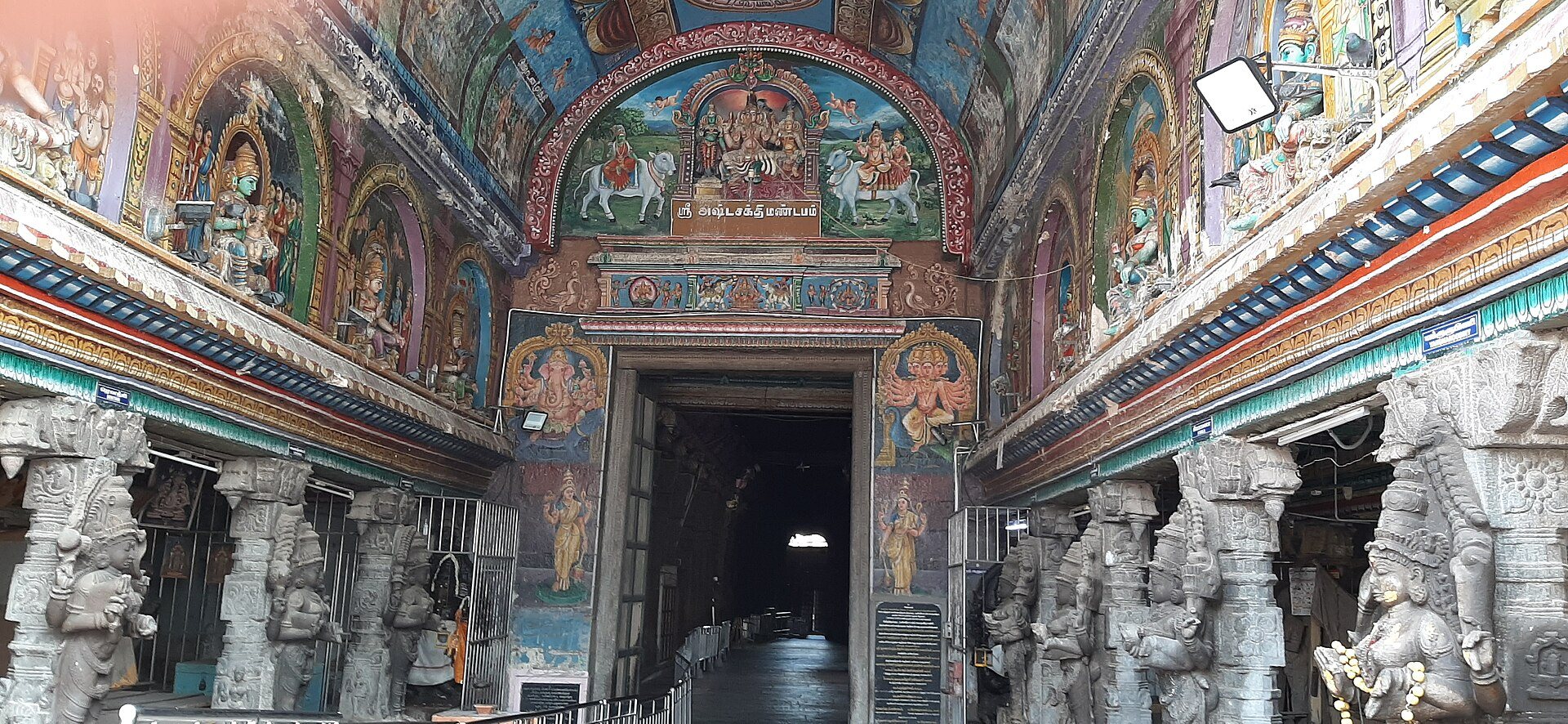
Eight kilometres south of Bhubaneswar, on the Daya river, is a low hill widely believed to be the site of the Kalinga war. Ashoka's rock edicts are carved there, as they are at Jaugada in Ganjam district — the two Ashokan edict sites in the territory he conquered.
The set at both places is Major Rock Edicts one to ten, and fourteen. Eleven, twelve and thirteen are absent.
Edict Thirteen is the one every educated reader knows. It is the text in which Ashoka counts the dead of Kalinga — the hundred and fifty thousand deported, the hundred thousand killed, the many times that number who died afterwards — and says that he is filled with sorrow, and that the conquest of a country not previously conquered causes him deep remorse. It is inscribed at Girnar in Gujarat, at Shahbazgarhi and Mansehra in what is now Pakistan, at Kalsi in Uttarakhand, at Erragudi in Andhra Pradesh.
It is not inscribed in Kalinga.
What stands at Dhauli instead are two separate edicts found nowhere else, addressed to the officials of the newly conquered province at Tosali and Samapa. The first is about judicial conduct — impartiality, the avoidance of undeserved fettering, the monitoring of officers — and contains the line all men are my children. The second instructs those same officials to persuade the unconquered peoples on the frontier that the emperor means them well, that they should learn he is to them like a father.
So the inscription at the site of the war is a set of administrative directions to an occupying bureaucracy, and the emperor's grief was published everywhere except to the people it was about. We should be careful here: the omission is documented fact, and the reading of why is an inference. But it is a startling thing to stand in front of, and almost nobody writes it.
One correction while you are there. The white stupaStupaA solid domed Buddhist monument, built to house relics and walked around by worshippers as an act of devotion.Read in the glossary on the hilltop that everybody photographs is not Ashokan and not ancient. It was built in 1972 by the Japan Buddha Sangha and the Kalinga Nippon Buddha Sangha. The thing to look at is the rock-cut elephant beside the edict, which is.
Konark, and the hall full of sand
The Sun Temple at Konark was inscribed by UNESCO in 1984 under three criteria, as a 10.62-hectare compound. Not a town, not a beach — the compound.
It was built in the reign of Narasimha Deva I, between 1238 and 1264, as the chariot of the sun: twelve pairs of carved wheels about three metres across, dragged by seven rearing horses. The ASI's own description of the sanctum is worth quoting for its hedge — a sikhara reportedly over 68 metres high. The jagamohana, the assembly hall, is thirty metres square and thirty high, and it is what dominates the site now, because the great tower is gone.
When it fell is not fully established. Nineteenth-century accounts describe ruins, so the damage happened at some point between the mid-sixteenth and the late eighteenth century, by causes nobody has determined. What is dated is the end: the main tower fell in 1837 and the last standing curved fragment came down in 1848. European sailors had been calling it the Black Pagoda since at least 1676, as a navigational mark rather than a religious name.
Now the thing that makes Konark different from every other ruin in India.
In 1903 the Bengal administration filled the jagamohana with sand and sealed it, to stop it following the tower. It has been full ever since. The sand has settled by something between twelve and fifteen feet inside a seventy-foot hall, which is the structural concern now driving its removal.
We should say that the usual attribution of that order to Lieutenant-Governor Sir John Woodburn cannot be right. Woodburn died in office in November 1902. The sources split between him and his successor, Bourdillon, and we could not resolve it, so we write it as the Bengal administration and leave the name out.
The removal has been talked about since at least 2000, when UNESCO's committee asked for help framing a technical request for a structural survey. In December 2025 the Archaeological Survey reached the sand layer with a nine-metre bore about sixteen centimetres across, cut with zero-vibration diamond drilling, with a ten-member expert group on site. By April 2026 a thirty-member ASI and IIT Madras team was working on it, the fill having been tested at IIT Madras and found stable enough to remove, and extraction was reported to have begun through a passage cut in the western wall — four skilled workers, no heavy machinery, a projected three months.
And then the honest part. Reporting in June 2026 described the project as still about to commence; reporting in August described it as ongoing. No ASI or government statement describing the removal is published anywhere we could find — the only government answer on Konark conservation we could locate, from March 2021, does not mention the sand at all. Different outlets also use jagamohana, garbhagriha and sanctum interchangeably, which are different chambers; it is the jagamohana that was sealed, because the sanctum was already roofless.
What this means for a visitor is simple. The inside of that hall has not been seen for over 120 years, the work is live, and nothing suggests it will be open while it is going on. If you are travelling for Konark, ask us to ring the ASI sub-circle before you book. It is the single thing in this piece most likely to change within weeks.
What we will not tell you about Konark
Three things, because they are in every account of the place and none of them survives checking.
The wheels are not precision sundials accurate to the minute. That claim appears nowhere in UNESCO's inscription or on the ASI's own page, both of which describe chariot wheels and calendrical symbolism. It is uncited where it appears, and the one peer-reviewed treatment that asserts it gives no source. What is real is the guides' demonstration with a stick and a shadow, which is a genuine practice and a modern one. Twelve pairs are conventionally read as the twelve months and seven horses as the days of the week. That is enough; it does not need the embellishment.
The lodestone at the apex, removed by sailors so that ships' compasses would work, is legend. Even the sympathetic literature calls it unverified.
And the erotic sculpture is not the reason to go, and the position-counting treatment is both inaccurate and, in our view, embarrassing. These are kama and mithuna figures of a type integrated into Hindu temple art across India; Konark carries them most lavishly, and the scholarly question is placement rather than content — they concentrate on the upper register of the wall and increase from the tenth century onward. There are four competing readings of why, from four serious scholars, and none of them is settled. If you want the genuinely interesting fact: UNESCO's own dossier for Odisha's Buddhist sites notes that the tantric imagery at Ratnagiri includes erotic sculpture and calls it unique in the Buddhist world. The register crosses traditions here, which is a far better thing to notice.
Two practical notes, both current. Entry is ₹40 for Indian, SAARC and BIMSTEC nationals and ₹600 for other foreign nationals, slightly less booked online, free under fifteen, sunrise to sunset. And since 8 November 2025 the Nata Mandap has been closed to entry — visitors may not go into it, climb it or touch the carving, after falls during selfie-taking and scratching of the stone. Any guidebook that has you standing on that platform is out of date.
Puri, honestly
We have written separately about temple entry rules in India, so we will not repeat the position at the Jagannath temple here beyond the essentials: the temple administration's own FAQ says only Hindus are allowed inside; it applies to the whole complex; smartphones have been banned for everyone since January 2023 and a dress code has been mandatory since January 2024.
What that leaves is a question the guidebooks answer badly, because their answer no longer exists.
The standard recommendation for a non-Hindu in Puri has for decades been the roof of the Raghunandan Library inside the Emar Matha, from which the temple could be seen for a small donation. Both buildings were demolished between August and September 2019, in the clearance of the seventy-five-metre radius around the temple for the corridor project. If you read it anywhere, it is wrong.
The real answer is the Rath Yatra, and it is a good one. On the second lunar day of the bright fortnight of Ashadha — 16 July in 2026, around 5 July in 2027 — the deities leave the complex on three chariots and travel about three kilometres to the Gundicha temple, where they stay for seven days before returning. This is the one occasion on which somebody barred from the temple can see the deities, and that single fact reframes the whole Puri problem.
The chariots are rebuilt from nothing every year. Nandighosha, for Jagannath, has sixteen wheels, 832 wooden pieces and stands 44 feet 2 inches. Taladhwaja, for Balabhadra, fourteen wheels and 763 pieces. Darpadalana, for Subhadra, twelve wheels and 593. Each has its own charioteer, flag, horse colour and rope, all named. Around nine hundred thousand people attended on the day in 2026, on the Odisha government's own statement — a figure we would use in preference to the millions that get quoted.
On the Nabakalebara, the renewal of the wooden deities, we will correct a thing that is nearly always wrong. It is not a twelve-year cycle and it is not a nineteen-year cycle. It happens in a year containing an intercalary month of Ashadha, and because intercalation is irregular the observed interval has run from eight years to nineteen. The series runs 1912, 1931, 1950, 1969, then 1977 after only eight years, then 1996, then 2015. The next is widely reported as 2034, which we would describe as expected rather than confirmed.
On the kitchen, we are going to decline the superlative. The Rosaghara at Puri is routinely called the largest kitchen in the world, and we could not verify a single figure for it. The only cited authority is one 2006 Odisha government monograph, and the reference literature cannot even agree whether the claim is first or second — one encyclopedia calls it second largest while citing a source whose title says biggest. Treat the superlative as unverified, which is a more interesting sentence than any number.
And on the corridor around the temple, a word, because it is the live argument in Puri. The Shree Mandira Parikrama Prakalpa is a seventy-five-metre corridor over 15.64 acres, with a reception centre for six thousand visitors, built between November 2021 and its inauguration in January 2024, at a cost variously given between eight hundred and nine hundred and forty-three crore rupees. Over six hundred residents gave up land. The Supreme Court had directed the clearance, and later dismissed two public interest challenges as frivolous. What was never adjudicated on its merits is the substantive heritage objection: in February 2022 the Archaeological Survey halted the excavation and filed an affidavit stating that archaeological remains may have been destroyed during the excavation, as no heritage impact assessment studies were done. Those are ASI's own sworn words. The state won in court; the process objection was never answered.
The turtles, and why 2026 matters
Odisha's olive ridley arribadas are among the great wildlife events on earth and they are not a product you can book.
There are three documented mass-nesting sites — Gahirmatha, the Devi river mouth and Rushikulya — and the Devi has had none for over a decade, leaving two. Gahirmatha was identified by Robert Bustard in 1974; Rushikulya only in the early 1990s.
In 2025 Rushikulya had a record year: 698,000 turtles nested between 16 and 26 February on the Odisha Forest Department's figure, beating the previous record of 630,000 in 2023. An independent team from the Dakshin Foundation and the Indian Institute of Science counted 450,000 to 500,000 over a two and a half kilometre stretch, and called it one of the biggest arribadas recorded there in twenty years.
In 2026 the same beach recorded 205,239 nests, and the event lasted four days. The forest officers attributed the compression to climate change. And at Gahirmatha there was no mass nesting at all — the first blank year in twelve, after 2014 and 2008, with the turtles massing offshore after the February mating season and then dispersing. Coastal erosion, climate variability, illegal fishing and unseasonal rain were all cited.
The window is February to March and it cannot be predicted to the week. The government's own position is nesting from December to April with peak activity in mid-March; in practice 2025 was mid-to-late February and 2026 was mid-March.
One thing that needs saying plainly, because it is sold wrongly. Gahirmatha's nesting beach sits inside the no-entry core of a marine sanctuary — 725 square kilometres where commercial fishing is prohibited year-round, inside a total of 1,435, notified in October 1997. It is not a visitable arribada and never was. Rushikulya, in Ganjam district, is where access is managed by the Forest Department, and we could not find a published visitor protocol for it. It has to be arranged through the divisional forest office, and it should never be sold as a guaranteed experience. 2026 is the argument for that.
The protection regime behind all this is substantial and worth knowing: a seven-month marine fishing ban from 1 November to 31 May within twenty kilometres of the coast at three river mouths, a year-round ban off Gahirmatha, sixty-one onshore and five offshore camps, joint patrols with the Coast Guard — and a one-time livelihood payment of ₹7,500 to around 10,666 affected fishing families. The cost of the turtles is borne by people who did not choose it.
Chilika, and a conservation story that ended well
Chilika is a brackish lagoon of about 1,165 square kilometres in the rains and 906 in the dry season, and it has a distinction almost no wetland has.
It was designated Ramsar site number 229 on 1 October 1981, among India's first two. In June 1993 it was placed on the Montreux Record — the register of wetlands in trouble — because of siltation. In November 2002 it was taken off, after rehabilitation by the Chilika Development Authority, which won the Ramsar Wetland Conservation Award the same year.
The dolphin count is the thing visitors come for. The most recent official census, reported in February 2026, puts 159 Irrawaddy dolphins in Chilika, unchanged from the year before, within a statewide total of 765 aquatic mammals across six species — a five-year high. Officials maintain Chilika holds the highest concentration of Irrawaddy dolphins at any single location in the world.
And here is the part a luxury publication ought to say rather than skip. The International Whaling Commission's own case study on Chilika records over two thousand boat trips a month from a single operators' association by 2009-10, around nine hundred vessels across four associations by 2010-11, and dolphin groups routinely surrounded by between one and seven boats during the October to January peak. Its conclusion is that constant pressure from vessel presence is a serious threat through disruption of feeding and resting. There is a printed dolphin-watching protocol and a joint patrol squad.
What that means in practice is that a good operator charters a single boat, works to the protocol, and briefs the guest on it, rather than joining the scrum at Satapada. We mention it because the alternative is contributing to the documented problem while believing you are having a wildlife experience.
The birds are the other half, and the numbers are extraordinary: 1,132,200 birds of 196 species, counted by the Chilika Development Authority and partners in a single morning between six and noon across five ranges, reported in January 2026 — up about five thousand on the previous year. The census is deliberately held in mid-January because that is the peak. Nalabana island, 15.57 square kilometres, is the sanctuary. Mangalajodi, in the northern marshes, runs punt-boat birding with former poachers as guides, which is a well-documented conservation and livelihood story, though we could not verify its own bird numbers against any government source.
Bhitarkanika, and the figure nobody uses
Bhitarkanika was declared a wildlife sanctuary in April 1975 over 672 square kilometres, a national park in September 1998 over 145, and a Ramsar site in August 2002 over 65,000 hectares.
The estuarine crocodile census of January 2026 counted 1,858 — up thirty-two on the year before, and 1,811 two years earlier — using day surveys for basking adults and night surveys for hatchlings and juveniles.
But the remarkable number is the one nobody quotes. Ramsar records 55 of India's 58 mangrove species at Bhitarkanika. That is more than the Sundarbans. A mangrove forest a fifth the size with almost the complete national species list in it is a far better reason to go than a crocodile count, and we have never seen it written.
We have to be honest about the operational side. We could not verify Bhitarkanika's opening and closing months, its permit requirements, its fees or its entry gates from any Odisha Forest Department or state tourism source. Everything circulating about gates, boat charges and closures comes from commercial operators. Permits are issued by the divisional forest office at Rajnagar and must be arranged in advance; we are not publishing a fee because no current official schedule is available, and we would rather say that than print a number that turns out to be three years old at a gate.
Bhubaneswar, and the Buddhist state nobody knows about
Bhubaneswar is on UNESCO's tentative list as Ekamra Kshetra, submitted in April 2014, citing 199 structures and two thousand years of continuous architectural development around a mandala layout of water bodies with Lingaraj at its centre. Twelve years on the list with no nomination submitted, so it is not UNESCO-listed and should not be described that way.
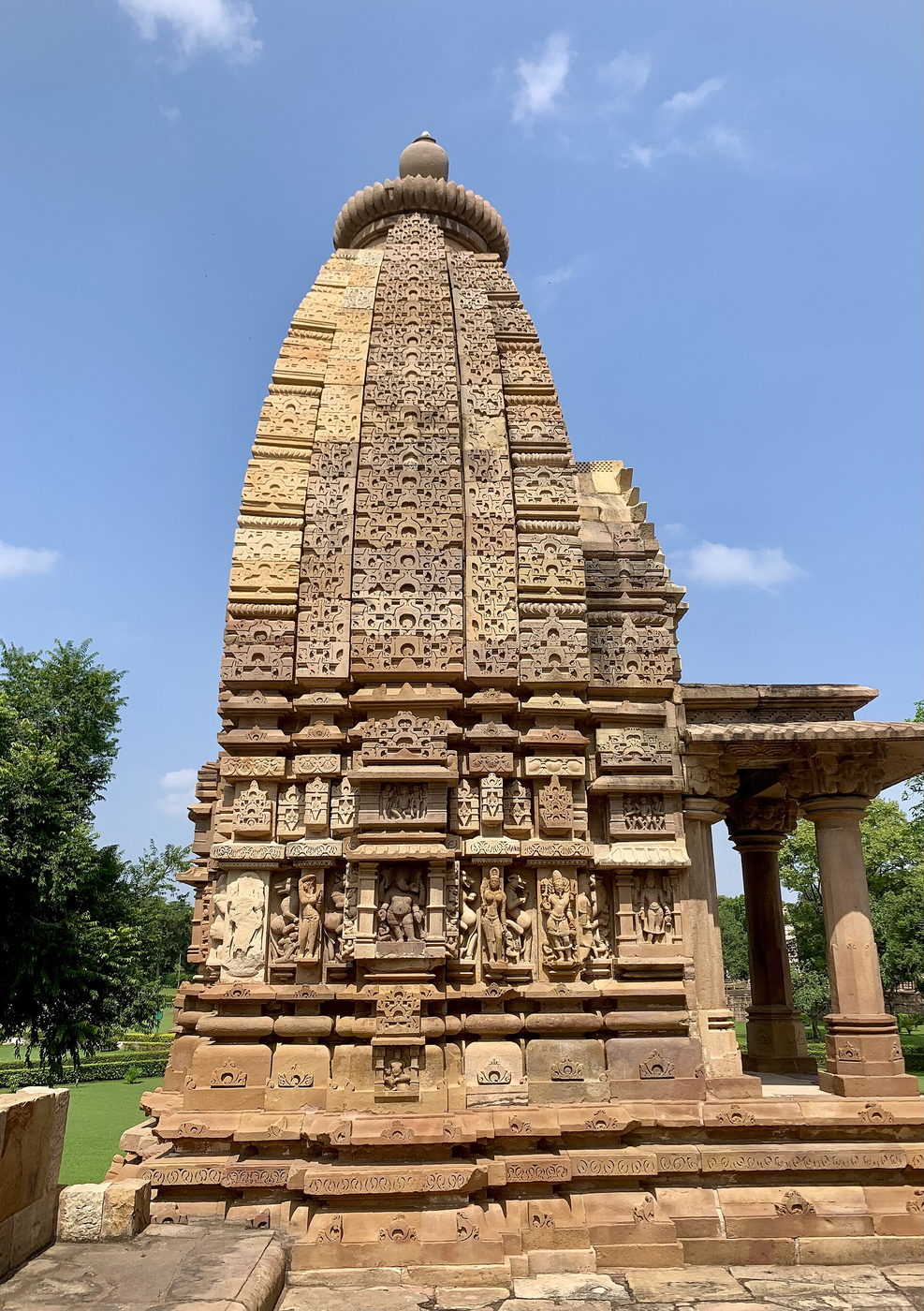
The four to see, with their dates. Parsurameswara, mid-seventh century, Shailodbhava — the best-preserved early Odia temple and the first in the city to add an assembly hall to the tower. Mukteshvara, around 950 to 975, the earliest Somavamsi work, whose freestanding toranaToranAn ornamental gateway or hanging placed over a threshold to mark it as auspicious.Read in the glossary of about 900 is unique among contemporary Odia temples and is the thing you will remember. Rajarani, mid-eleventh century, which has no image in its sanctum and is not a functioning temple — its name comes from the yellow-and-red sandstone it is built of, not from a king and queen. And Lingaraj, whose present form dates to the last decade of the eleventh century, with a 55-metre tower, where the viewing platform outside is the documented provision for non-Hindu visitors.
The Udayagiri and Khandagiri caves — eighteen and fifteen respectively — were cut in the second or first century BCE, largely as residential cells for JainJainA follower of Jainism, an ancient Indian religion whose central commitment is non-violence towards every living thing.Read in the glossary monks under Kharavela. The Hathigumpha inscription there, seventeen lines of Prakrit in Brahmi, is a genuinely consequential document: it records public works with their costs, military campaigns, and the recovery from Magadha of a Kalinga Jina image carried off by a king Nanda. Its date is contested across three centuries and the readings vary widely between scholars, so we would not give you one.
What it did to Indian chronology is the striking part. Early misreadings of this inscription propagated errors through the dating of Indian history, and Walter Spink argued the correction requires shifting numerous Buddhist monuments in central India and Andhra Pradesh forward by two to three hundred years. One cave inscription outside Bhubaneswar that forced a re-dating of Buddhist India.
Which brings us to the thing most visitors do not know about this state at all. In December 2025 India added to its tentative list a serial nomination of the Buddhist triangle sites of Odisha — Lalitgiri in Cuttack district, and Udayagiri and Ratnagiri in Jajpur — continuously occupied from the second or third century BCE to the thirteenth century CE, tracking Theravada through Mahayana to Vajrayana. Lalitgiri produced a Theravada-phase stupa containing relic caskets of khondalite, holding steatite, silver and gold caskets within. Ratnagiri was a major Vajrayana centre under the Bhaumakaras.
A state everybody files under Hindu temples has a Buddhist archaeology with a live World Heritage case, a day's excursion from the airport, and essentially no visitors.
The craft, and the dance that was built rather than found
Odisha's craft registrations are dense and specific. Verified at the Geographical Indications registry: Orissa Pattachitra, Pipli Applique Work, Orissa IkatIkatA weaving technique in which the threads are dyed to a pattern before they are woven, so the design emerges as the cloth is made.Read in the glossary and separately Sambalpuri Bandha SareeSariAn unstitched length of cloth, several metres long, draped to form a garment — the principal traditional dress of Indian women.Read in the glossary, Khandua, Bomkai, Habaspuri, Berhampur Patta, Gopalpur tussar, Kotpad handloom, Konark stone carving — which many sources wrongly say is unprotected — and, registered only recently, Cuttack Rupa Tarakasi, the silver filigree.
One clean negative worth having: there is no Odisha GI for dhokra. The register's dhokra entries are Bastar in Chhattisgarh and Adilabad in Telangana. Odisha's dhokra tradition in Dhenkanal is real and unprotected.
Pipli, about forty kilometres from Puri, makes chandua applique — from a word meaning canopy — a craft traced to the twelfth century and historically commissioned by the Gajapatis. It still supplies the cloth covers for the three Rath Yatra chariots. That is a living commission eight hundred years old, which is a better reason to stop than the roadside shops suggest.
Raghurajpur, fourteen kilometres from Puri, was designated by INTACH as Odisha's first heritage crafts village around 2000 — not India's first, which is the claim usually made. Over a hundred and twenty houses, most occupied by practising craftspeople: pattachitra, palm-leaf engraving, tussar painting, stone and wood carving, papier-mâché masks. It is the birthplace of Kelucharan Mohapatra and of Guru Maguni Charan Das, and the gotipua gurukul tradition continues there. Our honest caution: walking in unannounced produces a succession of sales approaches. Arranged in advance with a named household it is one of the best mornings in the state, and that difference is exactly what an operator is for.
On Odissi, the version in circulation needs correcting and the true version is better.
The pre-modern evidence is real: dance and musicians carved in the Manchapuri cave at Udayagiri in Kharavela's reign, and the Hathigumpha inscription recording the king as versed in the Gandharva arts and entertaining his capital with dancing and singing. Temple sculpture from the tenth to fourteenth centuries at Puri, Konark and Brahmeswara. Three traditions, not one — the maharis in the temple, the gotipuas outside it, the nartakis at court.
Then suppression. Hunter in 1872 describing the performances as indecent ceremonies; the anti-nautch movement from 1892; a colonial ban on temple dancing in 1910.
And then construction. In the mid-1950s the form began to be shown outside Odisha; demonstrations followed at SangeetSangeetThe music-and-dance evening held before an Indian wedding, at which both families perform for one another.Read in the glossary Natak Akademi seminars in Madras and Delhi in 1958; and on 22 June 1958 the Jayantika group was formed in Cuttack — six gurus, two journalists, two writers — and met for five or six years with the explicit aim of codifying the grammar and repertoire so that execution would be uniform, and of validating the dance against textual sources.
That is construction, not rediscovery, and it was contested at the time by two of its own founders. Pankaj Charan Das, now acknowledged as the adi-guru, broke with Jayantika because he held that the dance must acknowledge the mahari heritage in spirit and form. Deba Prasad Das broke with it too, resisting what he saw as Sanskritisation and arguing for regional Odia elements.
An ancient temple dance unchanged for a thousand years is the version to abandon. A classical form assembled in the 1950s out of three suppressed traditions, by people who argued bitterly about how to do it, is a far more interesting thing to watch.
Where to see it properly: the Mukteswar Dance Festival, 14 to 16 January, performed in the Mukteshwar temple precinct from six in the evening, free entry, run by Odisha Tourism with the state Sangeet Natak Akademi. The Konark Festival, 1 to 5 December, which is broader and includes Chhau. And Srjan, Kelucharan Mohapatra's own school in Bhubaneswar, which is the serious option for a private lecture-demonstration with a lineage behind it.
When to go, and the reason is not the weather
The season in Odisha is set by cyclones, and the exposure is bimodal: post-monsoon in October and November, and pre-monsoon in April and May.
The record is not abstract. The super cyclone of late October 1999 near Paradip. Phailin in October 2013 near Gopalpur. Fani in early May 2019 near Puri, after which the Archaeological Survey sent a high-level team to assess damage at both the Jagannath temple and Konark. Dana in late October 2024, near Bhitarkanika and Dhamra, with mass evacuations from the coastal villages.
The clean window is late November to February, and three independent things corroborate it rather than one. No major cyclone landfall is documented in Odisha in December, January or February. Chilika's bird numbers peak then, which is why the census is held in mid-January. And both dance festivals fall inside it.
March is a genuine trade-off: it opens the turtle window and closes the comfortable one. June to September is the monsoon. October and November, and April and May, carry the cyclone risk.
The honest assessment of what is there
Bhubaneswar's airport is six kilometres from the city and handled 4.8 million passengers in 2024-25. Its only international routes are Bangkok, Dubai and Singapore, which means in practice that almost every guest arrives via Delhi, Mumbai or Kolkata.
Puri has no airport. The one proposed is, fittingly, itself a wildlife story: a ₹5,631 crore project on 1,164 acres, which received environmental clearance in June 2025, had forest clearance deferred the following month because of the likely impact on olive ridley turtles and Irrawaddy dolphins and the felling of thirteen thousand trees on a vulnerable coastline, and received stage-one forest clearance in February 2026. No construction has begun. Anybody writing that Puri will soon have its own airport should be made to carry the clause about the turtles.
On hotels we are going to be blunt, because this is where the state will disappoint a guest who has not been told.
Odisha has exactly two internationally branded luxury properties. The Trident in Bhubaneswar, set in about fifty-seven thousand square metres of grounds and explicitly marketed as the base for the Bhubaneswar-Puri-Konark triangle. And the Taj Puri Resort and Spa, ninety keys, which opened in December 2024 — the first branded hotel in Puri, and the single most significant change to the state's inventory in years. Any assessment of Odisha written before 2025 is out of date on this point.
Mayfair is the strong regional group, with properties in Puri, Bhubaneswar and Gopalpur. Beyond that: at Chilika and at Bhitarkanika there is nothing we would stand behind without inspection. The state tourism department's own description of Bhitarkanika accommodation is nature camps with Swiss tents, government hotels, bed and breakfasts and homestays. That is the honest ceiling.
So the coast is served and the wildlife is not. A guest who wants Bhitarkanika is choosing the mangroves over the mattress, and should be told that before they book rather than discovering it at a jetty.
How we would build it
Six to eight nights for the state; four if you only want the triangle. That is our judgement rather than anybody's published guidance, and we will label it as such.
The Bhubaneswar-Puri-Konark triangle is genuinely compact and works from one base — sixty kilometres to Puri, thirty-five on to Konark by the marine drive, sixty-five back. A day for Bhubaneswar's temples with Udayagiri and Dhauli, a half day for Konark, a half for Raghurajpur and Pipli properly arranged, a day at Chilika, and a day in Puri — honestly less than a day for a non-Hindu guest outside Rath Yatra, which is worth planning around rather than discovering.
Add a day for the Buddhist triangle at Lalitgiri, Udayagiri and Ratnagiri, which now has a reason beyond curiosity.
Bhitarkanika is a separate journey with a boat at the end and needs two nights minimum. It is the reason the state is more than a long weekend, and the reason the hotel conversation has to happen first.
And if the trip is being built around one thing, build it around the second week of January. The birds are at their peak on the lagoon, the Mukteswar festival is in the temple precinct, the cyclone season is closed, and the weather is as good as the east coast gets.
Journeys That Take You There
Read Next