Planning Guides8 min readPublished August 4, 2026
The Golden Triangle — Delhi, Agra, Jaipur — is the most traveled route in India for the same reason the Louvre is crowded: the concentration of the extraordinary is simply higher here than anywhere else. MughalMughalRelating to the Muslim dynasty of Central Asian descent that ruled most of the subcontinent from the sixteenth to the eighteenth century.Read in the glossary Delhi, the Taj Mahal, and the pink capital of the RajputsRajputA member of the warrior and landholding clans of northern India, chiefly Rajasthan, who ruled its princely states.Read in the glossary, joined by drives of four to five hours or trains of two. The route is not the tourist trap; the standard seven-cities-in-six-days execution of it is.
Is it worth it? Unreservedly — once. And it is worth doing properly the first time, because the difference between the Triangle at dawn with the right guide and the Triangle at noon in a tour bus queue is the difference between two different countries.
The shape of the week
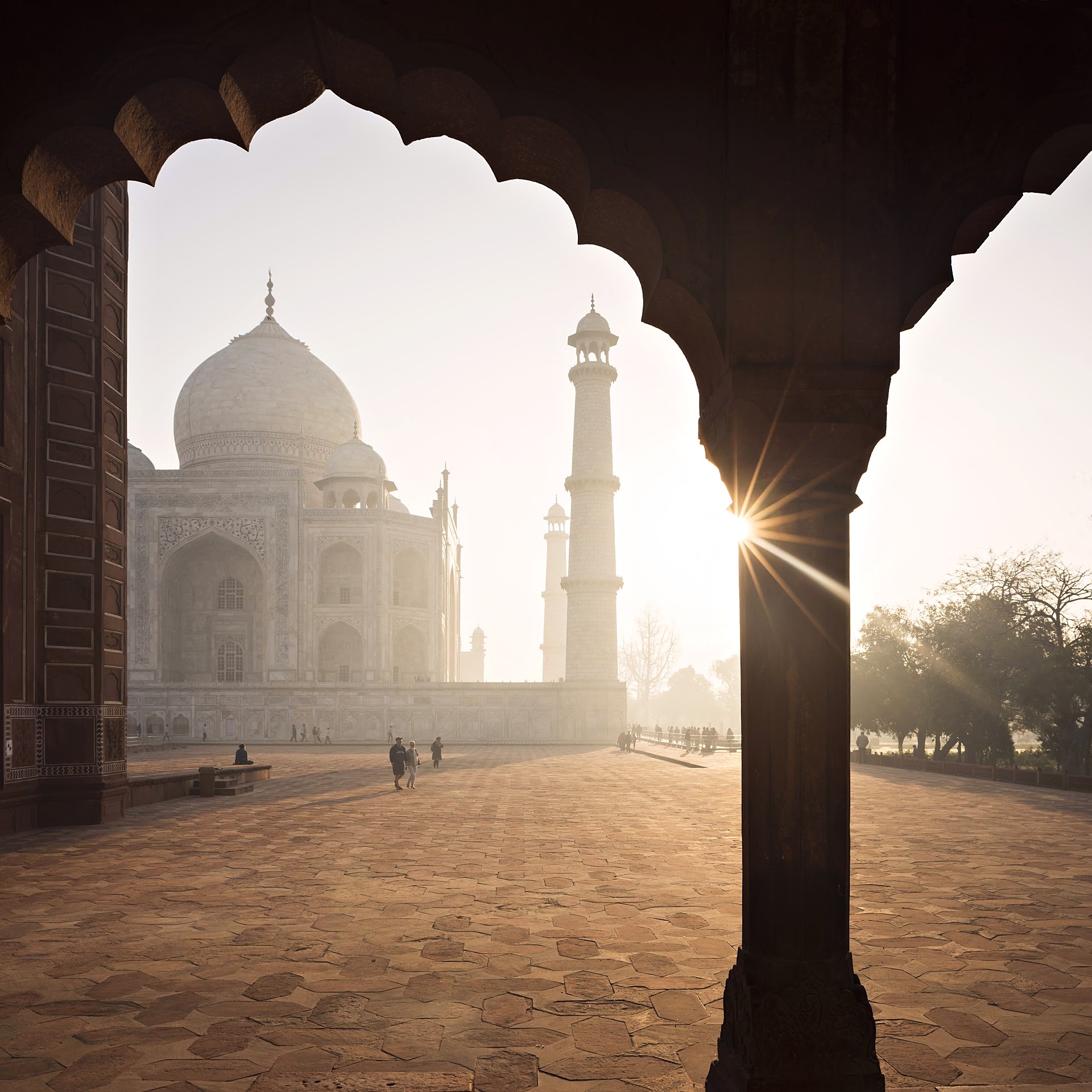
Six nights is the honest minimum; seven breathes. Days one and two: Delhi — Old Delhi's mosque, fort and food lanes one day; New Delhi's imperial avenues, Humayun's Tomb and Qutb Minar the next. Day three: the fast train down for Agra by mid-morning, the fort in the afternoon, the Taj saved — deliberately — for first light. Day four: Taj at sunrise, when the marble holds the dawn and the crowds are thinnest; then the drive west, pausing at the abandoned Mughal capital of Fatehpur Sikri. Days five through seven: Jaipur, which deserves the longest stay — Amber Fort early, the observatory and City Palace, the bazaars with a guide who knows the workshops behind the shopfronts.
The upgrades that cost little and change everything: sunrise entries everywhere, not just the Taj; one dinner in a heritage haveliHaveliA traditional townhouse or mansion built around one or more internal courtyards.Read in the glossary rather than the hotel; and in Jaipur, staying in one of the palace hotels that make the city India's finest overnight address.
Extensions: where the Triangle points
The Triangle's real genius is as a launchpad. Add Ranthambore (three hours from Jaipur) for two nights and the route acquires tigers. Add Udaipur or Jodhpur by short flight or drive and it becomes a full Rajasthan arc. Add Varanasi by one-hour flight from Delhi for the spiritual counterweight, or Kathmandu to make it a two-nation journey. Even Kerala works: fly south from Delhi and append a week of green.
Our standing advice: never fly home from Agra-fatigue. The travelers who extend — by tigers, by lakes, by the Ganges — are the ones who return. The Triangle is India's overture; it is a strange decision to leave at the interval.
Begin Properly
Let a curator sketch your India
A few short questions — who is traveling, what draws you, how you like to move — and we reply with a first sketch of the journey we would design for you. No commitment; just a considered starting point.
Begin Your Private EnquiryQuestions, Answered
How many days do you need for the Golden Triangle?
Six nights minimum, seven ideally: two in Delhi, one to two in Agra, three in Jaipur. Compressing it into four days is possible and popular and turns the trip into a transport exercise.
Is the Golden Triangle worth it, or too touristy?
Worth it, emphatically — the density of world-class sights is unmatched in India. The crowds concentrate at midday at famous gates; sunrise timing, licensed guides and the right hotels restore nearly all the magic.
What is the ideal Delhi–Agra–Jaipur order?
Delhi → Agra → Jaipur → Delhi, using the sub-two-hour express train to Agra and the Fatehpur Sikri stop on the Agra–Jaipur drive. Jaipur last means ending in the region's best hotels.
What are the best Golden Triangle extensions?
Ranthambore for tigers (from Jaipur), Udaipur or Jodhpur to complete Rajasthan, Varanasi by short flight for the Ganges, or Kathmandu for an India–Nepal journey. Each converts the Triangle from a trip into a first chapter.
When should I do the Golden Triangle?
October to March. December–January bring perfect days and foggy dawns (pad the Taj sunrise plan); November and February are the connoisseur's months. Summer heat on this route is punishing.
From the Journal
Journeys That Answer This