Planning Guides8 min readPublished August 4, 2026
If the north is India's imperial theatre, Kerala is its exhale — a slender green state where the itinerary writes itself in descending altitude: spice port, tea mountains, lake country, sea. The distances are short, the pace is soft, and the food alone justifies the flight south.
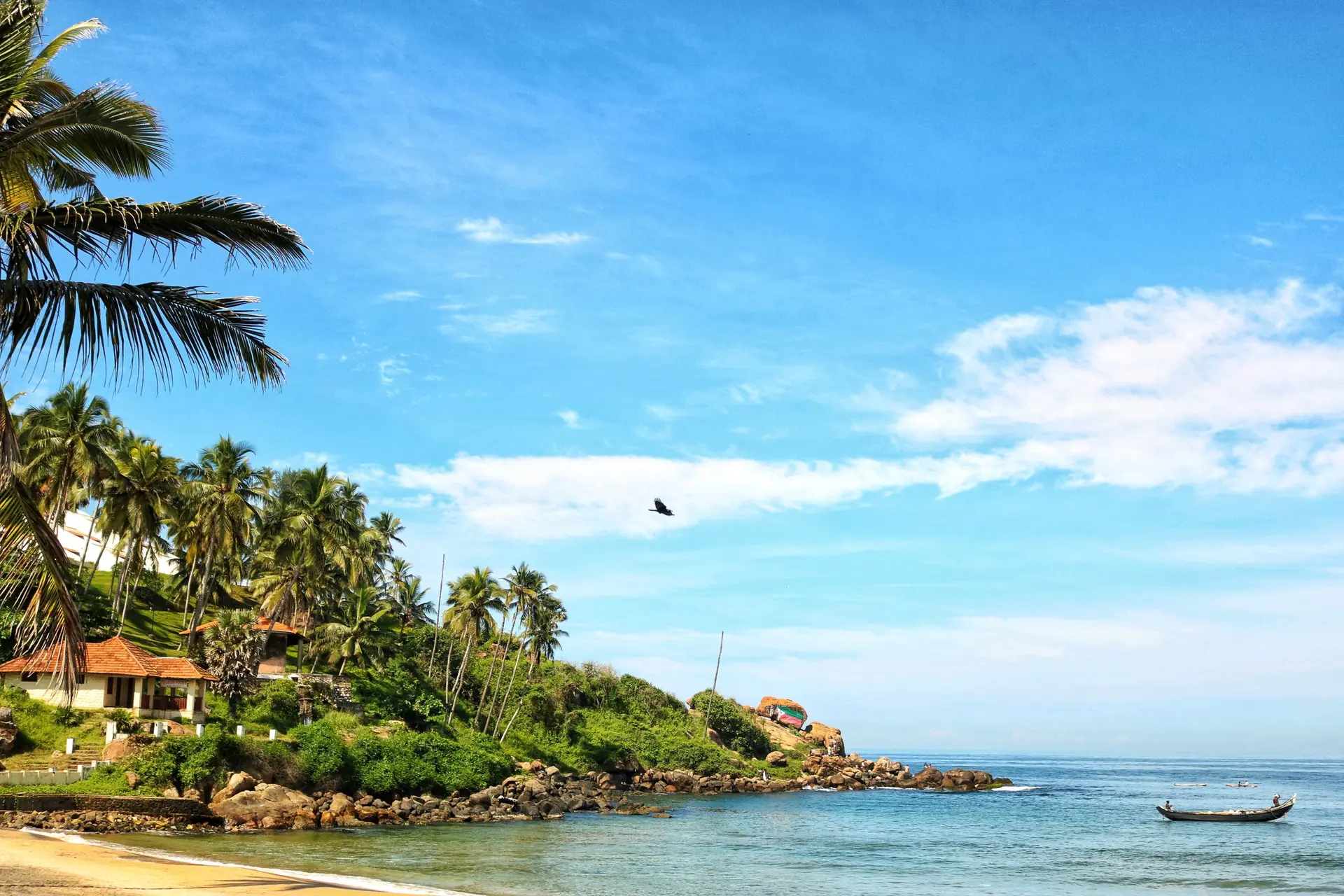
Seven days does Kerala honestly. Begin in Kochi (two nights): the old spice port where Portuguese chapels, a 16th-century synagogue and Chinese fishing nets share three square miles, best unlocked with a historian guide and one evening of KathakaliKathakaliThe classical dance-theatre of Kerala, in which heavily painted and costumed performers enact episodes from the epics through codified gesture and eye movement.Read in the glossary. Then climb to Munnar (two nights), where tea estates roll to the horizon at 5,000 feet and mornings smell of eucalyptus. Descend to the backwaters (one night afloat, one ashore), and finish on the Marari coast (two nights) where the itinerary's only obligation is deciding between pool and sea.
The houseboat question, answered honestly
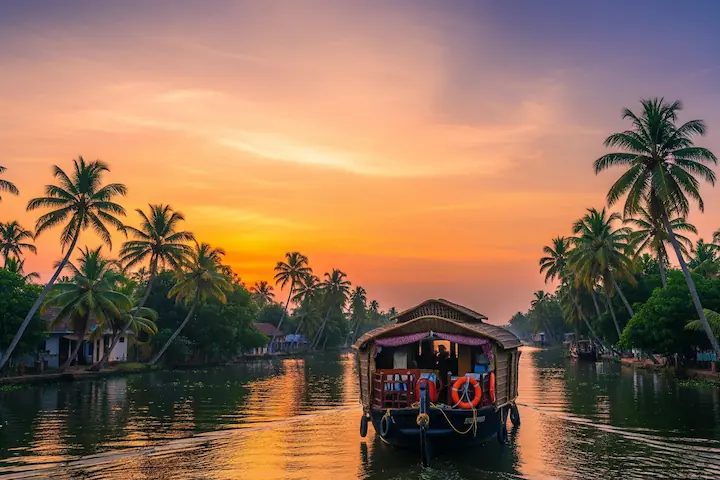
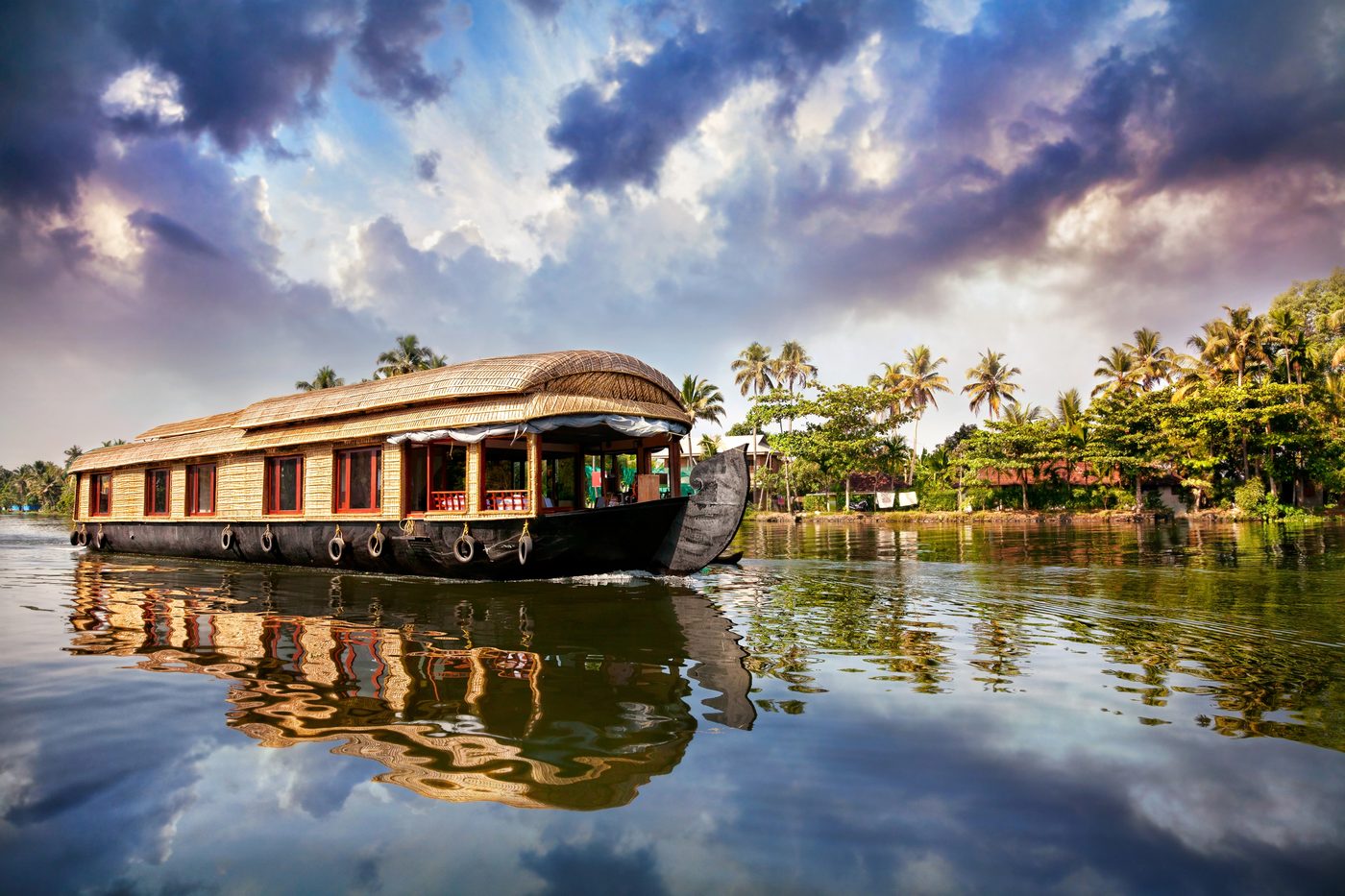
Is the famous overnight houseboat worth it? Yes — with discrimination. The backwaters carry everything from tired barges to genuinely beautiful one- and two-cabin boats with chefs worth the title; the gap between them is the entire experience. A private premium boat, moored for the night in open lake water rather than rafted up in a canal traffic jam, delivers one of India's great twenty-four hours: herons at dusk, toddyToddyThe fermented sap of a palm tree, drunk fresh as a mild, sour, cloudy beer.Read in the glossary-tapper mornings, fish curry that ruins restaurants for you.
The alternative for the boat-sceptical: stay in a lakeside heritage resort on Vembanad and take the backwaters by day cruise and village shikaraShikaraThe long, canopied wooden boat of Kashmir's Dal Lake, paddled from the stern.Read in the glossary — all of the water, none of the cabin. Either way, one night afloat is the right dose; two invites diminishing returns.
The two-week southern arc — and when to come
With fourteen days the south opens fully: Kerala's seven-day descent, then either east into Tamil Nadu's temple country — Madurai's technicolor Meenakshi temple, Tanjore's thousand-year CholaCholaRelating to the Tamil dynasty that ruled much of southern India, and territories beyond it, between roughly the ninth and thirteenth centuries.Read in the glossary shrine, the French quarter of Pondicherry — or north into Karnataka for Mysore's palace and the ruined imperial city of Hampi. The temple route suits the culturally hungry; the Karnataka route the architecture-and-landscape traveler.
Kerala's season inverts nothing: December through February is prime — dry, bright, 85°F; October–November and March are excellent shoulders. The monsoon (June–September) turns the state emerald and half-price, and is precisely when AyurvedaAyurvedaA traditional Indian system of medicine that treats health as a balance between three bodily humours, or doshas.Read in the glossary tradition says treatment is most effective — the connoisseur's window for a wellness-led trip. Book Christmas and New Year houseboats and coast hotels by August; the good ones are few.
Begin Properly
Let a curator sketch your India
A few short questions — who is traveling, what draws you, how you like to move — and we reply with a first sketch of the journey we would design for you. No commitment; just a considered starting point.
Begin Your Private EnquiryQuestions, Answered
What is the ideal 7-day Kerala itinerary?
Kochi (2 nights) → Munnar tea country (2) → backwaters houseboat (1) → Marari beach (2). Short drives, descending pace, and the classic port–hills–water–coast arc.
Is a Kerala houseboat worth it?
A private, high-quality boat mooring overnight in open water — absolutely; it is one of India's great experiences. A budget boat rafted up in a crowded canal — skip it and stay lakeside instead. Quality decides everything; one night is the right length.
What is the best time to visit Kerala?
December to February for dry, bright prime season; October–November and March as excellent shoulders. The June–September monsoon is the traditional season for Ayurvedic treatment and the budget-romantic's green season.
What does a 2-week south India itinerary look like?
Week one: Kerala's descent (Kochi, Munnar, backwaters, coast). Week two: either Tamil Nadu's temple trail (Madurai, Tanjore, Pondicherry) or Karnataka (Mysore, Hampi). Two distinct souths; both work seamlessly with the Kerala week.
Munnar or Ooty for tea country?
Munnar, for most travelers — higher, greener, with better boutique hotels and a natural fit into the Kerala circuit. Ooty carries colonial-railway nostalgia but suits a Tamil Nadu route better.
From the Journal
Journeys That Answer This