Planning Guides7 min readPublished August 4, 2026
No building on earth is harder to see freshly — and none rewards the effort more. The Taj Mahal survives its billion photographs for one reason: the photographs are of marble, and the building is of light. It changes by the quarter-hour, from pearl at dawn through white fire at noon to honey at dusk, and the visit you design determines which Taj you meet.
The strategic facts first: the Taj is closed on Fridays. Foreigners pay a premium ticket (around ₹1,100, plus a small supplement to enter the mausoleum chamber), best booked online ahead. Bags are restricted to almost nothing — phone, camera, water, wallet; leave the rest at the hotel. And the three gates open at sunrise, which is not a poetic flourish but the operative planning fact.
Sunrise or sunset — and the crowd problem
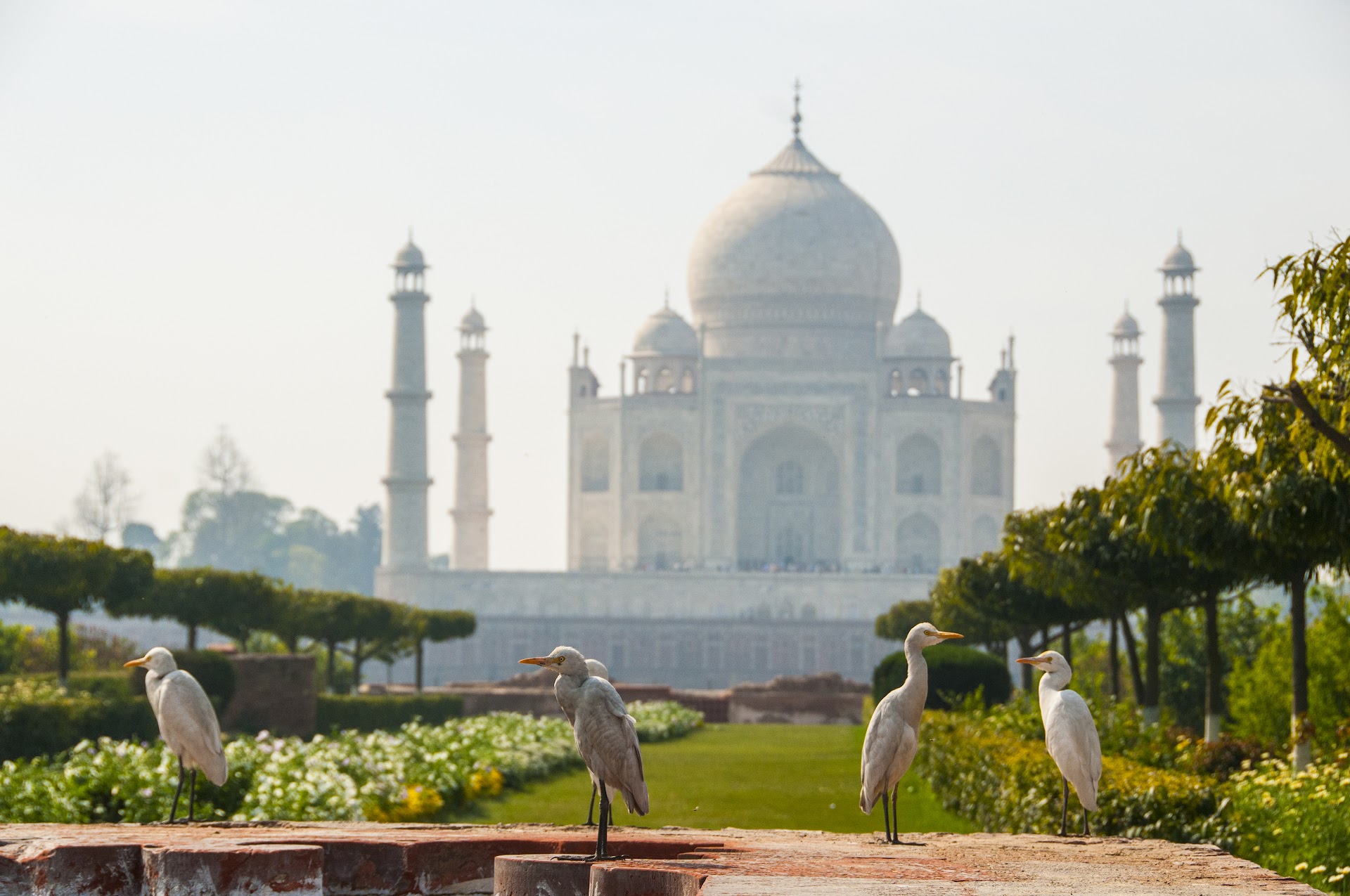
Sunrise wins, and it is not close. At gate-opening the light is soft, the air is cool, the reflecting pools are still, and for perhaps forty-five minutes the monument holds only the small congregation of those who set alarms. By 9 a.m. the day-trip waves arrive and the forecourt becomes a festival. Sunset is beautiful from within but crowded; the connoisseur's evening move is across the river — the Mehtab Bagh gardens face the Taj over the Yamuna, and at dusk you watch it turn gold in near solitude.
In winter (December–January), fog is the complication: dawn can be a whiteout that burns off by mid-morning. The professional's answer is the two-visit structure — sunrise attempt plus a garden-view fallback — or simply visiting in October–November or February, when dawns run clear.
Day trip or overnight — and doing it justice
Can you day-trip from Delhi? Yes — the express train reaches Agra in under two hours, and a dawn departure delivers the Taj by mid-morning with Agra Fort after lunch. It is a good day. But the overnight is the better instrument: sleeping in Agra buys you the gates at first light, which is the whole game, and the city's supporting cast — the Fort's marble pavilions, the jewel-box tomb of Itimad-ud-Daulah, and Fatehpur Sikri on the road onward — deserves the fuller canvas.
Take a licensed guide: the building's story — the empress, the twenty-two years, the symmetry with one deliberate exception — is half the experience, and a good historian pulls you through side chambers the crowds miss. And when you exit, resist the marble-inlay 'cooperative emporium' funnel; if the craft interests you, we arrange visits to actual workshop families instead.
Begin Properly
Let a curator sketch your India
A few short questions — who is traveling, what draws you, how you like to move — and we reply with a first sketch of the journey we would design for you. No commitment; just a considered starting point.
Begin Your Private EnquiryQuestions, Answered
Is sunrise or sunset better at the Taj Mahal?
Sunrise, decisively — soft light, cool air and the thinnest crowds of the day. For sunset, view it from the Mehtab Bagh gardens across the river rather than inside the complex.
What days is the Taj Mahal closed?
Every Friday, for prayers at its mosque. Plan the Agra leg around it — a surprising number of itineraries quietly fail this test.
How much are Taj Mahal tickets for foreigners?
Around ₹1,100 (roughly $13) for foreign visitors, plus a small extra fee for the main mausoleum chamber. Book online in advance to skip ticket queues; carry your passport.
Can you do the Taj Mahal as a day trip from Delhi?
Yes — express trains reach Agra in under two hours, making a comfortable day of Taj plus Agra Fort. But staying overnight buys sunrise at the gates, which is the single biggest upgrade available.
How long do you need at the Taj Mahal?
Two to three hours inside the complex does it justice — platform, mausoleum, mosque and gardens — ideally from gate-opening. Add Agra Fort (90 minutes) and Mehtab Bagh at dusk for the complete Agra day.
From the Journal
Journeys That Answer This