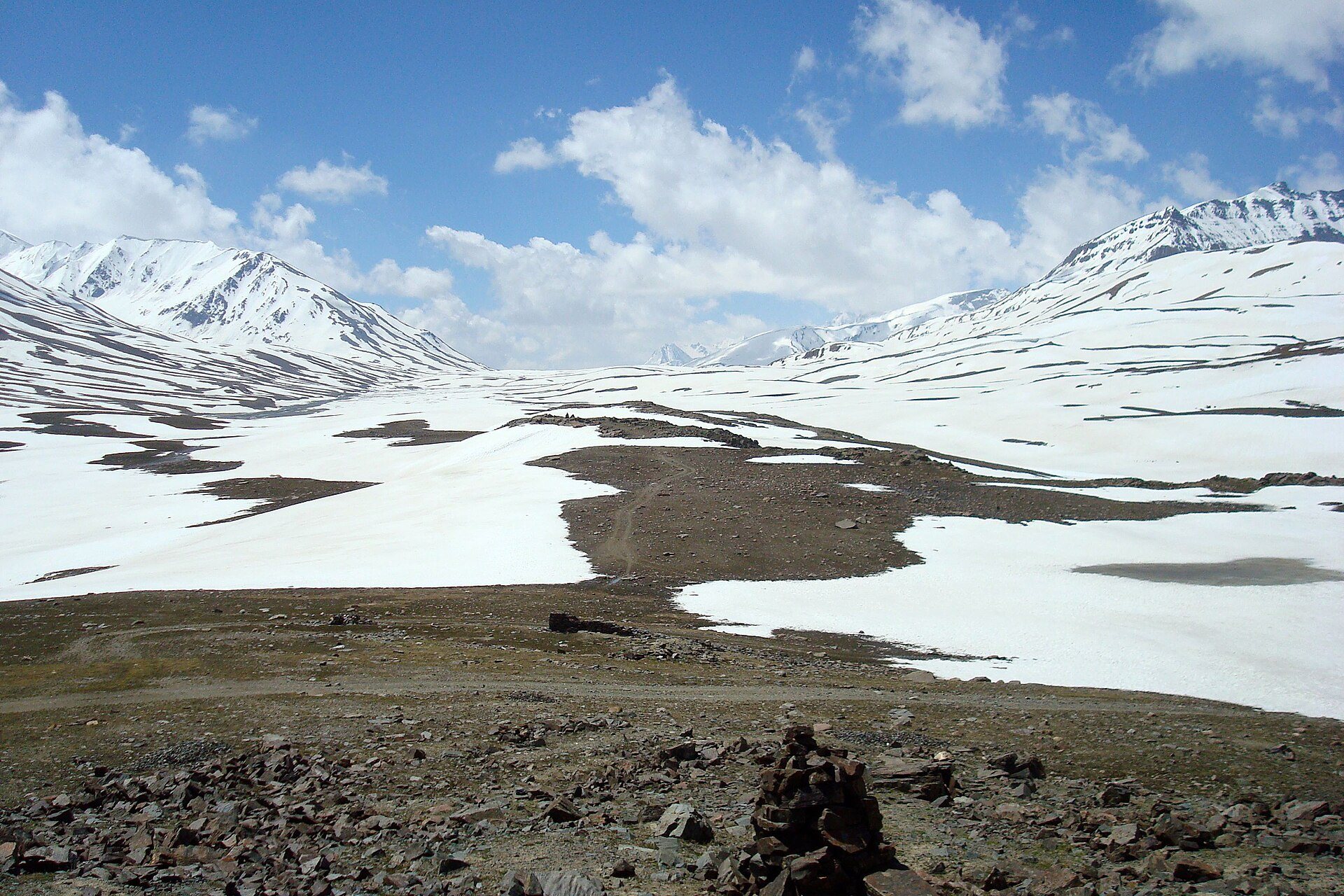
Fotografía de portada: Baralacha La, by GerthMichael (CC BY-SA 3.0), via Wikimedia Commons
Start with the sign, because it tells you what to do with everything else you read about Ladakh. The board at the top of Khardung La, and the shops in Leh selling shirts to match, give the pass an elevation in the region of 5,602 metres — about 18,379 feet — and call the road the highest motorable in the world. Hundreds of GPS surveys and satellite data put the pass at 5,359 metres, or 17,582 feet. The sign overstates its own mountain by roughly eight hundred feet.
The superlative is gone too, and not narrowly. Umling La at 19,024 feet held the record for four years. Since October 2025 the Guinness-recognised highest motorable road has been Mig La at 5,913 metres — 19,400 feet — built by the Border Roads Organisation under Project Himank on the Likaru-Mig La-Fukche road linking Hanle to Fukche near the Line of Actual Control. Almost no visitor has heard of it.
This matters beyond trivia. Ladakh is the part of India about which the most confident published information is the most comprehensively out of date, and the end of the season is where it does the most damage to an itinerary.
The Manali road
National Highway 03, Manali to Leh, runs 431 kilometres and is maintained by the Border Roads Organisation in two halves — Project Deepak from Manali to Sarchu, Project Himank from Sarchu to Leh. They meet at Sarchu for a handshake ceremony when the road reconnects each spring, which is a nice detail and also a useful one: the road opens from both ends towards the middle.
It closes annually around 15 November as a precautionary measure. That is the stated target, not a date, and in one recent year traffic continued into December on favourable weather. There is no gazetted closing day to plan against.
The reopening record gives the honest measure of what the winter does to it. The road opened on 23 April 2024; on 13 May 2025, nineteen days later, after about forty-three days of clearance from the Atal Tunnel's north portal to Sarchu, cutting through ice walls of roughly fifty feet and snow five to eight feet deep with twelve heavy machines; and on 12 May 2026 after a forty-two-day operation that began on 27 March. Baralacha La at 16,040 feet is described as the hardest section to restore, and the Manali-Sarchu stretch carries twenty-six avalanche-prone points — the 2026 clearance was halted and restarted at least six times.
One distinction that catches people out: the road being physically open and the road being drivable are two separate events. Vehicular movement is permitted only after a joint assessment with the Lahaul-Spiti administration. A reopening announcement is not a green light.
Zojila, and why the old advice is dead
Srinagar to Leh is 434 kilometres over Zojila, given at 11,643 feet and described as the lifeline between the Kashmir valley and Ladakh. The historic pattern is closure by late November and reopening by mid-April, with an average closure of about a hundred and thirty-five days.
That pattern no longer holds. In 2024-25 the pass was closed for thirty-three days and reopened on 1 April 2025 — the shortest winter closure ever recorded. The Director General Border Roads said so directly, and called it a point of pride. In 2025-26 it stayed open through December and into January, at least to 13 January 2026, kept open by Project Beacon on the Sonamarg side and Project Vijayak on the Drass side, working through temperatures to minus twenty, high wind, blizzards and avalanche risk. It did not stay open all winter. But it did not close in November either.
The practical reading is not that Zojila is now a winter road. It is that even when nominally open it shuts for days at a time after avalanches and fresh snow — a documented two-day shutdown among others. It is a route that can be available and cannot be relied on, which is the worst category for an itinerary and the reason we do not build a fixed-date transfer over it in the shoulder season.
The flights, which are the real season
Kushok Bakula Rimpochee Airport sits at 3,256 metres — 10,682 feet — the highest commercial airport in India, on a single asphalt runway of 2,752 metres. Air India serves it from Chandigarh, Delhi, Jammu and Srinagar; IndiGo from Chandigarh, Delhi and Jammu, with Mumbai seasonal; SpiceJet from Delhi, with Mumbai seasonal. It is also a front-line Indian Air Force airfield. Traffic from April 2025 to March 2026 was about 1.07 million passengers, down 10.4 per cent year on year.
Leh flights do not stop in winter. We could find no source supporting the claim, and the year-round schedule of three carriers is documented. What is true, and far more useful, is that all flights operate in the morning because of afternoon mountain winds, on approaches that are unidirectional over difficult terrain. A Leh day with a missed morning departure has no second chance in it.
The cancellations are worth understanding properly, because the intuition is backwards. On 28 July 2024 — late July — all flights to and from Leh were cancelled because high temperatures had reduced air density: thinner air means engines must work harder for the same thrust and lift, because there are fewer molecules to take in and burn. Heat cancels Leh flights. So does fog at the Delhi end, with Leh named among the routes cut in documented winter disruption episodes across north India.
We should say what we could not establish. There is no published winter-specific Leh schedule or cancellation rate that we could verify, and we would not quote one. What we do instead is build a buffer day at the Delhi end of any Leh departure between November and February, and never put an international connection on the same day as a Leh flight.
The passes and lakes, which mostly do not close
Khardung La has no permanent winter closure. Built by the Border Roads Organisation in 1976 and maintained by them, it is subject to long delays from congestion on narrow single-lane sections, washouts, avalanches and accidents — but it is not a seasonal road. Chang La, at 5,360 metres, is the same: BRO-maintained, the route to Pangong and the main gateway to Nubra, with an alternate via Ke La opened in September 2021. The ten to fifteen kilometres either side of Chang La turn to loose dirt and slush after the winter and need constant maintenance. Doctors advise against staying at the top for more than twenty to twenty-five minutes.
The right phrase for both is subject to closure after snowfall, not closed for the season.
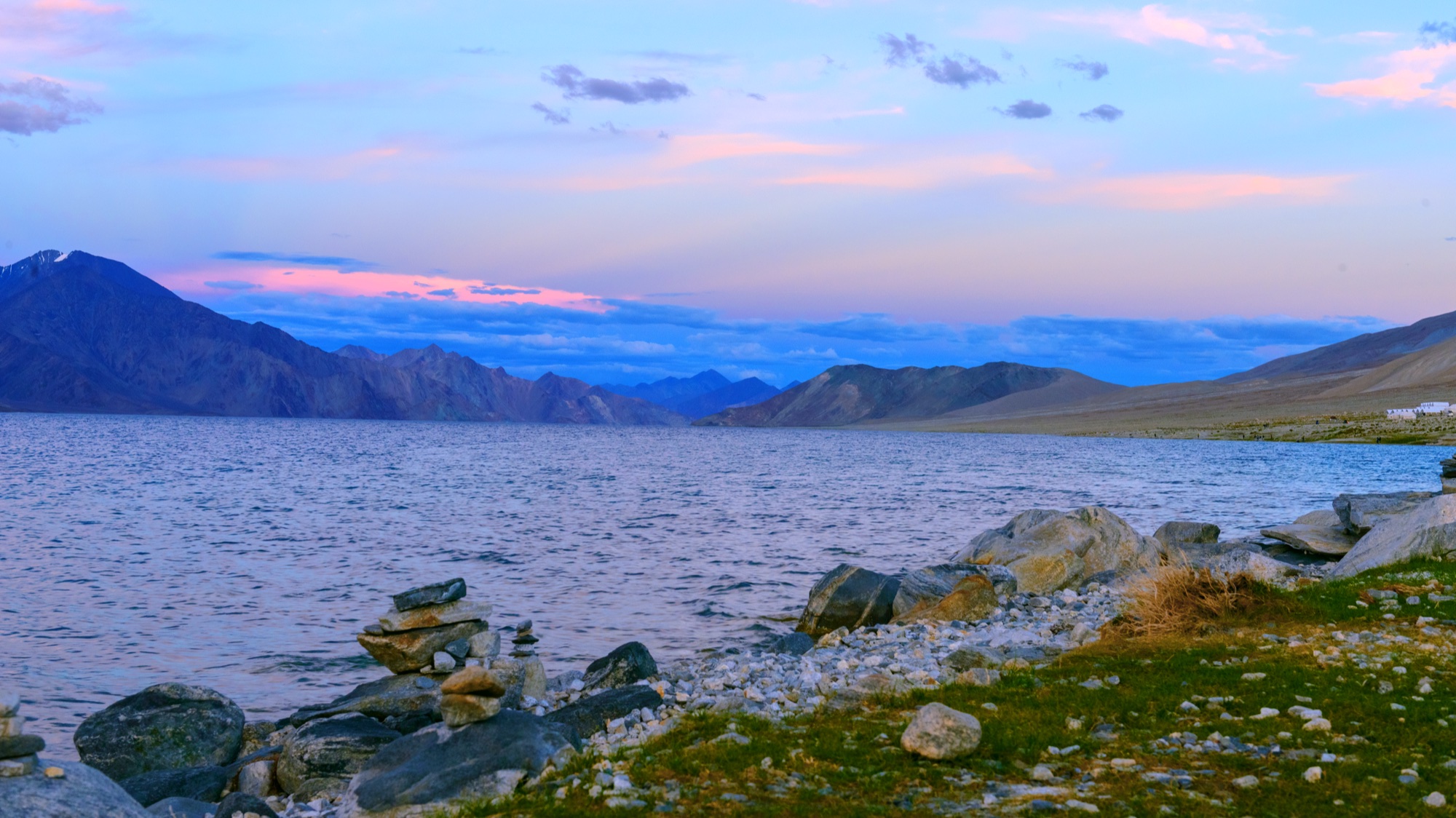
Pangong is accessible in winter, and the administration actively promotes it. The Pangong Frozen Lake Marathon, run by the Ladakh Autonomous Hill Development Council with the Adventure Sports Foundation of Ladakh in February, holds a Guinness record as the world's highest frozen lake half marathon — 21.9 kilometres from Lukung to Maan village, with around seventy-five runners, under the Vibrant Villages Programme to build winter tourism and homestay income in border villages. On Tso Moriri we found no authoritative source at all on winter access, only operator blogs, and so we make no claim about it.
The permits and the forty-eight hours
Non-local visitors need an Inner Line Permit and the Ladakh Environment Fee for Khardung La and the areas beyond. Since 2022 there is also a mandatory minimum two days' acclimatisation in Leh before crossing the pass.
The district's own wording is unambiguous: all tourists arriving in Leh have to undergo at least forty-eight hours' acclimatisation before beginning a journey to higher-altitude areas, which includes Khardung La and Pangong, with places near Leh town permitted in the interim.
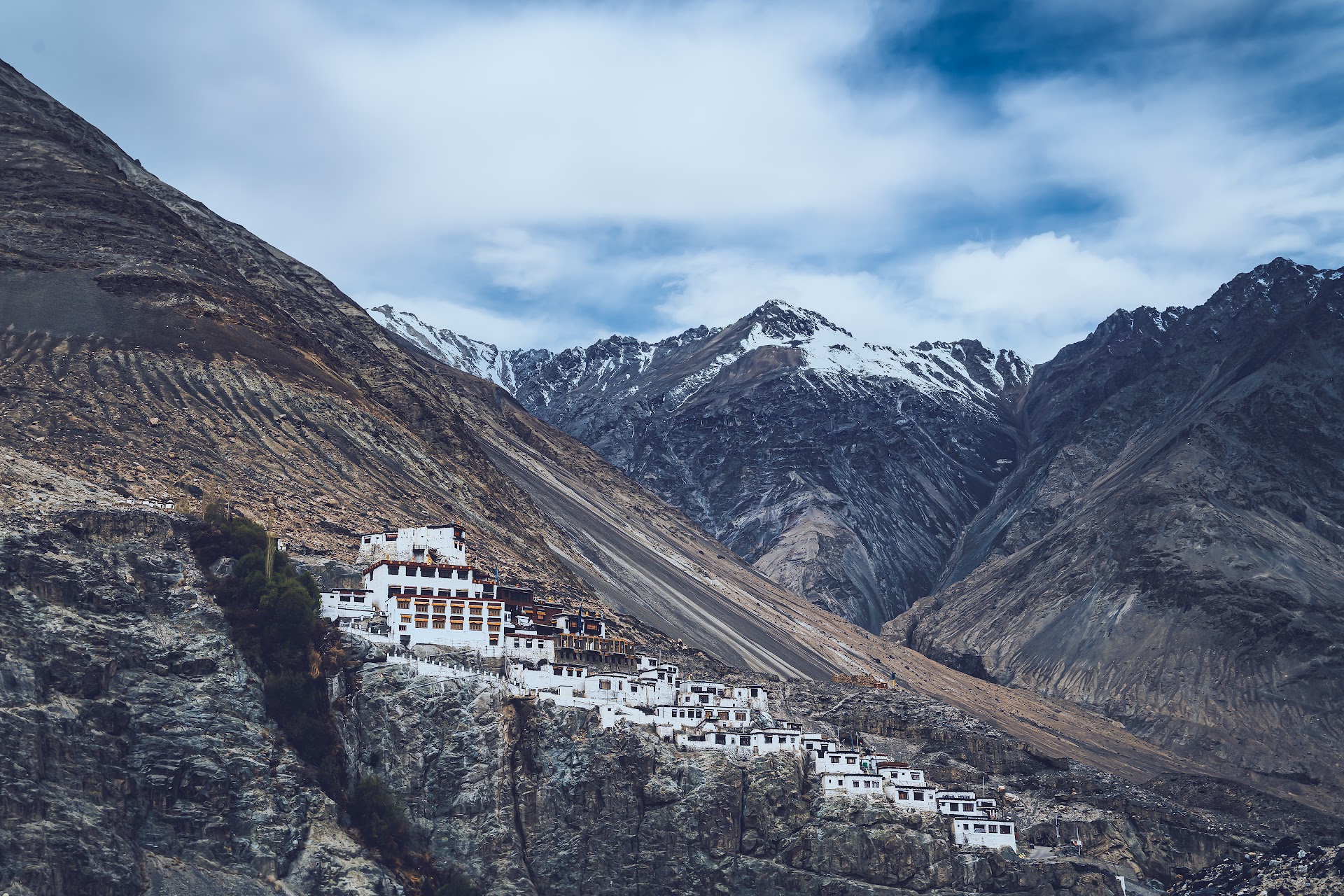
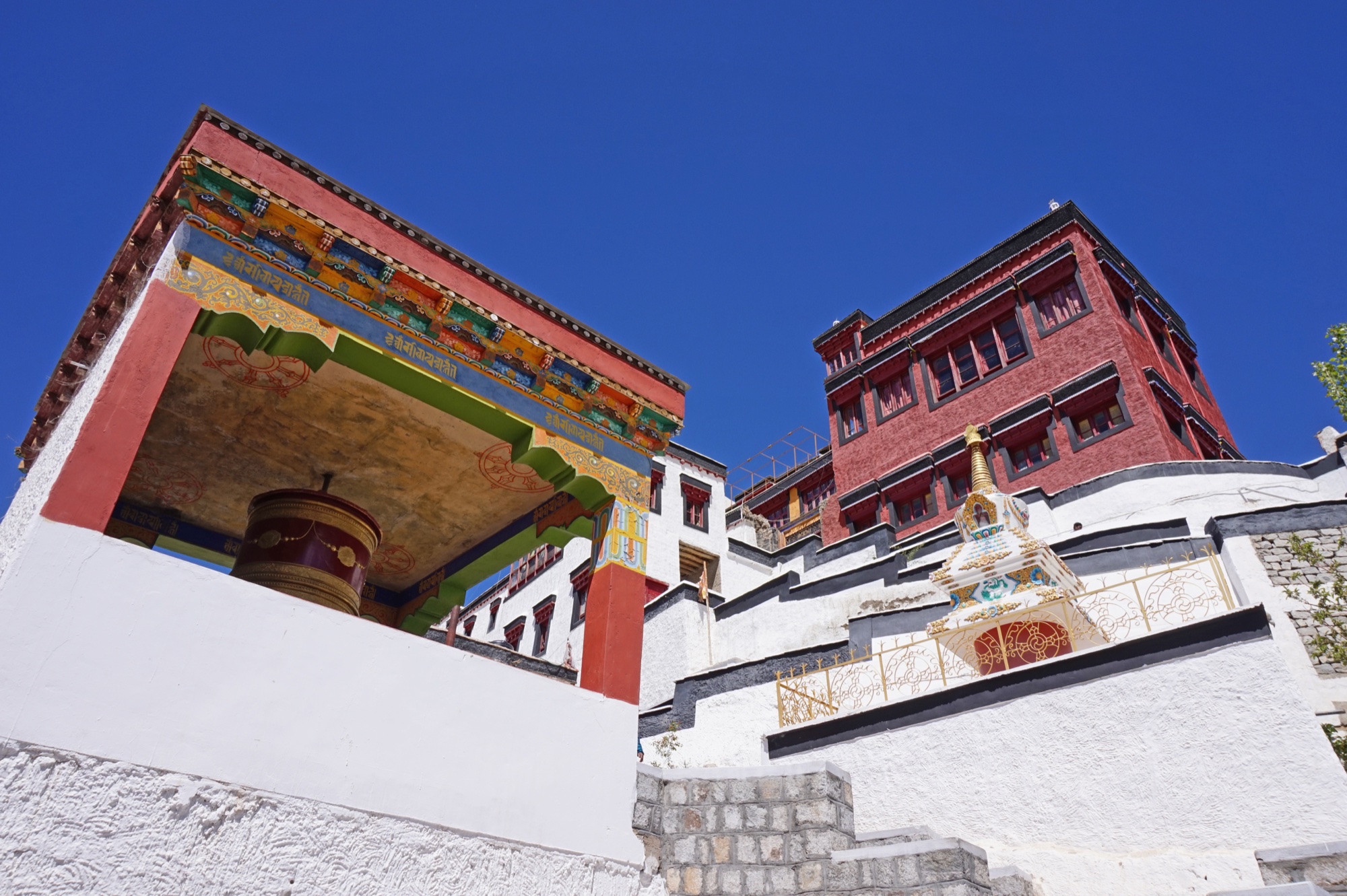
This is a rule with real itinerary consequences and it is routinely ignored in published Ladakh itineraries, including some sold commercially. A seven-day Ladakh trip has five usable days in it, not seven. We build to that, and the two days in Leh are not wasted — the town, Shey, Thiksey, Hemis and the Indus valley monasteries are all inside the permitted radius and are among the best things in Ladakh.
The Chadar trek, and what is actually known
The winter walk on the frozen Zanskar is real, regulated and surprisingly poorly documented. The one season start we could verify from a government source is 13 January 2024, administered by the Ladakh administration with the All-Ladakh Tour Operators Association and the Ladakh Mountain Guides Association.
What is on the record: the guides' association was to conduct medical examinations covering insurance, acclimatisation and fitness certification; satellite phones are required for emergency communication; and route reconnaissance was completed by the operators' association with disaster response teams before the season opened.
What is not on the record, anywhere official: season dates, daily quotas, permit fees, route length or trek duration. Every fixed window and every cap in circulation comes from a trekking company. The regulation is genuine; the numbers attached to it are not sourced. We treat the medical and insurance requirements as binding and the schedule as a thing to confirm with the administration for the specific year.
How to read the end of the season
Through September the lodges begin to close, the Manali road enters its last reliable weeks, and the mornings get serious. October is a genuinely beautiful month in Ladakh — thin light, no crowds, the poplars turning in the Indus valley — and it is flyable, with the morning-window discipline. November onwards the question stops being whether Ladakh is open and becomes which Ladakh is open: Leh and the Indus valley, yes; Nubra and Pangong, conditionally, after snowfall and with time to spare; the overland routes, as a gamble.
For a guest set on winter Ladakh, the honest proposition is a Leh-based trip flown in and out, with an extra day at each end, Pangong attempted rather than scheduled, and the monasteries of the valley as the actual itinerary rather than the filler. It is one of the most extraordinary things India offers in January. It is also the trip most likely to need rearranging on the day, and it should be sold that way.
Los viajes que le llevan allí
Leer a continuación