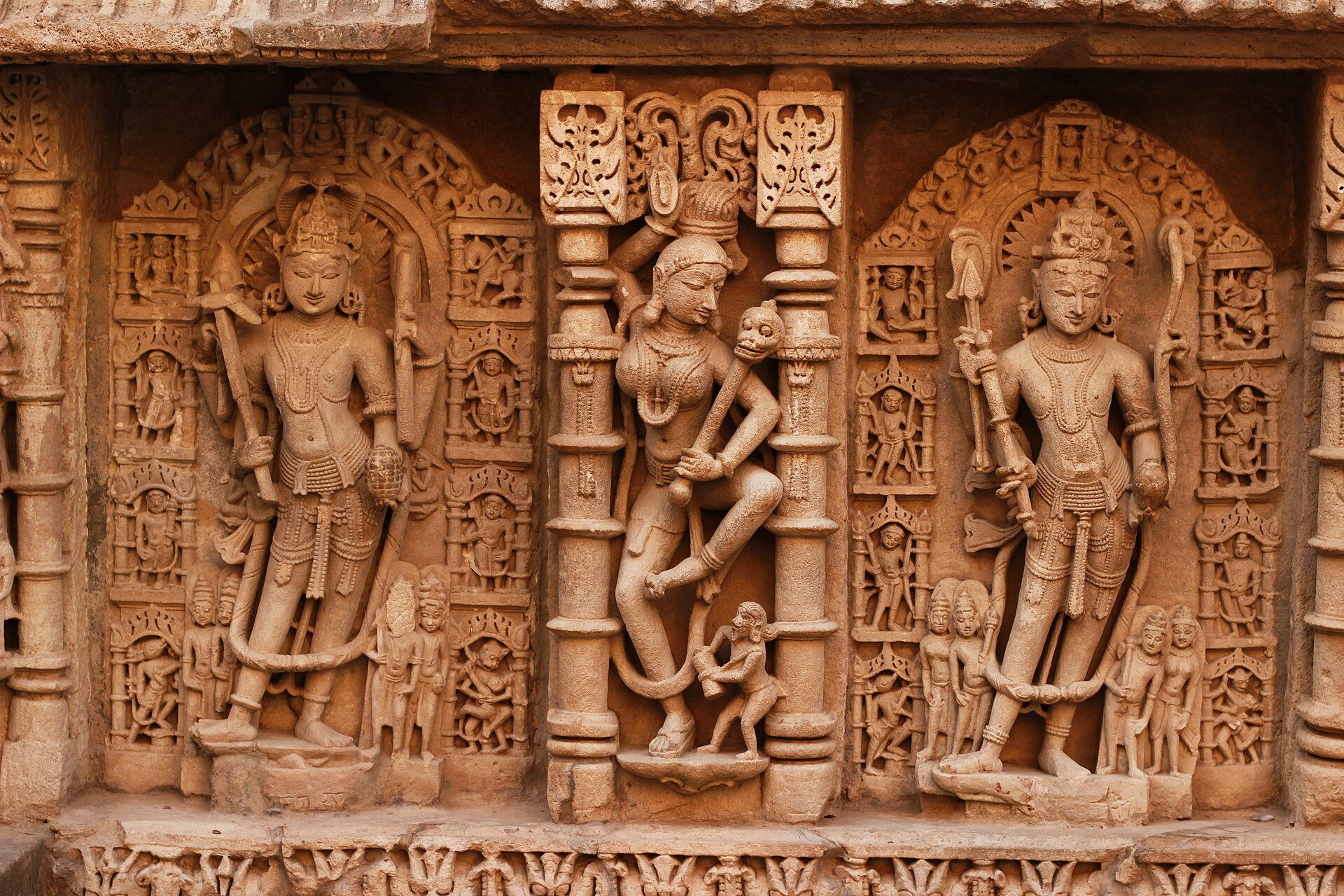
Hero photograph: Rani-ki-Vav, Patan, by Snehrashmi (CC BY-SA 4.0), via Wikimedia Commons
Gujarat is the most under-visited serious destination in India, and the reasons given for skipping it are mostly wrong. It is dry, which is a genuine constraint and a manageable one once you understand that the dangerous offence is possession rather than drinking. It has no beach tourism despite having the longest coastline in the country. It is assumed to be a business state, which it is, and assumed therefore not to be a travel one, which is a non-sequitur. What it actually has is four World Heritage Sites, the only wild lions outside Africa, the best-preserved living craft economy in India, and a window — November to February — in which everything is simultaneously open. It needs ten to fourteen days and it does not reward a short visit, because the three clusters are a long way apart.
We have written about this state almost not at all, which is an honest failure rather than an editorial judgement, and this piece is the correction.
Gujarat is skipped by nearly every first-time and second-time visitor to India, and by a good many people on their fifth trip. The reasons given are that it is dry, that it is a business state, and that there is nothing there. The first is true and more manageable than it sounds. The second is true and irrelevant. The third is simply wrong, and the scale of how wrong it is takes a few paragraphs to establish.
Start with the thing nobody knows. In April 2025 the National Hydrographic Organisation finished remeasuring India's coastline with modern survey methods — the old figures came from charts at a scale of one to four and a half million, the new ones from one to two hundred and fifty thousand. India's coastline went from 7,562 kilometres to 11,099. Gujarat's went from the 1,600 kilometres printed in every guidebook to 2,340.62.
Gujarat has by a wide margin the longest coastline of any Indian state, it was properly measured for the first time in fifty years only last year, and the state has essentially no beach tourism. That is the shape of the whole place: enormous, documented, and unvisited.
The drink question, answered properly
This is the first thing anyone asks and it is almost always answered badly, in a way that leaves visitors exposed to the one real risk.
The law is the Gujarat Prohibition Act, 1949 — which began life as the Bombay Prohibition Act, assented in May 1949 and carried over when Gujarat was created in 1960. It is worth saying that Gujarat's prohibition is inherited Bombay law rather than a Gandhian invention; Gandhi is the political lineage, not the legal source.
A foreign visitor is entitled to a permit. The correct name is a tourist's permit under section 46A, or a visitor's permit under section 46 for a stay of a week or less. Validity is capped at one month. It is granted free of cost — the standard form says so in capitals. The quantity allowed is not more than two units at a time or six in a month, a unit being one bottle of spirits, or three of wine, or nine of strong fermented liquor.
You obtain it through an authorised dealer or a licensed hotel in Gujarat, on production of your passport and visa. There were sixty-six permitted foreign liquor outlets in the entire state as of 2020, attached to licensed hotels — eighteen in Ahmedabad, six in Vadodara, five each in Rajkot and Surat, four in Bhuj. What that means practically is that there are no bars, no restaurant wine lists and no room-service cocktails. A permit holder buys from a counter inside a licensed hotel, carries the bottle to their own room, and drinks it there.
There is a state e-permit portal. We could not read it — the government sites refuse automated access — so we are not going to publish a step-by-step online process we cannot stand behind. And we found no primary evidence of a permit counter at Ahmedabad airport or any other Gujarat airport. Do not plan on one.
Now the part that matters, and that we have never seen stated correctly in travel writing. In 2017 the Act was amended. The amendment moved possession and transport into section 65 — which carries two to ten years and a fine up to ₹5 lakh, with statutory minimums — and narrowed section 66(1)(b) to consuming or using, which carries up to six months and ₹1,000 for a first offence.
So the risk runs the opposite way to most people's intuition. Drinking without a permit is a minor offence. Having an unpermitted bottle in your bag is a serious one. The amendment was aimed at bootleggers after a hooch tragedy, but it is written generally and it catches visitors. A duty-free bottle in a suitcase on a flight into Ahmedabad is not a technicality.
One more thing worth knowing: section 66(2) provides that a blood alcohol concentration of not less than 0.05 per cent shifts the burden onto the accused. Gujarat can test you, and the test is close to conclusive.
GIFT City, near Gandhinagar, is the exception and it is narrower than the headlines suggested. Notifications in December 2023 and December 2025 permit licensed venues inside that defined jurisdiction to serve permit holders, and the 2025 easing created an external-person category under which visitors from outside Gujarat and foreign nationals with valid ID may drink at permitted venues without obtaining a permit at all, including room service. It is not a wet zone. There is no retail sale and nothing leaves the premises, and it changes nothing in Ahmedabad, Bhuj or Gir.
Four World Heritage Sites, and the one nobody mentions
India has forty-five inscribed properties. Exactly four are in Gujarat, and the fourth fact about them is the one worth leading on.
The Historic City of Ahmadabad was inscribed in 2017. Jaipur was inscribed in 2019. Ahmedabad is India's first World Heritage City, and we have never seen that sentence in a piece about Gujarat. It was founded by Sultan Ahmad Shah in 1411 on the east bank of the Sabarmati, and what UNESCO inscribed is not a monument but a fabric: the Bhadra citadel and the fortification walls, sultanate mosques and tombs, later Hindu and JainJainA follower of Jainism, an ancient Indian religion whose central commitment is non-violence towards every living thing.Read in the glossary temples, and the residential pattern of polsPolA gated residential quarter of old Ahmedabad — a self-contained lane of courtyard houses entered through a single doorway.Read in the glossary — gated streets of timber-fronted havelisHaveliA traditional townhouse or mansion built around one or more internal courtyards.Read in the glossary — across six centuries of continuous habitation.
Rani-ki-Vav at Patan, inscribed in 2014, is an eleventh-century stepwellStepwellA well reached by a long descending staircase, so that water can still be drawn as the water table falls.Read in the glossary of seven levels: a tank twenty-three metres deep, a well shaft ten metres across and thirty deep, more than five hundred principal sculptures and over a thousand minor ones. UNESCO describes it as an inverted temple highlighting the sanctity of water, and inscribed it under criterion one — artistic masterpiece — which very few Indian properties carry.
Champaner-Pavagadh, inscribed in 2004, is the one that ought to be famous and is not. UNESCO calls it the only remaining complete and unchanged Islamic pre-MughalMughalRelating to the Muslim dynasty of Central Asian descent that ruled most of the subcontinent from the sixteenth to the eighteenth century.Read in the glossary city. It runs from chalcolithic settlement through a fourteenth-century Hindu hill fortress on Pavagadh to the remains of a fifteenth- and sixteenth-century Islamic capital — fortifications, palaces, temples, mosques, residential quarters, water systems — most of it still unexcavated. The Kalikamata temple on the hilltop is a working pilgrimage shrine, so the site is alive rather than archaeological.
Dholavira, inscribed in 2021, is a Harappan city occupied for about fifteen hundred years from around 3000 BCE. The distinguishing fact is that unlike the other great Harappan sites it is not on a river. It sits on an island in the Khadir bet, chosen for minerals and raw materials and for trade that reached Mesopotamia and Oman, and it survived entirely on engineered water storage — reservoirs east and south of the citadel. There is a cemetery with memorial structures of six distinct types.
On the tentative list, waiting: Lothal, the Sun Temple at Modhera, the multi-layered town of Vadnagar, and the Wild Ass Sanctuary in the Little Rann.
The lions, and what has actually happened to them
The Asiatic lion is the reason most people who do come to Gujarat come, and the story has changed in a way that has not reached the travel literature.
The sixteenth lion population estimation ran from 10 to 13 May 2025, using direct beat verification across roughly 35,000 square kilometres of fifty-eight talukas in eleven districts, with 3,854 personnel and camera traps, radio collars and GPS. The count was 891, up from 674 in 2020. The Union government confirmed the figure in Parliament in February 2026. The breakdown was 196 adult males, 330 adult females, 140 sub-adults and 225 cubs.
And here is the number that matters: 384 inside Gir National Park and Wildlife Sanctuary, and 507 outside it.
Fifty-seven per cent of the world's wild Asiatic lions no longer live in a national park. They live in notified forest, river corridors and revenue wasteland across Saurashtra — in the farmland and village margins and coastal scrub of Amreli, Bhavnagar and Gir Somnath, among people. In 2023 lions walked back into the Barda hills, about 192 square kilometres between Porbandar and Devbhumi Dwarka, after a hundred and forty-three years of absence, and there are now seventeen of them there, six adults and eleven cubs. Nobody moved them. They walked.
That inverts the premise of the safari. Gujarat is not protecting lions inside a fence; it is sharing a populated agricultural landscape with them, and that is a more interesting thing to go and see than a game drive.
The reason conservationists remain uneasy is documented and sobering. In September 2018, twenty-eight lions of all ages died at Gir within a fortnight, with eighteen more clinically ill; canine distemper virus was detected in sixty-eight lions and six leopards. The paper, published in the US Centers for Disease Control's journal in November 2019, concluded that a single isolated population is the risk and recommended distributing it. The Supreme Court had in fact ordered translocation to Kuno in Madhya Pradesh in 2013, within six months. Thirteen years on, the cheetahs are at Kuno and the lions are not. We should note that we are relying on reporting for the terms of that 2013 judgment rather than on the text, which we could not retrieve.
Booking Gir, which has three traps in it
The only official booking site is the Gujarat forest department's own lion portal, and it says so itself and warns against imitators. Everything below comes from its published terms.
The season. Gir is closed from 16 June to 15 October every year. The open season is therefore 16 October to 15 June. Winter slots run 06:45 to 09:45 and 15:00 to 18:00; from 1 March the morning slot moves to 06:00. Booking opens three months before the date and closes two hours before. The 16 October reopening is standard rather than immutable — in 2025 it was brought forward around a presidential visit.
The first trap: the permit is not the safari. One e-permit admits up to six adults and one child in a six-seater Gypsy, or eight and one in an eight-seater, and it does not include the vehicle or the guide. Those are paid separately on the day — a guide at ₹400 and a six-seater from ₹2,000. The permit itself is ₹800 on a weekday and ₹1,000 at weekends and festivals for Indians, and ₹5,600 and ₹7,000 for foreign nationals.
The second trap: you cannot choose a zone. The portal states that the safari route is given based on permit numbers at the reporting time. Travellers who think they have booked a particular zone have not. Route is allotted at the gate.
The third trap: identification is checked and there is no discretion. For foreign nationals the portal is explicit that it is compulsory to carry the original passport, and that entry will not be permitted without original photo identity.
On Devalia — the Gir Interpretation Zone — we will be blunt, because it is sold badly. It is a fenced enclosure near Sasan with a bus circuit. Sightings are near-certain because the animals cannot leave. It is a perfectly reasonable thing to do with children or limited time, and it is not a wild safari. Anyone selling it as one is misleading you. It closes on Wednesdays.
One practical warning about getting there. Keshod is the nearest airport to Gir and it is fragile: service resumed in October 2025 after the airport had been closed for three months for technical reasons, and runs three days a week. Do not build an itinerary on Keshod. Gir is reached by road from Ahmedabad, Rajkot or Diu.
The Rann, and what is actually on
There are two Ranns and they are for different things, which is the first thing to get straight.
The Great Rann is the white salt desert north and west of Bhuj; the Dhordo viewing area sits on its southern edge. The Little Rann is east and south-east, towards Surendranagar and Patan, and it is protected as the Wild Ass Sanctuary — 4,954 square kilometres, on India's tentative list since 2006. UNESCO's description of it is worth quoting at a traveller: a vast desiccated bare surface of dark silt encrusted with salts, which becomes a spectacular coastal wetland after the rains. It has about seventy-four elevated plateaus, called bets, and roughly a month of monsoon inundation.
The Little Rann is where the khur is — the Indian wild ass, the last population of that subspecies anywhere on earth. The tenth survey, in 2024, counted 7,672, up from 6,082 in 2020. So it is a subspecies that exists nowhere else and is growing at about a quarter a decade, which is an unusual enough combination to be worth a day of anybody's itinerary.
Rann Utsav is the thing most people mean when they say the Rann, and it deserves a clear description because it is marketed opaquely. It is both a Gujarat Tourism festival dating to the mid-2000s and a commercial tented resort at Dhordo operating under tourism department appointment and run by a private operator. The 2026-27 season runs 1 November 2026 to 7 March 2027. We should say that we could not verify the dates on Gujarat Tourism's own domain, that at least four websites present themselves as official, and that their published dates differ from one another. Treat any single one as a commercial source.
On the full moon, which is the other thing everyone asks. Nothing is scheduled on full-moon nights. There is no programme, no government event and no special access. What there is, is a peak-pricing surcharge applied across a window of two to four nights bracketing the full moon — and the operators do not agree with each other on which nights those are. The moon over a salt flat is genuinely extraordinary. It is also free, and it happens every month, and the surcharge buys you nothing but a crowd.
Two things we could not verify and will not invent. The current permit position for Dhordo, Kala Dungar and the India Bridge is locally administered and changes; we could not find a notification, a fee or an issuing authority at any primary source, and the traveller accounts contradict each other. Assume an identity check, handle it through your hotel or at the Bhirandiyara checkpost, and do not plan the beyond-points without confirmation on the day.
And the thing almost nobody knows about the Great Rann. Inside the Kutch Desert Wildlife Sanctuary is a formally designated site called Flamingo City, 287 square kilometres, where over seventy thousand birds nest in about a hundred hectares. Salim Ali, India's founding ornithologist, estimated half a million birds there in 1945. It is the only known site in India where the rosy pelican has been found breeding. The sanctuary's final notification is still pending.
The salt desert everybody photographs at sunset is also South Asia's great flamingo nursery, mapped eighty years ago, and still not finally protected.
The craft, which is the real argument for the state
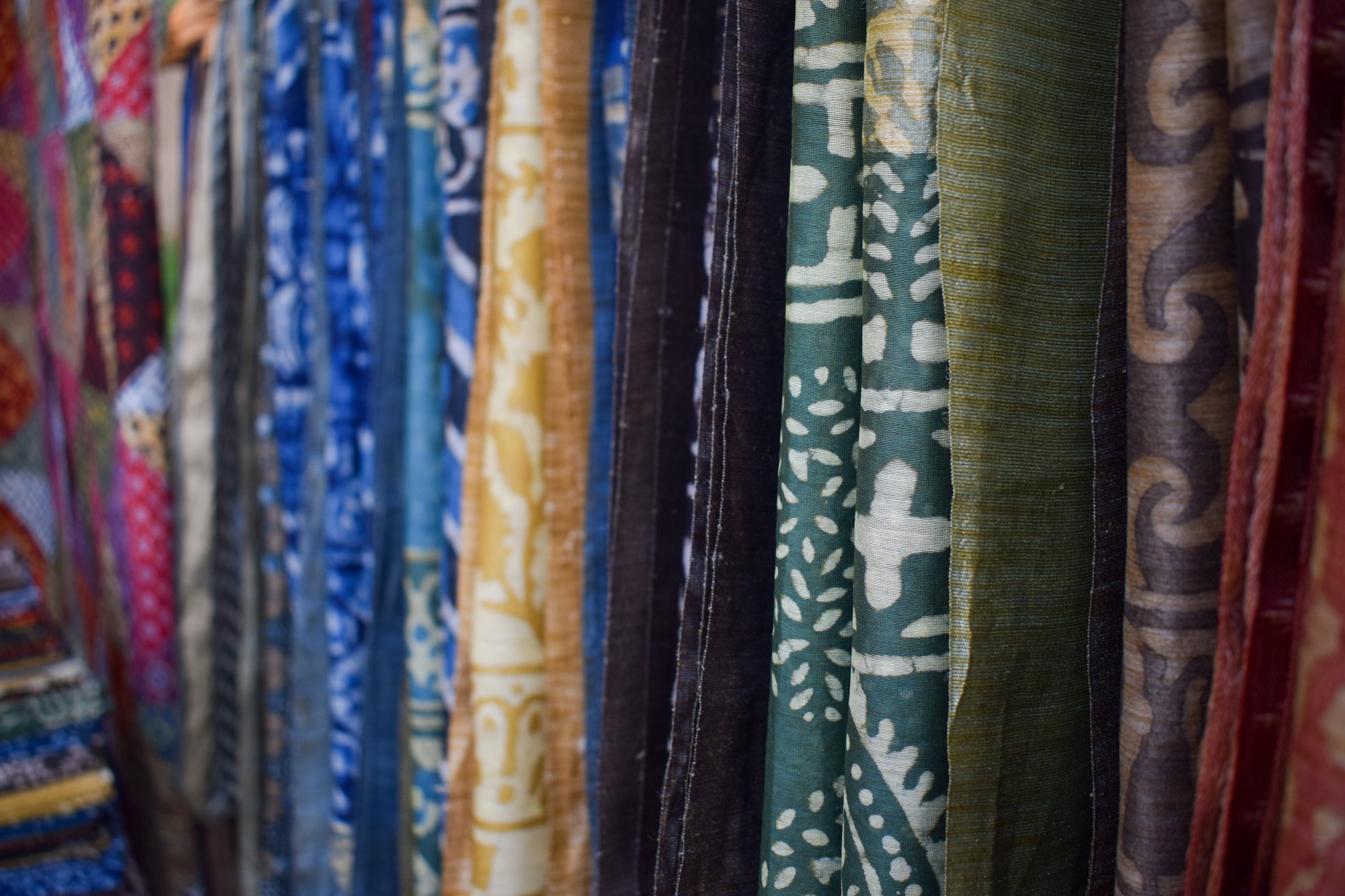
If Gujarat has one unanswerable claim it is this. The state holds twenty-nine registered Geographical Indications, and the craft list is the densest in India: Patan Patola, Rajkot Patola, Kutch Ajrakh, Kutch Rogan, Kutch BandhaniBandhaniA tie-dye technique of Gujarat and Rajasthan in which thousands of tiny points of cloth are tied off before dyeing, leaving a field of dots.Read in the glossary, Jamnagari Bandhani, Kutch Embroidery, Gujarat Suf Embroidery, Kachchh Shawls, Tangaliya, Mata ni Pachhedi, Sankheda furniture, Cambay agates, Surat zari.
The GI registry is also the thing that settles the arguments a buyer actually has, so we will use it rather than folklore.
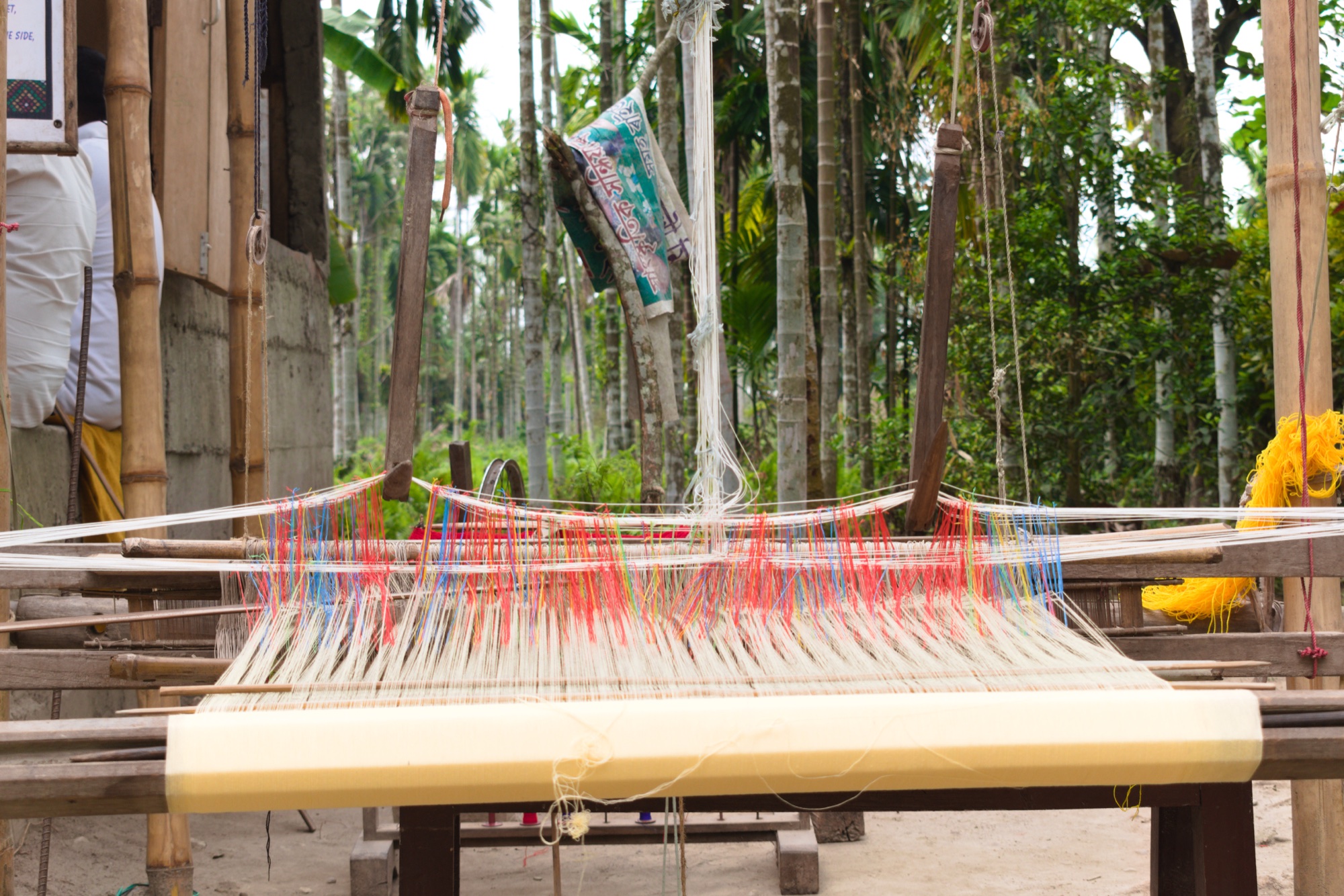
Patan Patola is double ikat — both warp and weft resist-dyed before weaving, so the pattern has to be calculated in the yarn before a single thread is on the loom. The GI applicant's registered name contains the words Double Ikat. The registry lists forty-three authorised users. The much-repeated claim that three families remain comes from a tourism page and is hard to reconcile with that figure; what is true is that the Salvi double-ikat lineages are very few. A government page gives six months to a year for a single sari.
Here is the practical point, and it is worth more than any amount of atmosphere: Rajkot Patola holds a separate GI and is single ikat, weft only — faster and far cheaper. A visitor told in an Ahmedabad shop that they are buying Patola is very often buying Rajkot work. The two are legally distinct registrations. Ask which, and ask for the GI authorised-user number.
Ajrakh is the one with the best story, and it is usually told wrong. After the 2001 Kutch earthquake the Khatri printers did not simply rebuild Dhamadka. The earthquake altered the village's water sources and changed their mineral composition, which degraded the dyes. Ajrakh is a resist-print and natural-dye craft whose quality is a function of its water chemistry, so the community moved to follow a water table, founding Ajrakhpur near Bhuj. Dhamadka still works; it was not abandoned. The GI, registered in 2024, is held from Ajrakhpur and has ninety-five authorised users. And Dr Ismail Mohmed Khatri, whose grandsons are the eleventh generation in the craft, holds an honorary doctorate from De Montfort University in Leicester, awarded in 2003.
Rogan, at Nirona, is painted rather than printed — castor oil boiled and drawn into thread and laid onto cloth. Abdul Gafur Khatri received the Padma Shri in 2019, confirmed on the Ministry of Home Affairs list. You will be told that one family in the world practises it; the GI records thirteen authorised users, so treat the single-family claim as a story the craft tells about itself. The family's own account, widely reported, is that two Tree of Life pieces were given to President Obama in 2014; we could not find a government record of it, so take it as the family's account.
And the one we would actually make a detour for. Mashru is a cloth with silk on one face and cotton on the other, woven on a seven-to-twelve-pedal loom at eighty threads to the inch. It exists because some Muslim communities held that silk should not touch the skin — the word mashru means permitted. It was made in Mandvi, worn by Muslim and Hindu women alike, and made up into backless kanjari blouses then embroidered by Rabari and Ahir women. Khamir, the Kutch craft resource centre, puts the number of remaining mashru weavers at fifteen to twenty, and says the tradition is on the brink of extinction. It has no GI.
A textile whose entire structure is a religious workaround, down to a name that means permitted, and fewer than two dozen people left who can weave it. That is the sort of thing this state has, and the reason we think ten days here beats a fourth trip to Rajasthan.
A few more things, accurately
The Sun Temple at Modhera was built in the reign of Bhimadeva I, between 1022 and 1063, under Solanki patronage, and has three parts: the main temple with its sanctum and porch, a detached assembly hall with a torana in front, and the Suryakunda, a large rectangular tank lined with miniature shrines. It is on the tentative list.
You will read that the Sun Temple is solar-powered. It is not. In October 2022 the village of Modhera was declared India's first round-the-clock solar-powered village, with a ground-mounted plant, more than thirteen hundred rooftop systems and battery storage. The temple separately got a projection-mapping show. A thousand-year-old sun temple in India's first solar village is a lovely fact and it only works if you state it correctly.
The stepwells are where Gujarat's syncretism is physically legible. Rani-ki-Vav is an eleventh-century Hindu dynastic commission that UNESCO itself calls an inverted temple. Dada Harir ni Vav in Ahmedabad was built in 1499 by a woman of Sultan Mahmud Begada's household, five levels down, carrying Persian and Sanskrit inscriptions on the same walls. Three centuries apart, the same civic form. We would not give you a date for Adalaj, because we could not verify one at a primary source.
At Lothal, the ASI site is visitable — the dockyard basin, 217 metres by 26, the warehouse platform, the bead workshop, a port trading between roughly 2400 and 1600 BCE. The National Maritime Heritage Complex is under construction beside it. Phase one was targeted for July 2026 at around eighty-two per cent complete. We could not confirm that any of it is open, so check before you build a day around it.
Somnath. The honest description is that the present temple is a twentieth-century building in Chalukya revival style, consecrated in 1951 by President Rajendra Prasad, built at Vallabhbhai Patel's direction on a site with a documented medieval history of destruction and rebuilding. We are not going to print the familiar line about seven destructions. It is a devotional and political formula rather than an archaeological finding, and the scale of the 1026 raid is disputed by historians.
Palitana, and the Shatrunjaya temple city, is one we are deliberately going to underwrite. The figures in circulation — around 863 temples, about 3,500 steps, and the rule that nobody including the priests may stay on the hill overnight — we could not source to the managing Jain trust, the municipality, the state or the ASI. The overnight rule is the best detail in Gujarat and we are not printing it as fact until someone puts it on the record. We will say what is documented: nothing made of leather or fur goes up the hill, the climb is on foot or by palanquin, and the route is closed in the rainy season, so access runs roughly October to June.
The claim that Palitana is the world's only vegetarian city is folklore. We searched for a notification, a gazette entry or a municipal resolution and found none; every source traces back to the same 2014 press reports. Do not repeat it, and be sceptical of anyone who does.
Sabarmati Ashram is being rebuilt at scale — a ₹1,200 crore project, upheld by the Gujarat High Court in 2022 and cleared by the Supreme Court in April 2025 over the objection of Gandhi's great-grandson. Reporting puts it at about forty buildings preserved and around two hundred structures demolished or reconstructed. Expect construction, and take those figures as reported rather than official.
Food, with the cliché corrected
Gujarat is the vegetarian state in the national imagination, and the government's own survey says that is half right in a way that matters.
The National Family Health Survey found about sixty-one per cent of Gujarat's women and fifty per cent of its men do not eat meat or fish. Which means roughly half of Gujarati men do. The coastal and Muslim communities of Kutch and Saurashtra eat extremely well, and the wholly-vegetarian framing writes them out.
The regional split is real and worth planning around, though we should be honest that it is culinary knowledge rather than documented fact. Kathiawadi cooking is chilli-forward and garlic-heavy, built on bajra and ghee. Surti is sweeter and richer, with the undhiyu and ponk axis in winter and south Gujarat's locho and khaman street culture. Kutchi is drier and more dairy-dependent, closer to Sindh than to Ahmedabad.
What is documented is the terroir, through four agricultural Geographical Indications in four different parts of the state: Gir Kesar mango, Bhalia wheat — grown on residual soil moisture without irrigation — Kachchhi kharek, the Kutch date, and Amalsad chikoo in the south. Those are legally defined origins, not marketing.
When, how long, and in what order
The season is not a matter of comfort. It is structural, and three facts fix it.
Gir is closed from 16 June to 15 October. The White Rann is under water in and after the monsoon — it is a seasonal salt marsh, not a desert, and the salt crust people photograph forms as the water evaporates. Rann Utsav runs 1 November to 7 March. So November to February is the only period in which all three are available at once. March to mid-June gives you Gir without the Rann; mid-June to mid-October gives you neither.
The state has three clusters and they do not overlap. Ahmedabad and north Gujarat — the walled city, Sarkhej, Adalaj, Modhera, Patan and Rani-ki-Vav, Vadnagar — is three or four days. Kutch — Bhuj, Ajrakhpur, Nirona, Bhujodi, Dhordo and Dholavira — is four or five, and Dholavira alone is a long day out of Bhuj. Saurashtra — Gir, Somnath, Junagadh and Girnar, Palitana, the Bhavnagar coast — is three or four.
Ten to fourteen days does the state properly. Seven does one cluster and Ahmedabad well. Five becomes a driving holiday, and that is the commonest mistake made here.
Ahmedabad is the only realistic international gateway. Rajkot's new airport at Hirasar, opened in 2023, is the usable Saurashtra option; Bhuj serves Kutch. We would not route a client through Keshod.
If you have time for one cluster, make it Kutch. The craft is the strongest single reason to come to this state, it is concentrated within an hour or two of Bhuj, and Dholavira and the Rann are on the same circuit. If you have time for two, add Saurashtra for the lions. Ahmedabad is best taken as the beginning and the end rather than as the point.
Journeys That Take You There
Read Next