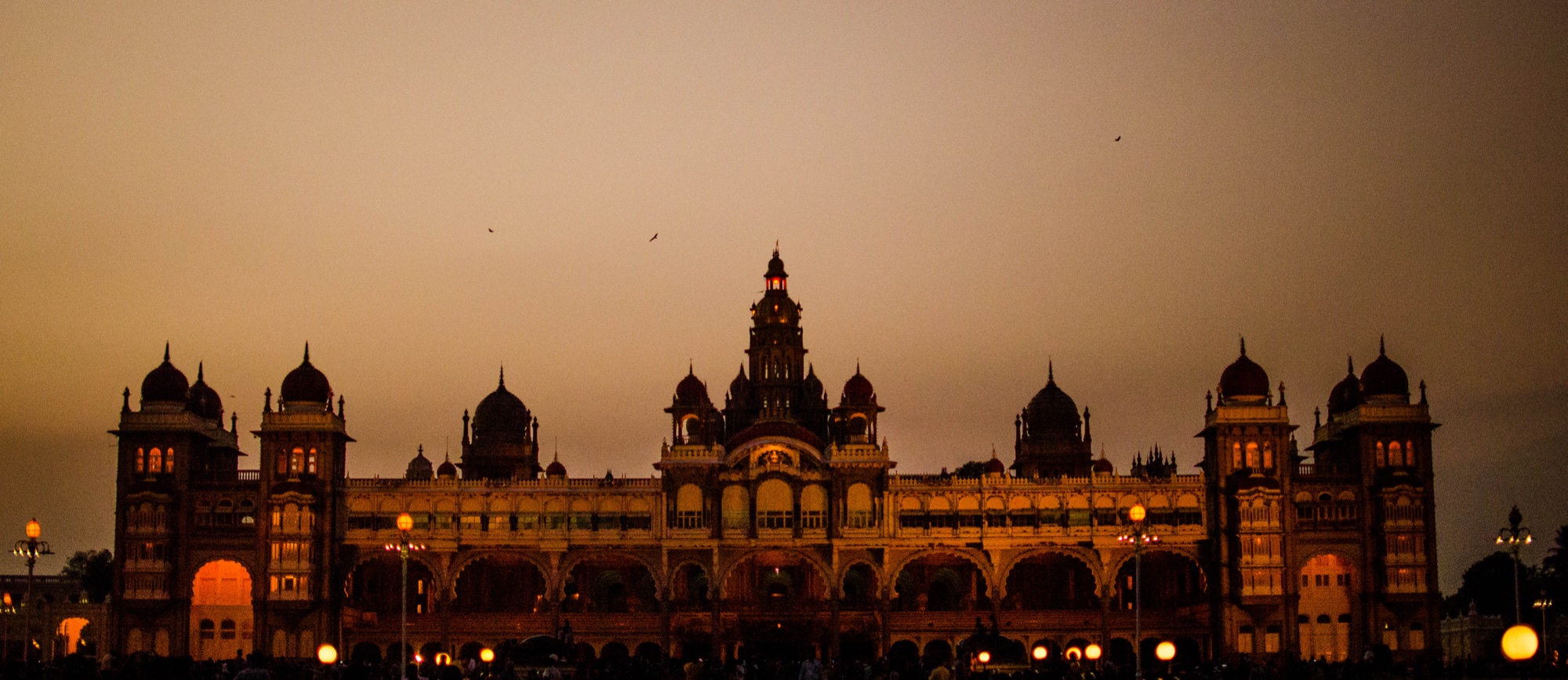
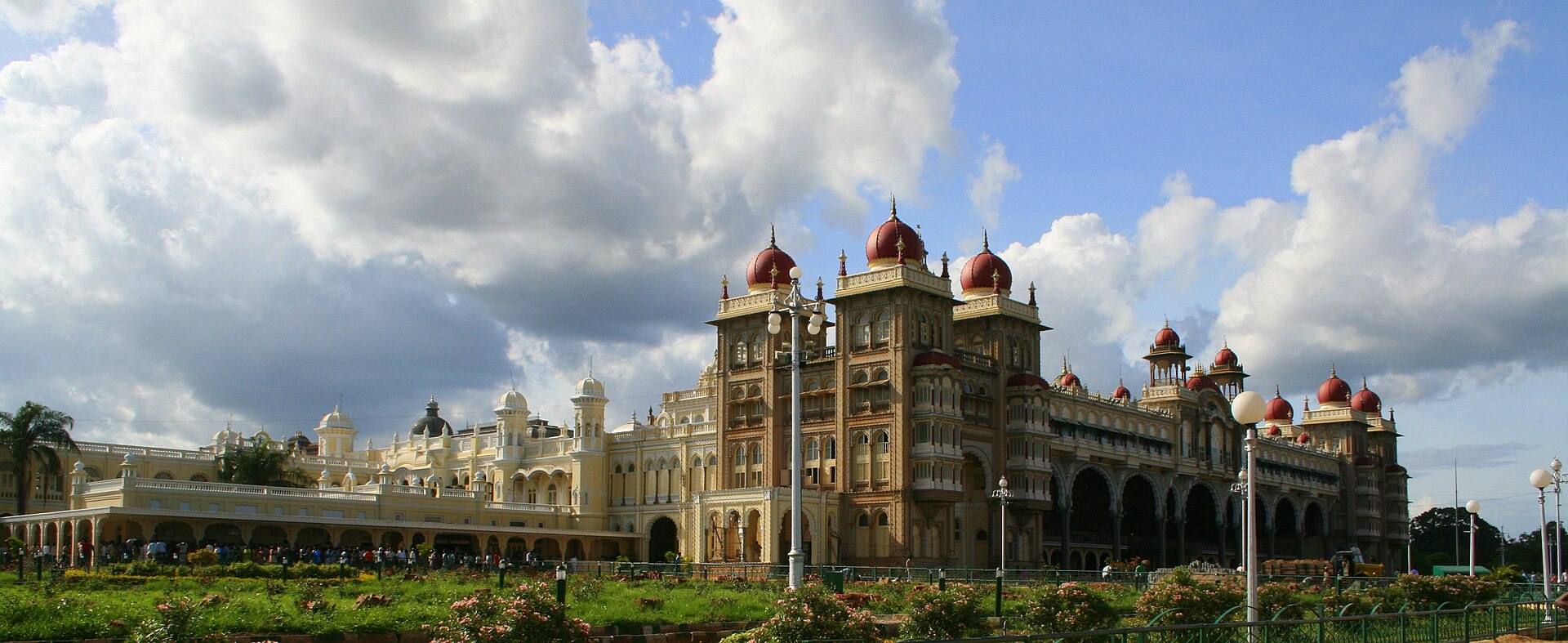
Hero photograph: Mysore Palace at dusk light — CC BY-SA 4.0, via Wikimedia Commons
Mysore surprises people. After the density of most Indian cities it is spacious, tree-lined and visibly planned, with a palace at its centre that is far grander than a city of this size has any obvious right to. That is the Wodeyar inheritance: a dynasty that ruled here for the better part of six centuries and, in its last century, ran a princely state that was widely regarded as among the best administered in India — with early investment in electricity, education and industry.
Amba Vilas
The palace as it stands is largely an early twentieth-century rebuilding after fire, and it is unapologetically eclectic — Indo-Saracenic outside, stained glass and cast iron within, the whole thing a demonstration of a state that could afford anything it wanted. The interiors reward slow looking: the durbarDurbarThe court of an Indian ruler — and, by extension, the hall in which he gave audience, or the grand ceremonial assembly held there.Read in the glossary hall, the marriage pavilion, the painted panels of the Dussehra procession that show the city celebrating itself.
On Sunday evenings, and through the Dussehra festival, the exterior is lit by tens of thousands of bulbs. It is theatrical and slightly absurd and absolutely worth arranging your week around.
The market
Devaraja Market is a working produce and flower market and one of the most photographable places in southern India — pyramids of kumkum powder, banana leaves, marigolds by the sack. Go early. Go with someone who can explain what is being sold, because much of it is unfamiliar even to visitors who know Indian food.
Sandalwood, silk and where the money went
Mysore's name attaches to two luxury goods — sandalwood and silk — and both remain genuine local industries rather than heritage branding. The state-run silk weaving operation and the sandalwood oil works are visitable, and Mysore silk sarisSariAn unstitched length of cloth, several metres long, draped to form a garment — the principal traditional dress of Indian women.Read in the glossary are one of the few souvenirs from India that carry a reliable mark of origin.
Fitting it in
Two nights, usually approached from Bengaluru, and it pairs naturally with the temple towns and with Coorg's coffee estates for guests continuing south. October to March is the season; Dussehra, usually in October, is the city at its peak and needs booking well ahead.
Questions, Answered
Is Mysore worth visiting?
Yes — it is one of the most attractive and best-planned cities in southern India, with a genuinely spectacular palace, an outstanding working market, and living sandalwood and silk industries. It is also easy to reach from Bengaluru.
When is Mysore Palace illuminated?
The palace exterior is lit on Sunday evenings and during the Dussehra festival. It is worth timing a visit to catch it.
How many days do you need in Mysore?
Two nights covers the palace unhurried, Devaraja Market in the morning, and either the silk and sandalwood works or a day trip to Srirangapatna.
When is Dussehra in Mysore?
Dussehra usually falls in October, with exact dates set by the lunar calendar each year. Mysore's celebration is among the most elaborate in India and requires booking well in advance.
What is Mysore famous for?
Amba Vilas Palace, its Dussehra festival, Mysore silk, sandalwood, and its reputation as the capital of one of India's best-governed princely states under the Wodeyar dynasty.
Journeys That Take You There
Read Next