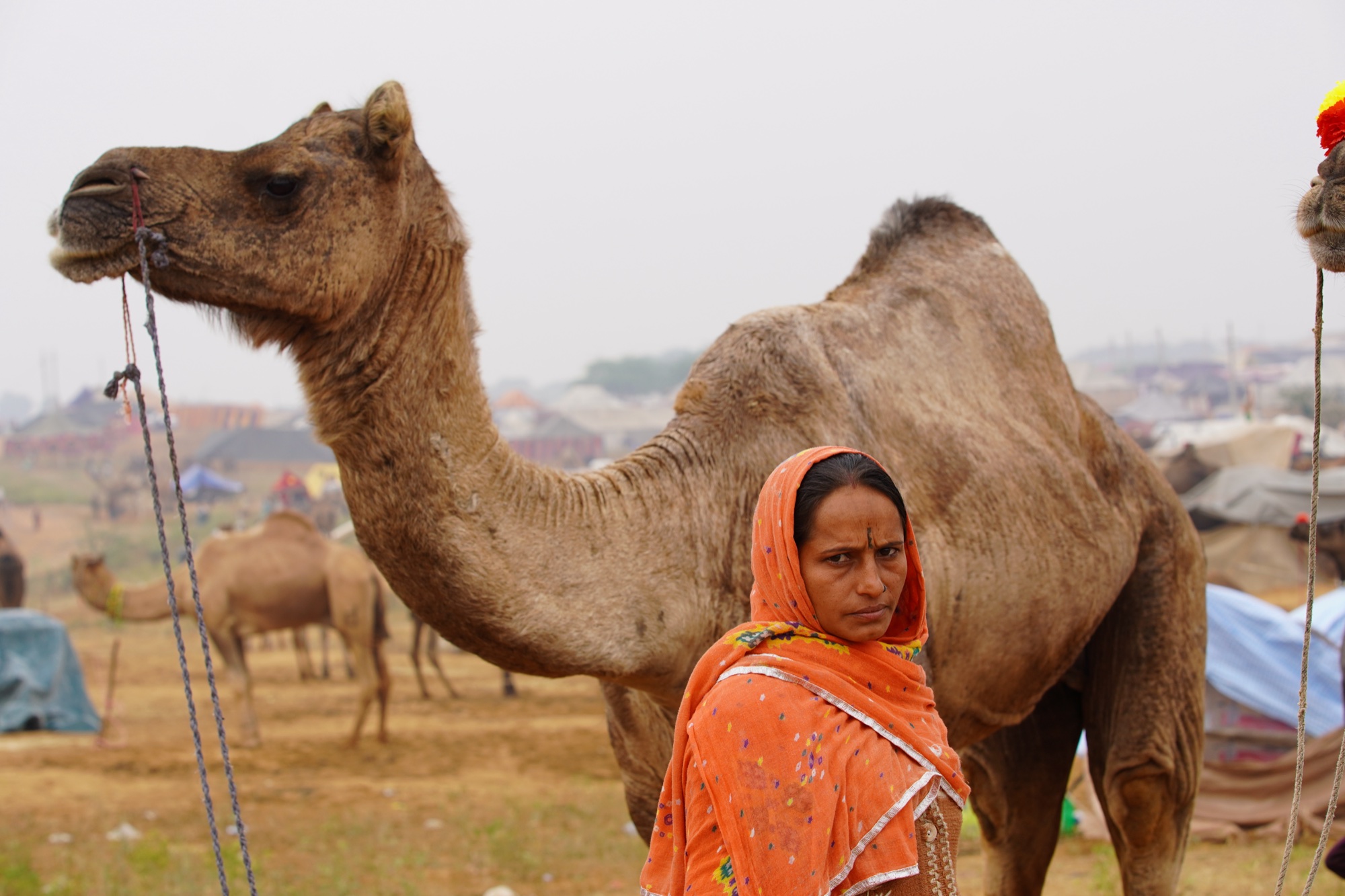
Hero photograph: A lady in Pushkar fair with camel — CC BY 4.0, via Wikimedia Commons
Go for the trading days, not the climax: the livestock ground in the first half of the week is the fair people remember, and it is emptier, earlier and better lit than the Kartik Purnima crowds at the end.
| Days | What is happening | Who it suits |
|---|---|---|
| 17–19 Nov | Livestock arrives; trading at its most serious; the dunes at their emptiest | Photographers, anyone who wants the fair before the fair |
| 19–22 Nov | The full cultural programme — competitions, music, the arena events | First visits; travellers who want spectacle and colour |
| 23–24 Nov | Pilgrimage builds to Kartik Purnima; the ghats fill; trading thins | Those drawn to ritual over spectacle |
Ask when the Pushkar fair 'is' and you will get a single date, which is the least useful answer available. The fair is a week, and the week has a shape: it begins as a livestock market and ends as a pilgrimage, and the two halves feel so different that guests who arrive for one are sometimes surprised to have booked the other. In 2026 it runs from 17 to 24 November, closing on Kartik Purnima — the full moon of the month of Kartik — which falls on Tuesday 24 November.
That structure is the single most useful thing to understand before you plan around it.
The trading days, which almost nobody plans for
The first days belong to the traders. Camels and horses arrive across the dunes in the days before the official programme, and the serious business of buying and selling happens while the town is still relatively quiet. For anyone with a camera, or anyone who would rather watch a working market than a performance, this is the part of the week worth protecting in an itinerary. The light on the dunes at dawn, with the animals moving and the cooking fires going, is the image people imagine when they imagine Pushkar — and it is easiest to find before the crowds arrive.
The pilgrimage, and why the ending is not an anticlimax
By the closing days the register changes entirely. Pushkar's lake is one of the most sacred bathing sites in India, and Kartik Purnima draws pilgrims in very large numbers to bathe at the ghatsGhatA flight of steps leading down to a river or tank, used for bathing, worship and cremation.Read in the glossary. The livestock thins out; the town fills with people who have not come for camels at all. Travellers who booked for the spectacle sometimes find this the more affecting half — but it is crowded in a different way, and it asks for a different kind of attention.
The real constraint is where you sleep
Access to the fair is not the difficulty — it is open, and it is free. The difficulty is that Pushkar is a small town absorbing an enormous temporary population, and the comfortable options are finite. The well-run tented camps outside town are contracted far in advance, and the strongest years are those planned twelve months out. If a fair week matters to you, the accommodation conversation should happen before the itinerary conversation.
The alternative, which suits some guests better, is to base in Jaipur or at a heritage property within reach and come in for the days that matter most to you. You trade atmosphere for comfort, and for a certain kind of traveller that is the right trade.
A note on dates, and why they move
Pushkar is set by the lunar calendar, not the Gregorian one, so the dates shift by several weeks year to year. It is worth being careful with anything you read online: a good deal of published material simply takes last year's dates and advances the year, which produces confident and entirely wrong answers. Anchor on Kartik Purnima and count backwards.
Questions, Answered
When is the Pushkar Camel Fair 2026?
The 2026 fair runs from 17 to 24 November, ending on Kartik Purnima — the full moon of the month of Kartik — which falls on Tuesday 24 November 2026.
Which days of the Pushkar fair are best?
It depends what you have come for. The earlier days, roughly 17–19 November, are the serious trading days and the best for photography and for seeing a working livestock market. The middle days carry the full cultural programme. The final days belong to the pilgrimage and the bathing at the ghats.
How far in advance should I book for the Pushkar fair?
As far ahead as you can — ideally around a year. The fair itself is open and free to attend; the constraint is accommodation, because Pushkar is a small town and the well-run camps and heritage properties nearby are contracted long in advance.
Is the Pushkar Camel Fair worth visiting?
For travellers drawn to spectacle, photography, or living tradition, it is one of the most extraordinary gatherings in India. It is also crowded, dusty and demanding. Travelled privately, with the right base and someone who knows which days suit you, it is exceptional.
Why do the Pushkar fair dates change every year?
The fair is timed to Kartik Purnima on the Hindu lunar calendar, so its Gregorian dates shift by several weeks from year to year. Always check the year you are travelling rather than assuming last year's dates apply.
Journeys That Take You There
Read Next