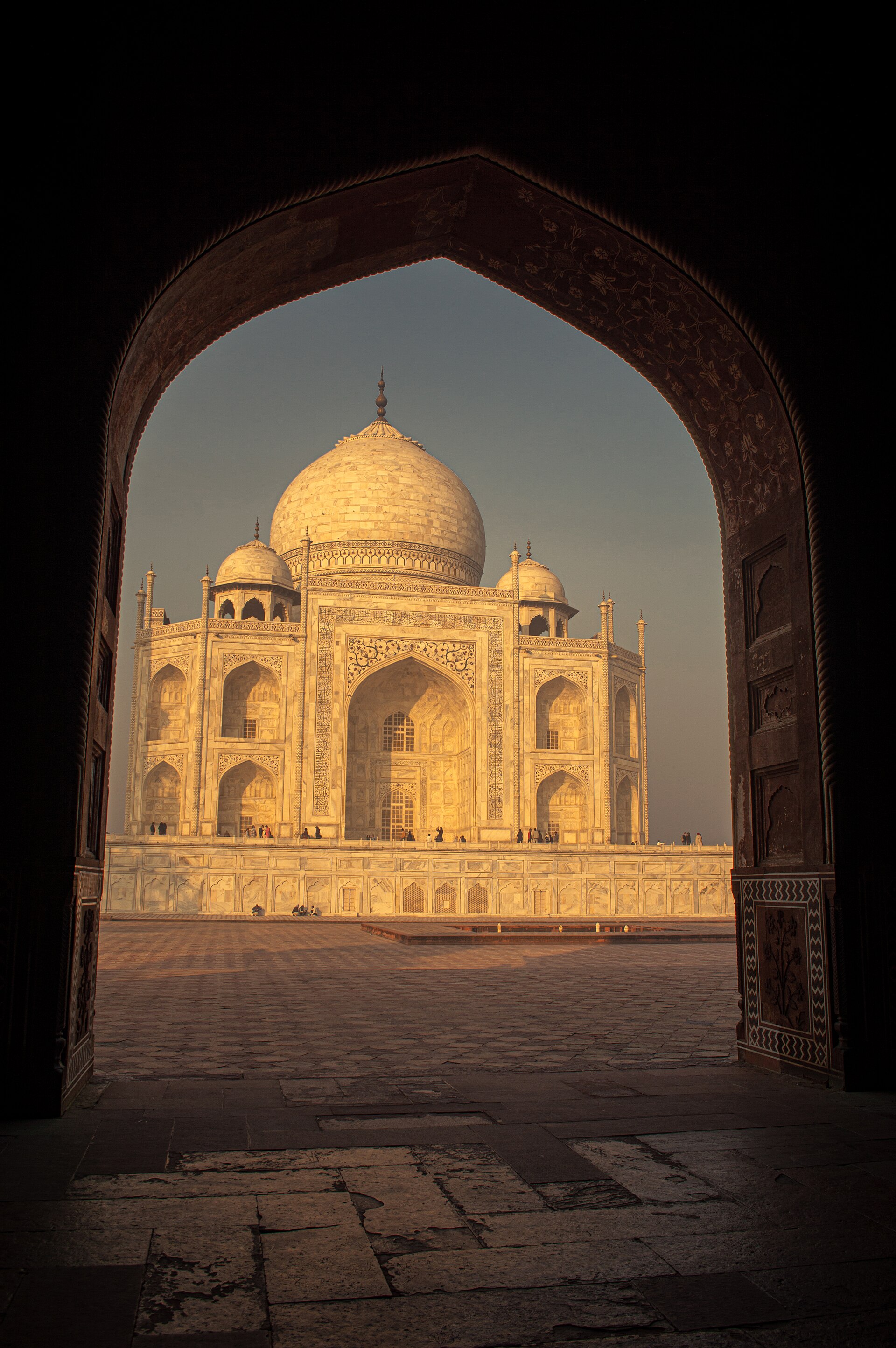
Hero photograph: Yann / Wikimedia Commons (CC BY-SA 4.0)
Sunrise. The marble is at its most luminous in the first light, the crowds are at their thinnest, and Agra's heat and haze are lowest — it is the finest and calmest time to see the Taj Mahal. Sunset is beautiful too and easier on early risers, but the monument faces the crowds and the afternoon haze; if you see it once, make it dawn.
| Sunrise | Sunset | |
|---|---|---|
| The light | Soft, pale gold; marble at its most luminous | Warm, pink-to-amber; beautiful but hazier |
| Crowds | Thinnest of the day at opening | Busiest — the day's visitors are all present |
| Heat & haze | Coolest and clearest, especially in summer | Warmer, with more afternoon haze and dust |
| Photography | Best — clean light, empty foreground | Good colour, but crowds in frame |
| Best for | Everyone who can rise early | Late risers; a second, different view |
The Taj Mahal is never quite the same monument twice. Its white marble is designed to catch and change the light — pale gold at dawn, dazzling white at midday, warm pink as the sun drops — so the question of when to visit is really a question of which Taj you want to see. For most travellers, on most trips, the answer is clear, but the case for each is worth making plainly.
Why sunrise wins
Come at dawn and you have the best of everything at once. The rising sun turns the marble a soft, luminous gold that no other hour matches. Agra's heat and its notorious haze are both at their lowest, so the dome is at its clearest — which matters enormously in the hot months, when the afternoon can dissolve into white glare. And crucially, the crowds are thinnest: arrive as the gates open and there is a window, before the tour groups build, when the forecourt is nearly your own. For photography and for sheer atmosphere, sunrise is unmatched.
The only cost is the early alarm. A dawn visit means being at the gate before opening, which on a winter morning is cold and dark. Every guest who does it tells me afterwards it was worth it.
When sunset is the better call
Sunset has real virtues. The late light is warm and romantic, washing the marble in pink and amber, and for a traveller who simply will not enjoy a pre-dawn start, an evening visit is far better than a rushed, resentful one. It also pairs naturally with a full day in Agra — the Fort, the marble workshops, Mehtab Bagh across the river — ending at the Taj as the light softens. The trade-offs are the crowds, which are at their fullest by late afternoon, and the haze, which builds through the day and can mute the view. If you have only one visit and can rise early, sunrise is better; if the schedule or the sleep says otherwise, sunset still delivers a beautiful Taj.
How to see it at its quietest
Whichever hour you choose, the experience is made or unmade by the logistics. The Taj is closed every Friday, so build the visit around any other day. A private guide who knows the entry gates, secures tickets in advance and times your arrival to opening is the difference between joining a queue and standing before an almost-empty monument. And a night in Agra rather than a long day-trip from Delhi is what makes a true sunrise possible at all. This is precisely the kind of small, decisive orchestration we build into a Golden Triangle journey — so the most photographed building on earth still feels, for a moment, like it is yours.
Questions, Answered
Is the Taj Mahal better at sunrise or sunset?
Sunrise. At dawn the marble is at its most luminous, the crowds are thinnest, and Agra's heat and haze are lowest, so the monument is at its clearest and calmest. Sunset is warmer in colour and easier for late risers, but you share it with the day's crowds and more haze. If you visit once, choose sunrise.
What time does the Taj Mahal open and close?
The Taj Mahal is open from about sunrise to sunset — roughly 6am until 6:30pm, shifting slightly with the season — and is closed all day every Friday. For a sunrise visit, aim to be at the gate as it opens; a guide who secures tickets ahead and times the arrival makes the early start count.
Is a sunrise visit to the Taj Mahal worth it?
For nearly everyone, yes. The combination of soft golden light, the thinnest crowds of the day and the clearest air makes the dawn visit the most rewarding, and it is far and away the best time for photography. The only cost is an early start, and travellers almost universally say it was worth it.
Can you see the Taj Mahal at both sunrise and sunset?
Yes, on separate entries — each visit needs its own ticket. Some travellers see it at dawn from inside the complex and again in the evening from Mehtab Bagh across the river, which gives two very different views. A night in Agra makes both comfortably possible.
Which day should you avoid visiting the Taj Mahal?
Friday, when the Taj Mahal is closed all day for prayers. Any other day of the week is fine; midweek mornings tend to be a little quieter than weekends. Plan a sunrise on a non-Friday and arrive at opening for the calmest experience.
Journeys That Take You There


Read Next