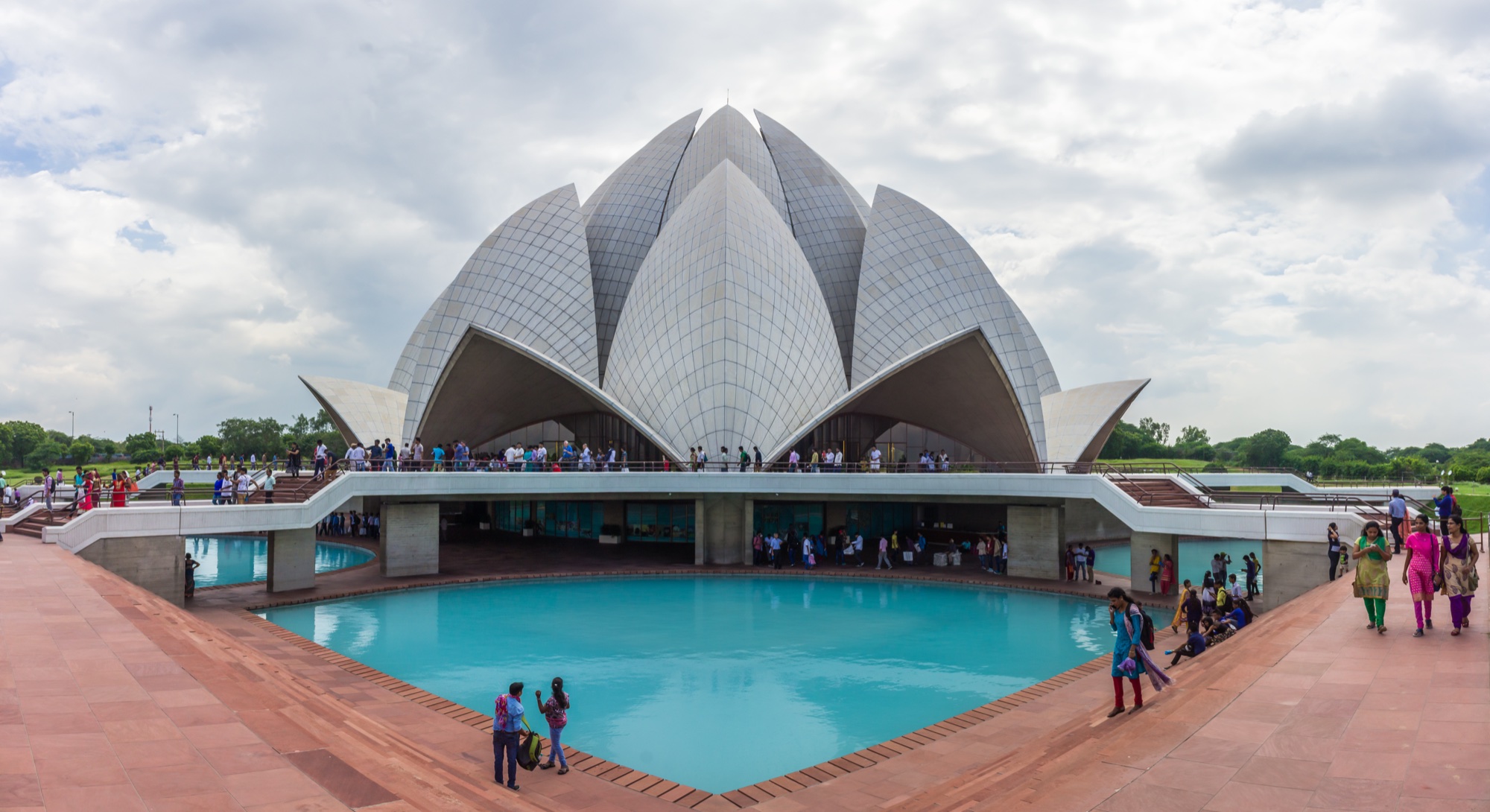
Hero photograph: Lotus Temple-Panoroma-Visit During WCI 2016- IMG 6471 — CC BY-SA 4.0, via Wikimedia Commons
A well-built India trip is very possible with limited mobility, and a badly built one is punishing. The difference is almost never the country — it is whether somebody checked each individual building, vehicle and transfer in advance instead of assuming. Ask for that verification in writing before you book anything.
| Setting | Generally workable | Verify before booking |
|---|---|---|
| Domestic flights | Assistance is a legal requirement and free; terminals are mostly modern | Powered chair battery type; terminal transfers at connecting airports |
| Trains | SLRD coaches on most Mail/Express; free wheelchairs at large stations | Platform-to-carriage gap; footbridges at junction changes |
| Modern city hotels | Lifts, step-free entrances, adapted bathrooms in the better properties | Bathroom door width; roll-in shower or bath only |
| Heritage and palace hotels | Ground-floor rooms and courtyards, often beautiful | Lifts frequently impossible; distance from car to room |
| Forts, temples, stepwells | Varies enormously and cannot be assumed | Steps at entry, surface underfoot, distance from drop-off |
| Backwaters and boats | Among the easiest days in India — one level, no walking | Boarding method at the specific jetty |
India has a reputation among travellers with mobility needs that is roughly half deserved. The infrastructure is genuinely uneven, the pavements are worse than the roads, and a great many of the buildings people come to see were built four hundred years ago by people with no interest in ramps. All of that is true.
What is also true is that the legal framework is more robust than most visitors expect, that a car and driver removes the single hardest part of moving around a city, and that some of the country's best experiences — a backwater boat, a palace courtyard, a private dining room, a craft workshop — involve very little walking at all. A trip built deliberately around those is not a compromise; it is often a better trip than the one the able-bodied version of the same itinerary would have produced.
The failure mode is not India. It is an itinerary assembled by someone who did not check.
Flying: what the rules actually guarantee
India's civil aviation requirements on this are unambiguous. An airline cannot refuse carriage to a person with a disability, nor to their assistive devices, their escort, or a guide dog. Assistance must be provided without an additional charge.
Beyond that, the provisions are practical: personal mobility devices are to be accepted, stored safely and returned at the aircraft door wherever possible — which is the detail that matters most, because being separated from your own wheelchair for the length of a terminal is the single most common indignity in air travel anywhere. Accessible seating with adequate legroom is to be provided without a surcharge, an escort should be seated adjacent to you, and neither of you will be placed at an emergency exit. Airports are required to have ramps, clear signage, reserved parking, ambulifts and accessible information systems.
Practically: request assistance at the time of booking rather than at check-in, travel with documentation of anything that might be queried, and put your own chair's dimensions and battery type in writing to the airline in advance if it is powered. Domestic Indian terminals are mostly modern and mostly work well. The weak link is usually the walk between a domestic and international terminal at a connecting airport, which is worth designing out of the itinerary entirely.
Trains: better than expected, with conditions
Indian Railways runs SLRD coaches — wider entrance doors sized to admit a wheelchair, wider aisles, and a modified toilet — on most Mail and Express services. The coach carries four berths, the lower two intended for the person with a disability and the upper two for attendants. There is also a small reserved quota on non-suburban trains, of four sleeper-class berths and two in 3AC, for passengers travelling on concessional tickets, with provision for escorts.
At the stations, wheelchairs are available free at the large ones, along with porter assistance, battery-operated vehicles for moving along platforms, ramps, designated parking and accessible restrooms.
The caveats are honest ones. The concessional fares themselves are documented around specific disability categories and Indian documentation, so a visitor should plan on paying full fare and treat the coach and the assistance — not the discount — as the point. Platform changes at big junctions can involve a footbridge. And the gap between platform and carriage is real. A train journey in India with limited mobility is very doable; it is not a thing to improvise on the day.
The buildings, which is the actual constraint
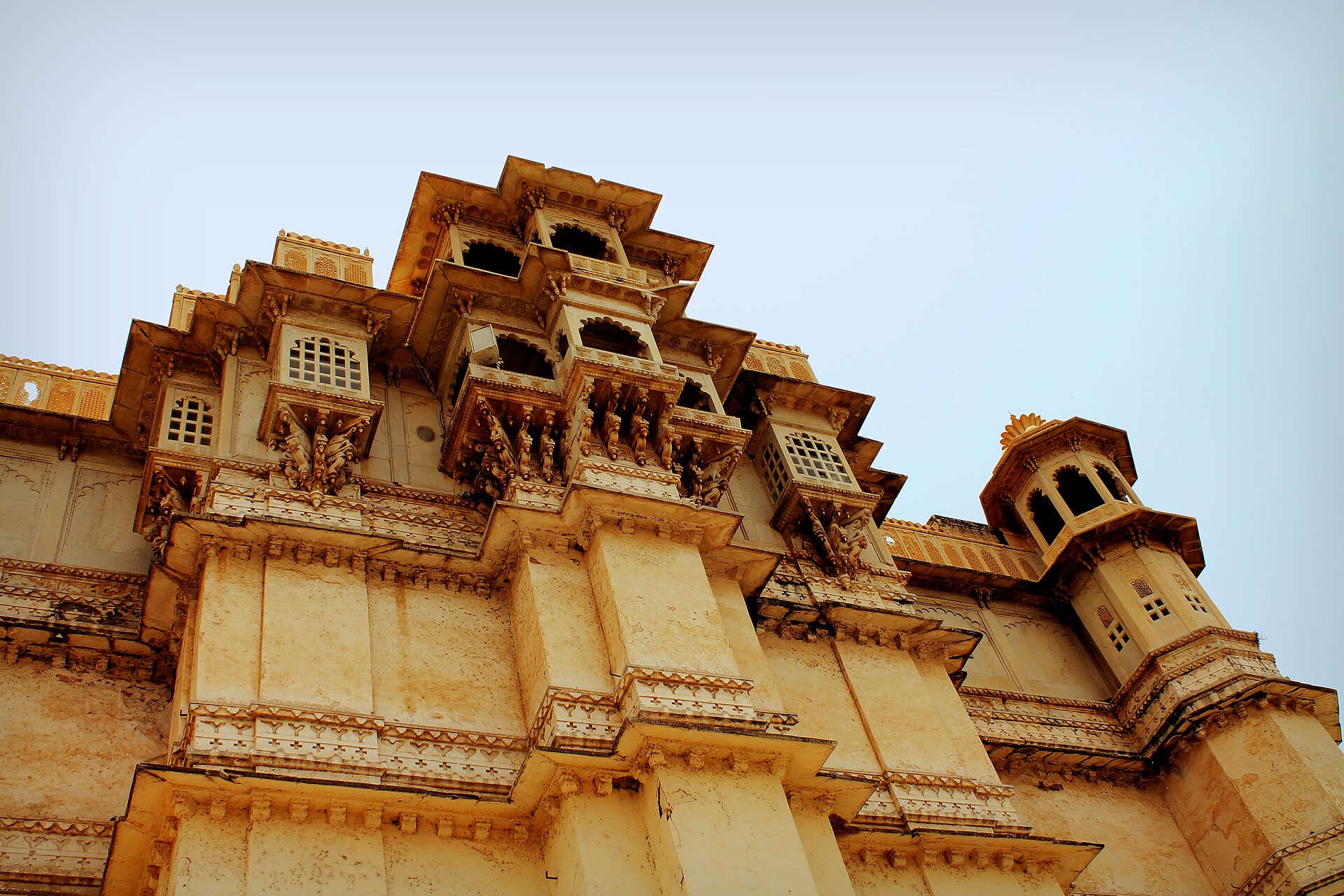
This is where candour serves better than encouragement. The monuments people travel to India for are, overwhelmingly, old. Forts sit on hills and were designed to be difficult to enter. Temples have thresholds and steps as part of their religious architecture, not as an oversight. Palace hotels convert historic structures where a lift may be impossible to install. StepwellsStepwellA well reached by a long descending staircase, so that water can still be drawn as the water table falls.Read in the glossary are, definitionally, stairs.
There is no general answer to whether a given site is navigable, and any source that offers one — including a hotel's own accessibility page — should be treated as a starting point rather than a finding. What works is a specific question about a specific place, asked close to the time: how many steps at the entrance, is there a ramp and how steep, is the surface flagstone or gravel, how far is the drop-off point from the gate, is there a lift and does it serve every floor, and how wide is the bathroom door.
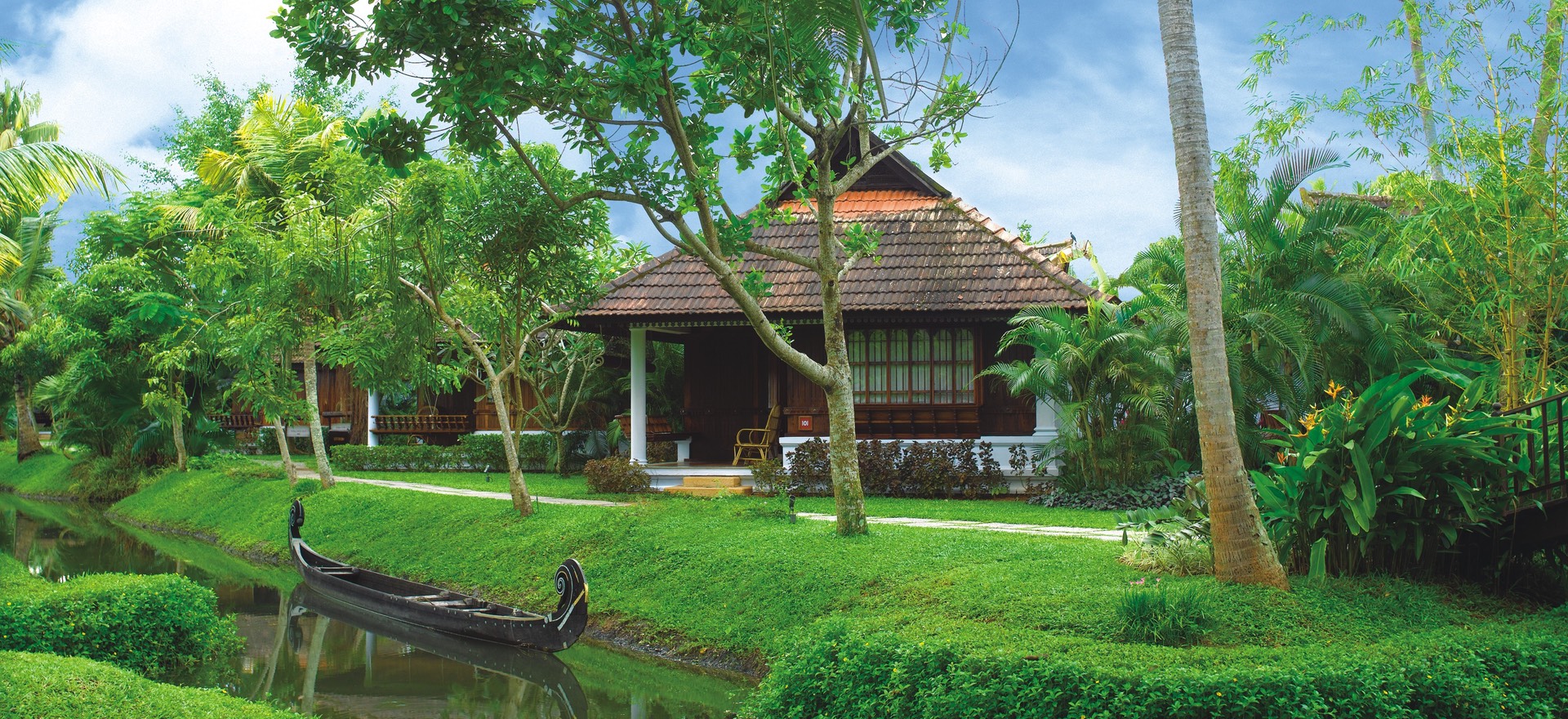
Some categories reliably work better than others. Gardens, riverfronts and lakes tend to be flat. Craft workshops and private houses are often single-storey and can usually receive a guest with notice. Modern luxury hotels are far more consistently accessible than heritage conversions, and the honest recommendation is often to use one as a base and visit the heritage property for dinner. Boats — a Kerala backwater cruise in particular — are among the easiest experiences in the country to arrange, because the whole day happens at one level.
The car and driver, which solves more than anything else
A dedicated car and driver is the single most useful thing on a trip of this kind, and for reasons beyond the obvious. The car becomes your base: it waits, it holds the things you do not want to carry, it moves the drop-off point to the nearest possible door rather than the designated coach park, and it means the plan can change at noon without stranding anyone.
Vehicle choice matters more than usual. A higher SUV is harder to get into than a saloon for many people and easier for others; this is worth specifying rather than leaving to whoever allocates the fleet. Ask whether the driver has worked with guests needing assistance before, and whether he will be the same driver throughout.
Wheelchair-accessible vehicles with ramps and lifts do exist in the major cities but are not a standard part of most fleets. If you need one, that is a question to settle before anything else in the itinerary is fixed, because the answer determines which cities work.
How to build the itinerary
Fewer places, longer stays. This is good advice for anyone visiting India and it is close to essential here — every additional city is another hotel to verify, another airport, another set of unfamiliar thresholds. Three well-checked bases across two weeks will produce a far better trip than six.
Build in the afternoon. Heat and crowds both peak in the middle of the day and both cost more energy than the sightseeing does. Early mornings and late afternoons, with the middle of the day spent somewhere comfortable, is the shape that works.
And ask your operator for verification rather than reassurance. The right answer to 'is this hotel accessible' is not 'yes' — it is a description of the specific room, the specific bathroom, the route from the car to the door, and who checked. If that is not what comes back, you have learned something important while it is still free to act on.
Questions, Answered
Can an airline in India refuse to carry a passenger with a disability?
No. India's civil aviation requirements state that an airline cannot refuse carriage to a person with a disability, their assistive devices, an escort or a guide dog, and that assistance must be provided without additional charge. Mobility devices are to be accepted, stored safely and returned at the aircraft door wherever possible.
Are Indian trains wheelchair accessible?
Partly, and better than most visitors expect. Indian Railways runs SLRD coaches with wider doors, wider aisles and a modified toilet on most Mail and Express services, and provides free wheelchairs, porter assistance and battery-operated platform vehicles at large stations. The gap between platform and carriage is real, and platform changes at big junctions may involve a footbridge, so a rail leg needs arranging rather than improvising.
Is the Taj Mahal or a Rajasthan fort accessible by wheelchair?
It varies site by site and cannot be assumed from a general statement. Forts in particular were built on high ground to be hard to enter, and temples often have steps as part of their religious architecture. The workable approach is a specific enquiry close to your travel date about steps at the entrance, surface underfoot, and the distance from where a car can stop — and to treat any blanket 'yes' with caution.
Are palace hotels in India accessible?
Less reliably than modern luxury hotels, because they are conversions of historic buildings where a lift may be structurally impossible. Ground-floor rooms around a courtyard often work well. A common and good solution is to base yourself at a modern hotel and visit the heritage property for a meal rather than staying in it.
Can I hire a wheelchair-accessible vehicle in India?
Vehicles with ramps or lifts exist in the major cities but are not standard in most fleets. If you need one, settle that question before fixing any other part of the itinerary, because the answer determines which cities are practical. For many travellers a standard car with a driver, chosen for ease of transfer, works better than waiting for a specialised vehicle.
What is the easiest kind of India trip with limited mobility?
Fewer places, longer stays, and experiences that happen at one level — a Kerala backwater boat, gardens and riverfronts, craft workshops, private dining, and city bases with a dedicated car and driver. Three well-verified bases over two weeks produces a better trip than six cities and a great deal less strain.
Journeys That Take You There

Read Next