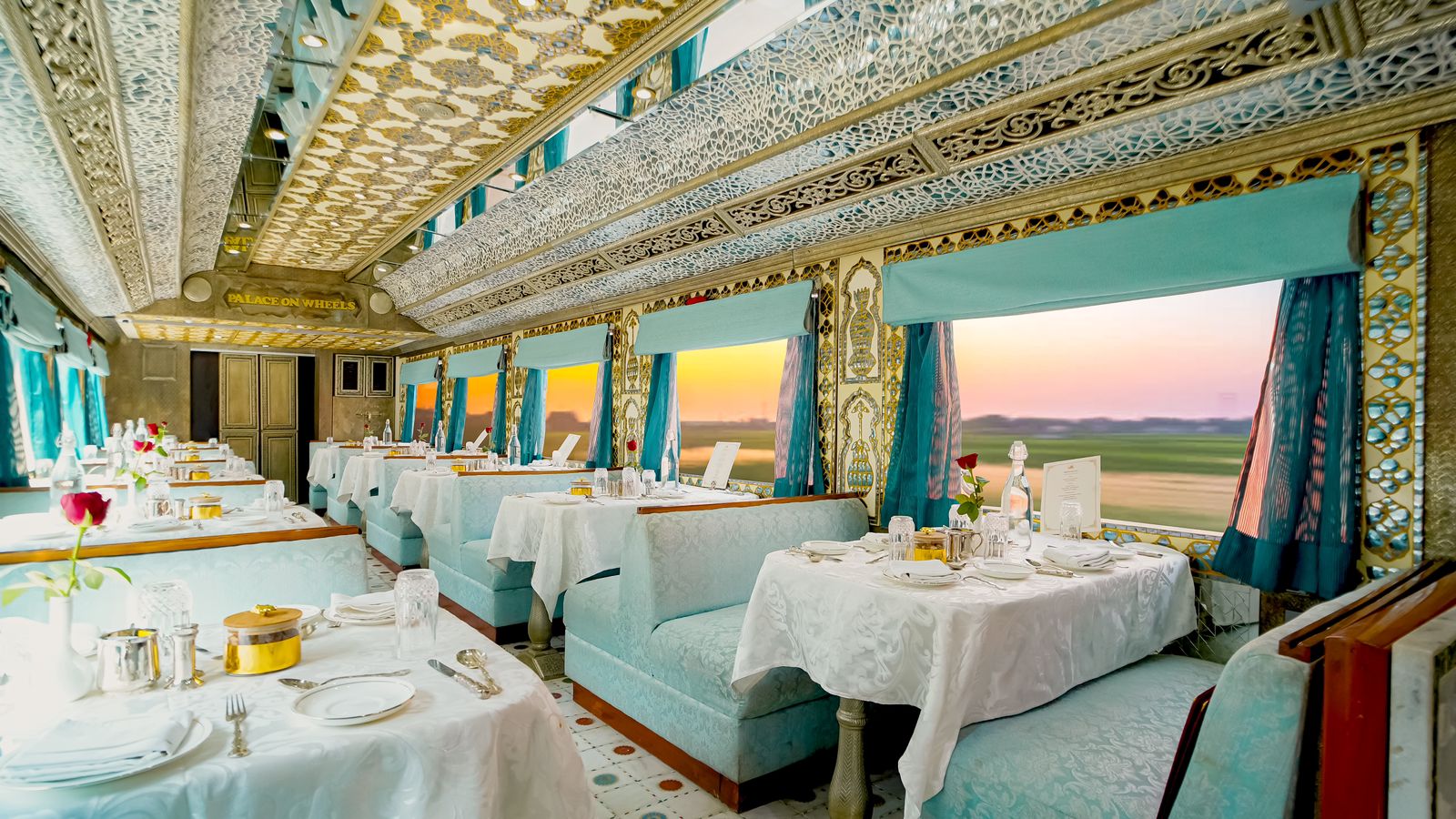
Hero photograph: Aswin Krishna Poyil / Wikimedia Commons (CC0)
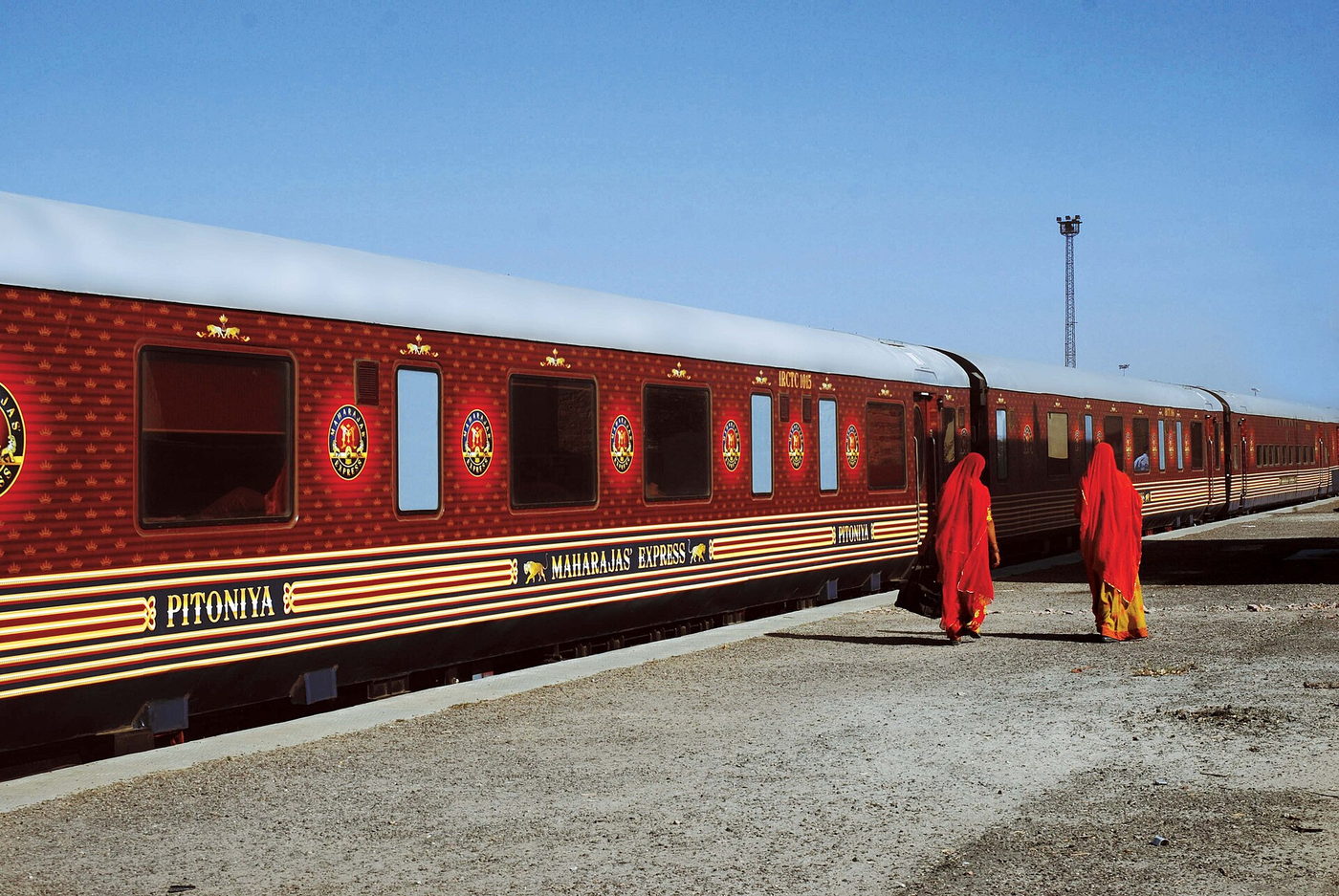
Palace on Wheels for a first Rajasthan circuit on a fixed eight-day route from Delhi, at the gentler fare. Maharajas’ Express for larger cabins, more route choice and a higher standard throughout — at a materially higher one. Both spend every night aboard; the difference is how much of the day the train asks of you.
| Palace on Wheels | Maharajas' Express | |
|---|---|---|
| Operator | RTDC (Rajasthan Tourism) | IRCTC |
| Duration | 8 days / 7 nights | 7 days / 6 nights (Indian Panorama) |
| Classic route | Delhi, Jaipur, Sawai Madhopur, Chittorgarh, Udaipur, Jaisalmer, Jodhpur, Bharatpur, Agra | Delhi, Jaipur, Ranthambore, Fatehpur Sikri & Agra, Orchha, Khajuraho, Varanasi |
| Departs | Wednesdays, in season | Multiple routes, in season |
| Focus | Rajasthan palaces & desert | Rajasthan plus the heritage north |
| Nights aboard | Every night | Every night |
If you are flying to India from New York, London or Sydney, a luxury train is not a transport decision. It is a decision to spend a week — and a substantial share of the trip budget — travelling at the pace of a train rather than staying in the palaces the train stops at. That is the question worth answering first, before the comparison of cabins and dining that most of the internet leads with.
India's luxury trains are moving palaces: you dine, sleep and travel in royal comfort while the country unrolls outside the window, waking each morning in a new city. The two great names, the Palace on Wheels and the MaharajasMaharajaA ruling Indian prince — literally 'great king'; a maharani is his queen, or a princess ruling in her own right.Read in the glossary' Express, both deliver this. They differ in route, register and price, and — for a traveller who has flown a long way and has perhaps fourteen nights — in how much of the trip they consume.
What is the difference between the two trains?
The Palace on Wheels is the classic. It runs a set week-long Rajasthan circuit — Jaipur, Jaisalmer, Jodhpur, Udaipur, Ranthambore and Agra — evoking the private carriages of the former princely states, and offers superb value for a first royal rail experience.
The Maharajas' Express is the grander, more contemporary option: larger cabins including opulent presidential suites, more expansive dining, and a choice of itineraries across Northern and Central India. It sits at the very top of the luxury-rail market and has the awards to match.
What do they actually cost?
The Maharajas' Express publishes its tariff openly. For the 2026–27 and 2027–28 seasons the operator lists the six-night Indian Panorama and Indian Splendour at USD 8,400 per person twin share in a Deluxe Cabin, USD 10,700 in a Junior Suite and USD 15,600 in a Suite, with the four-night Treasures of India from USD 5,300. Fares are quoted per person per journey on a twin-sharing basis and attract 5% GST on top. Single occupancy carries a supplement.
The Palace on Wheels is the materially cheaper of the two. Rajasthan Tourism does not publish a headline dollar figure the way IRCTC does — the tariff is set by season and confirmed on booking — but in practice it sits at roughly half the Maharajas' Express in the equivalent cabin. That gap, rather than any difference in romance, is the honest reason most first-time travellers choose it.
Set against the alternative: a week in the best suites at Rambagh, Umaid Bhawan and the Lake Palace, with a private car and driver between them, lands in broadly the same territory as a Deluxe cabin on the Maharajas' Express. The train is not a saving. It is a different way to spend the same money, and the case for it is the movement, not the value.
Is it worth it for a traveller flying in from abroad?
It depends almost entirely on how long you have. On a fourteen-night trip, a seven-night train is half the journey — and a train that overnights in a cabin and returns you to the same station leaves you with one week for everything else India might have been. On a three-week trip it is a superb centrepiece: the pace changes, you unpack once, and the land portions either side can be slow rather than compressed.
The other thing worth knowing before you book is what a train day is actually like. You are woken early, taken to a monument in a group, brought back for lunch aboard, and moved on. The excursions are included and competently run, but they are group excursions, on the train's schedule, with the train's guides — which is a different proposition from a private car, your own guide and the freedom to stay somewhere an extra hour because it is worth it. Travellers who most want a train tend to want the train itself; travellers who most want India tend, after a night or two, to want the car back.
Our own view, offered plainly because you are paying to hear it: one train leg inside a longer private journey is the version that works. Seven nights aboard as the whole trip is the version people come home ambivalent about.
Which should you choose?
In practice, the decision usually comes down to a single question: is Rajasthan the whole journey, or the first chapter of a longer one? Choose the Palace on Wheels for a focused, well-priced Rajasthan loop that captures the romance of heritage rail — the tea brought to your cabin as the train eases into a platform at first light, the fort you'll walk before lunch already pink on the horizon. Choose the Maharajas' Express for the largest suites, the most polished on-board service, and a broader sweep of India beyond Rajasthan alone.
Either can be woven into a wider journey — a few days of palaces before you board, a tiger reserve or the Taj afterwards. Elevated India secures the right cabin on the right departure and composes the land portions around it, so the train becomes the centrepiece of a complete itinerary rather than a standalone trip.
Questions, Answered
What is the difference between Palace on Wheels and Maharajas' Express?
The Palace on Wheels runs a classic week-long Rajasthan circuit and offers excellent value. The Maharajas' Express is larger and grander, with bigger cabins and presidential suites, more elaborate dining, and a choice of itineraries across Northern and Central India at the very top of the luxury-rail market.
Are India's luxury trains worth it?
For travellers who want the journey itself to be the experience, yes. You unpack once and wake in a new city each day in royal comfort, with guided excursions included. Elevated India books the right cabin and departure and builds the surrounding land itinerary around it.
Is the Maharajas' Express the same as the Palace on Wheels?
No — they are two different trains. The Palace on Wheels is the classic seven-night Rajasthan circuit from Delhi and offers excellent value; the Maharajas' Express is newer, larger and grander, with bigger cabins, presidential suites and a choice of multi-night itineraries across Northern and Central India. They share the golden-age-of-rail spirit but differ in route, cabins, dining and price.
How much does the Palace on Wheels cost?
The Palace on Wheels costs roughly USD 4,000 to 6,000 per person twin share for the seven-night Rajasthan circuit, depending on cabin and season. Rajasthan Tourism sets the exact tariff by season and confirms it on booking rather than publishing a fixed dollar figure, but in practice the fare sits at around half the Maharajas' Express — which lists at USD 8,400 per person twin share in a Deluxe Cabin for 2026-27. Suites, single occupancy and peak-season departures run higher. We confirm the exact current price and secure your cabin category when we book.
How much does the Maharajas' Express cost?
For the 2026-27 and 2027-28 seasons the operator lists the six-night Indian Panorama and Indian Splendour itineraries at USD 8,400 per person twin share in a Deluxe Cabin, USD 10,700 in a Junior Suite, USD 15,600 in a Suite and USD 26,800 in the Presidential Suite. The four-night Treasures of India starts at USD 5,300. All fares are per person per journey on a twin-sharing basis and attract 5% GST; single occupancy carries a supplement.
Is an India luxury train worth it on a two-week trip?
Rarely as the whole trip. A seven-night train consumes half of a fourteen-night journey and returns you to the station you left, and the excursions are group excursions on the train's schedule rather than private ones on yours. On a three-week journey a train leg works well as a centrepiece, with slower private travel either side. If you have two weeks and want to see India rather than ride through it, a private car, driver and guide will show you more of it for broadly the same money.
Journeys That Take You There
Read Next