Planning Guides8 min readPublished August 4, 2026
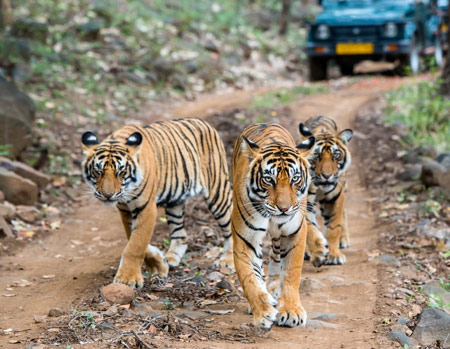
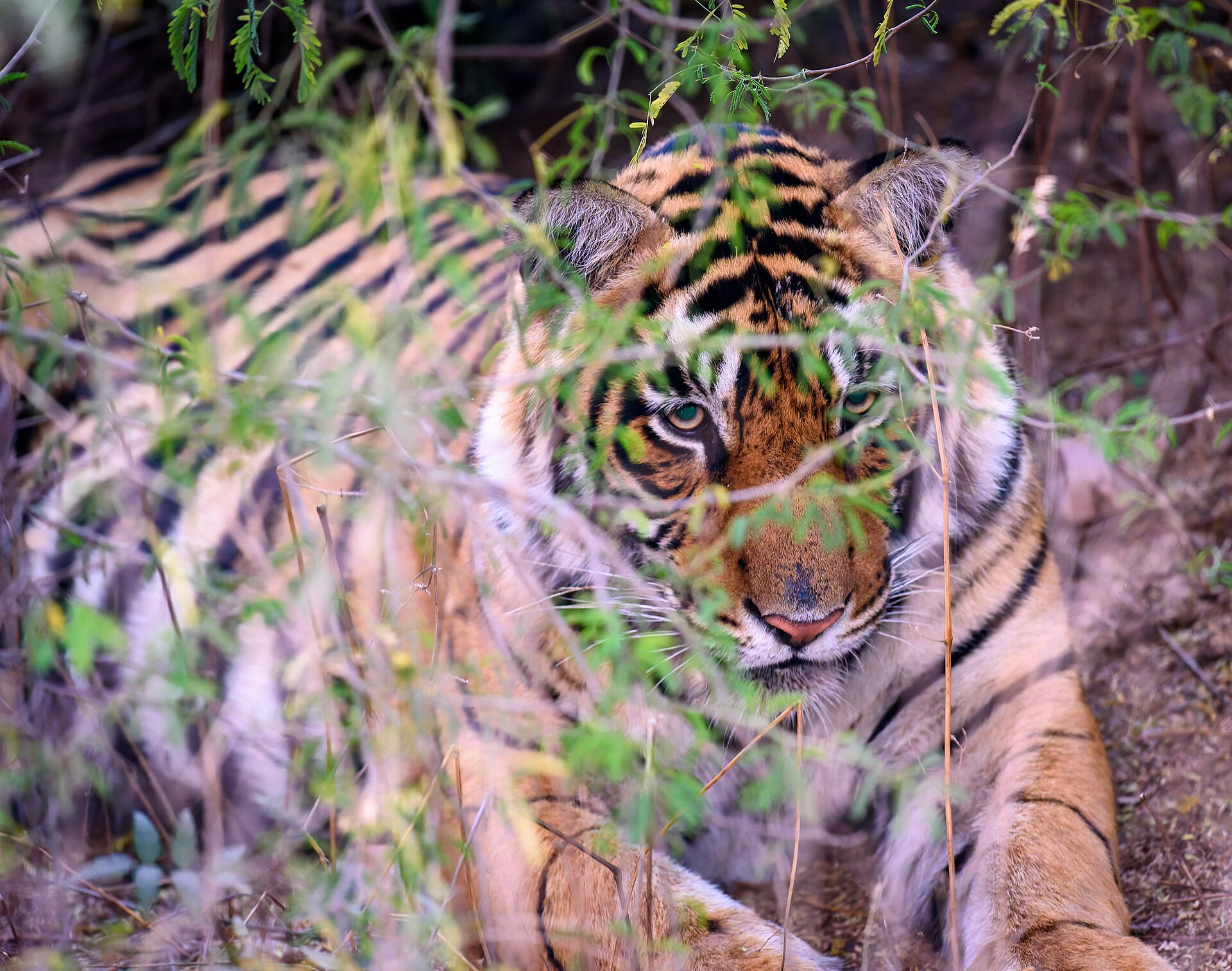
Seeing a wild tiger rearranges people. Africa prepares you for abundance; India's forests prepare you for presence — an hour of birdsong and rumor, alarm calls tightening, and then the striped fact of her, crossing the track without a glance at you. Roughly three-quarters of the world's wild tigers live in India, and a well-planned safari now offers odds our grandparents' generation would not have believed.
Planned is the operative word. Tiger safaris run on a permit system — fixed vehicle quotas per park zone per session, morning and afternoon — and the permits for prime zones in prime season are claimed months ahead. The safari dates anchor the whole itinerary; everything else bends around them.
Where and when
The essential shortlist: Ranthambore (Rajasthan) — tigers among ruined temples and lake palaces, the most photogenic stage and the natural add-on to a Golden Triangle route. Bandhavgarh (Madhya Pradesh) — the highest tiger density in India and the strongest sighting odds. Kanha — the largest, most beautiful salSalA tall hardwood tree that forms the dominant forest of central and northern India.Read in the glossary-forest park, the landscape that raised The Jungle Book. The connoisseur's pairing is Bandhavgarh plus Kanha in one central-India circuit; the convenient choice is Ranthambore; the crowd-averse pick Pench or Satpura, where walking and boat safaris exist.
Season: parks open October through June, and the dry heat of March to May delivers the best sighting odds as cover shrinks and cats come to water — serious photographers book April despite 100°F afternoons. The civilised compromise is February–March: good odds, kind weather. Monsoon closes the core zonesCore zone & buffer zoneThe two parts of an Indian tiger reserve: a strictly protected core, where no one lives, ringed by a buffer in which limited human activity is permitted.Read in the glossary entirely from July to September.
Cost, structure and expectations
Structure determines everything: a private gypsy (open 4x4) with a naturalistNaturalistThe trained wildlife guide who accompanies guests on safari, reading tracks, alarm calls and behaviour to find animals.Read in the glossary you have to yourself runs roughly $150–250 per drive including premium park fees — against $40-odd for a shared seat — and is not a luxury but the difference between a wildlife experience and a queue. Plan four to six drives over three nights minimum; sightings are probabilistic, and the itinerary that allots one drive has misunderstood the game. Lodges run from comfortable ($150/night) to the sublime safari camps ($600–1,500) whose naturalist teams, food and siesta-hour comfort transform the between-drives day.
Set expectations like an adult: even in Bandhavgarh in April, a sighting is likely per stay, not guaranteed per drive — and the forest fills the meantime with leopards, sloth bears, wild dogs, four-hundred-species birdlife and langurLangurThe grey, black-faced, long-tailed monkey of the Indian forest and temple town.Read in the glossary theatre. The travelers who come home rapturous are the ones who wanted a jungle, and were given a tiger.
Begin Properly
Let a curator sketch your India
A few short questions — who is traveling, what draws you, how you like to move — and we reply with a first sketch of the journey we would design for you. No commitment; just a considered starting point.
Begin Your Private EnquiryQuestions, Answered
What is the best time for a tiger safari in India?
October to June, with sighting odds rising as it dries: February–March balances odds and comfort; April–May maximises sightings in serious heat. Parks' core zones close during the July–September monsoon.
Which national park is best for seeing tigers?
Bandhavgarh for the highest density and odds; Ranthambore for scenery, history and Golden Triangle convenience; Kanha for the most beautiful forest. The Bandhavgarh–Kanha pairing is the serious wildlife traveler's circuit.
How much does an India tiger safari cost?
A well-run private safari — exclusive vehicle and naturalist, good lodge — runs roughly $400–800 per person per day; superb safari camps push higher. Shared-vehicle, simple-lodge versions run a fraction of that at a real cost in experience.
How do Ranthambore safari bookings work?
Through a fixed permit system with per-zone vehicle quotas, opening in advance and selling out for peak season. Book prime-zone permits months ahead — this is the piece that must be secured before flights and hotels.
Kanha or Bandhavgarh?
Bandhavgarh for maximum tiger probability in a compact park; Kanha for grandeur, meadows and a fuller wilderness feel. They sit five hours apart — the definitive answer is both, three nights each.
From the Journal
Journeys That Answer This